How To Conduct a Feasibility Study – The Element Most Teams Forget
A detailed guide on how to conduct a feasibility study in project management, covering purpose, key stages, examples, and benefits for decision-making.
What Is a Feasibility Study in Project Management?
A Feasibility Study is a step taken at the beginning of a project to decide whether an idea is realistic and worth pursuing.
It helps project managers, stakeholders, and investors determine whether to move forward, revise the plan, or stop before investing significant time, money, and resources.
It is a key part of the project initiation phase, ensuring decisions are made carefully before execution begins.
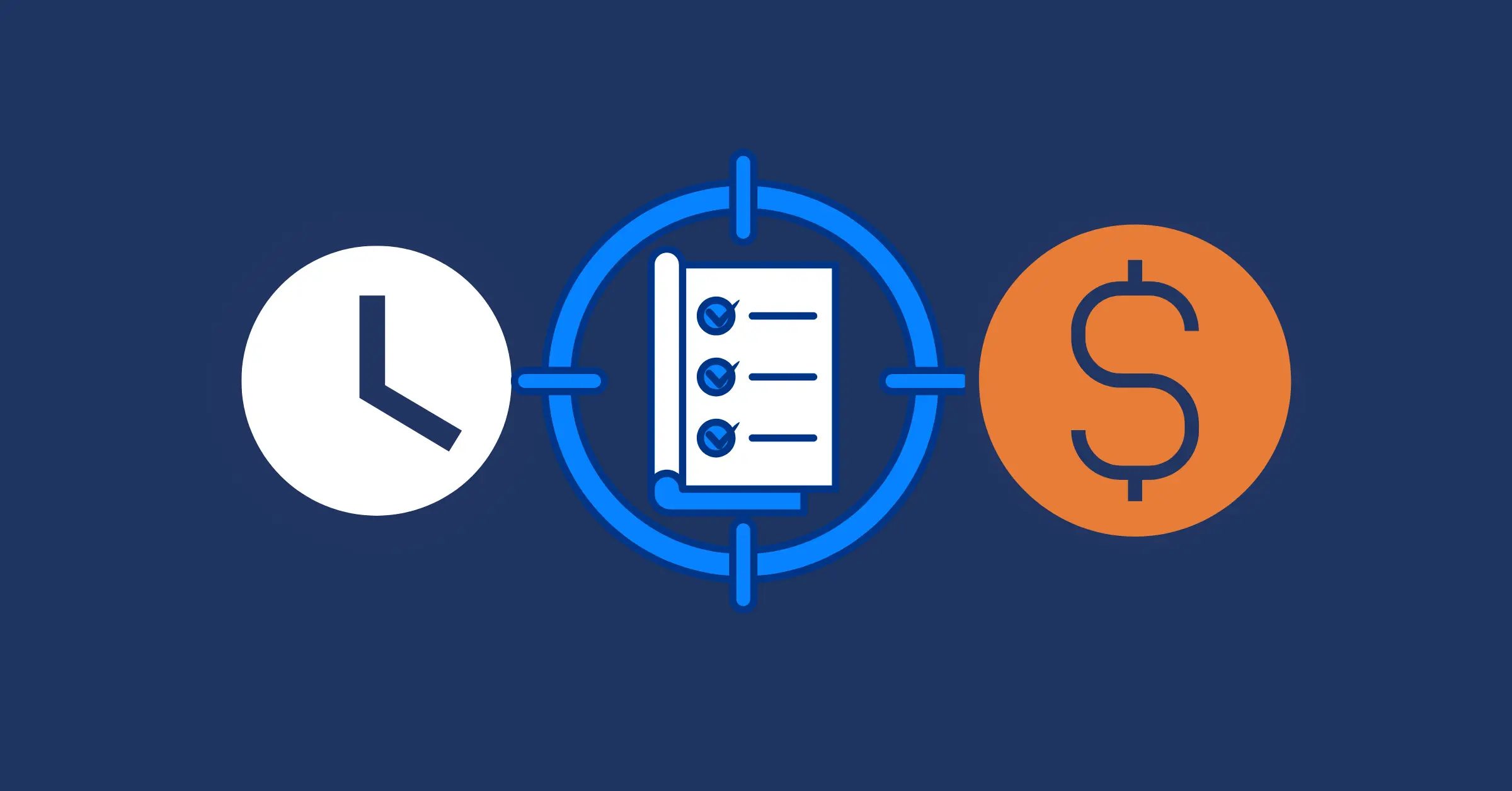
A feasibility study is designed to answer three critical questions:
- Can the project be done with available resources?
- Should it be done given the financial and operational impact?
- Is it the right time to execute it?
The outcome is a clear recommendation: proceed, revise, or reject. Rather than relying on enthusiasm, it relies on data, analysis, and realistic evaluation. In other words, it provides a solid foundation for project management decisions.
Why Most Teams Forget the Feasibility Study Stage
In practice, many organizations skip this stage of project initiation. The reasons are often simple: lack of time, overconfidence, or pressure from stakeholders to show progress.
Common reasons teams skip it
- They believe the idea is strong enough to “just start.”
- There is pressure from leadership to move fast.
- Teams see it as unnecessary paperwork.
- There is limited understanding of what a feasibility study actually involves.
The cost of skipping
When this step is ignored, the project often moves forward on assumptions. Budgets balloon, schedules slip, and teams discover problems that could have been predicted. A new software product might reach development only to fail because of legal restrictions or lack of market demand. A construction project might break ground before realizing zoning requirements weren’t met.
The feasibility study acts as the filter that prevents such mistakes. It ensures the project idea passes through practical, financial, and operational tests before money and time are spent.
The 5 Pillars of Feasibility (The TELOS Framework)
To truly understand if a project is a “go” or a “no-go,” you need a framework that looks beyond just the potential profit. Professional project managers use the TELOS Framework—a set of five pillars that act as the ultimate stress test for any business idea.
If your project can’t clear these five hurdles, it’s better to know now than after you’ve spent your budget.
1. Technical Feasibility
This determines whether the technology, tools, and expertise required for the project are available. It answers: Can we actually build or deliver this with our current capabilities?
For example, a company planning to launch an AI-powered service must confirm that its existing infrastructure can handle data processing requirements. If not, it needs to identify what upgrades are necessary and at what cost.
2. Economic Feasibility
This examines whether the project makes financial sense. It involves cost-benefit analysis, ROI forcasting, and identifying funding sources. Key questions include:
- Are projected returns worth the investment?
- When will the project break even?
- What are the long-term operational costs?
Economic feasibility provides the hard numbers decision-makers need to justify moving forward.
3. Legal Feasibility
No project exists in a vacuum. Legal feasibility ensures the plan complies with laws, regulations, and industry standards. This may include labor laws, environmental regulations, or data protection rules. A feasibility study that overlooks this area risks costly delays and potential penalties later on.
4. Operational Feasibility
Even if a project is technically and financially viable, it still must fit within existing operations. This component evaluates whether teams, processes, and organizational culture can support implementation. It answers: Can we manage this without disrupting other business functions?
Operational feasibility also considers staffing, training needs, changes to internal procedures, and change control control to ensure project changes are reviewed and managed without disrupting operations.
5. Scheduling Feasibility
Timing matters. This component determines whether the project timeline is realistic. It examines dependencies, available manpower, and seasonal factors. A project that looks perfect on paper can fail simply because there is not enough time to complete it effectively.
Using the TELOS framework gives you a structured way to validate ideas before committing resources—reducing uncertainty and increasing the likelihood of successful delivery.
Who Should Conduct a Feasibility Study
A feasibility study involves different areas of expertise. The goal is to gather accurate data and interpret it objectively.
- Project Manager: Coordinates the study, defines objectives, and ensures alignment with organizational strategy.
- Financial Analyst or Accountant: Evaluates cost structures, funding options, and ROI models.
- Technical Expert or Engineer: Reviews whether technology and infrastructure requirements can be met.
- Legal or Compliance Officer: Checks for potential legal or regulatory issues.
- Operations or HR Representative: Assesses resource capacity and potential impact on staffing or processes.
- External Consultant (optional): Adds neutrality and expertise, especially in large or complex projects.
In smaller organizations, one person may cover several roles, but maintaining objectivity is crucial. Bias or overconfidence can undermine the entire process.
Step by Step To Conduct a Feasibility Study
Step 1: Define the Project and Its Objectives
Start by clearly defining what you are evaluating—vague scope leads to wasted time and unclear conclusions.
- Clarify the objective: What problem are you solving? What outcome are you expecting?
- Define internal scope: Which teams, resources, or systems will be involved?
- Define external scope: Who are you targeting (customer segments, markets, locations)?
- List non-goals: Be explicit about what is not included to avoid scope creep
👉 Practical tip: If you can’t explain the project in 2–3 sentences, it’s not defined well enough yet.
Step 2: Perform Market Research
Before going deeper, confirm that the idea makes sense outside your organization.
- Identify your target users: Who will actually use or pay for this?
- Check real demand: Use surveys, interviews, or existing data to validate the problem
- Analyze competitors: What are others already doing? What are they missing?
- Look for gaps: Is there a clear opportunity, or are you entering a saturated space?
👉 Practical tip: If customers wouldn’t care whether this exists or not, the project is not feasible—no matter how good it looks internally.
Step 3: Evaluate the Main Feasibility Areas
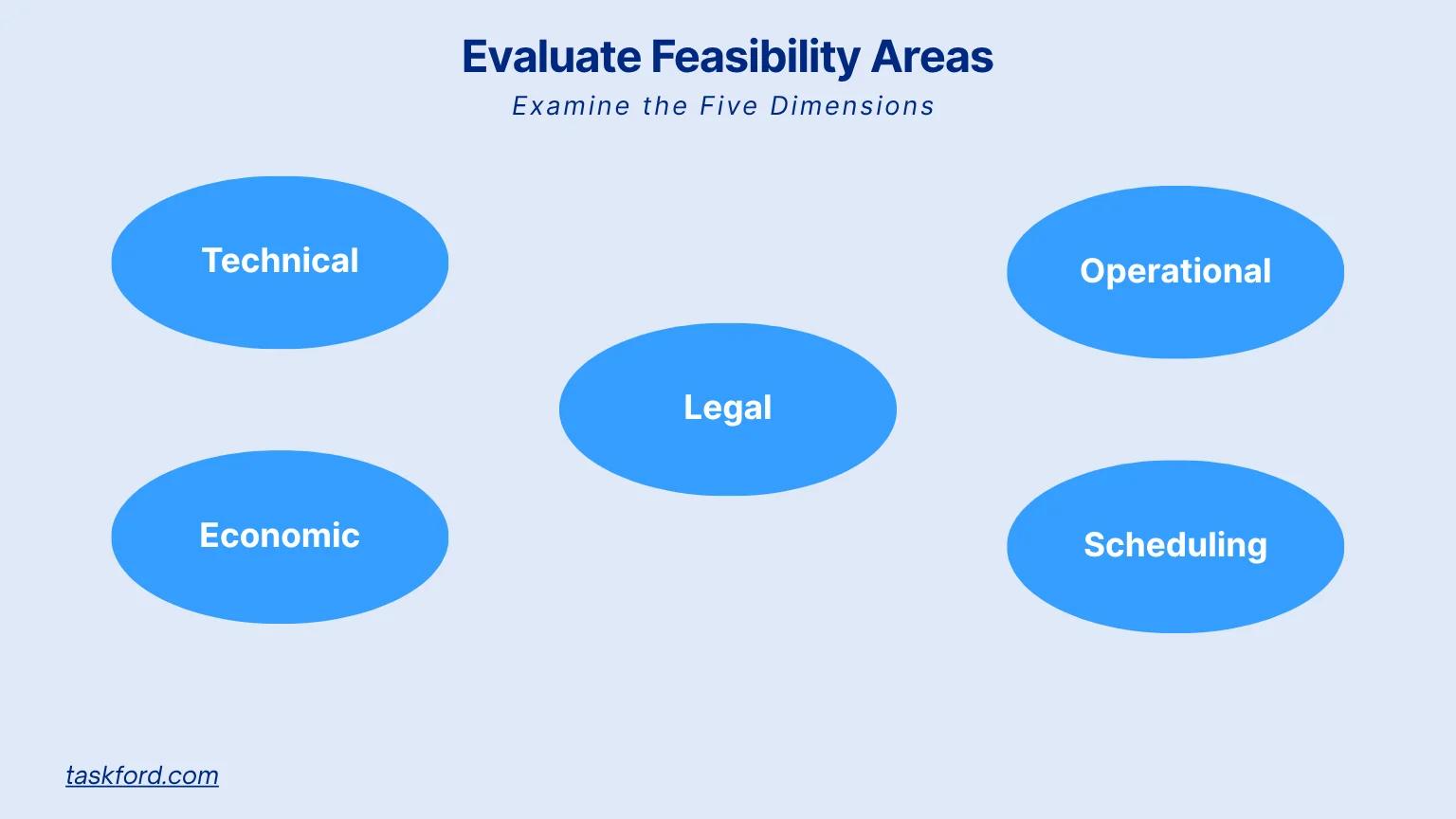
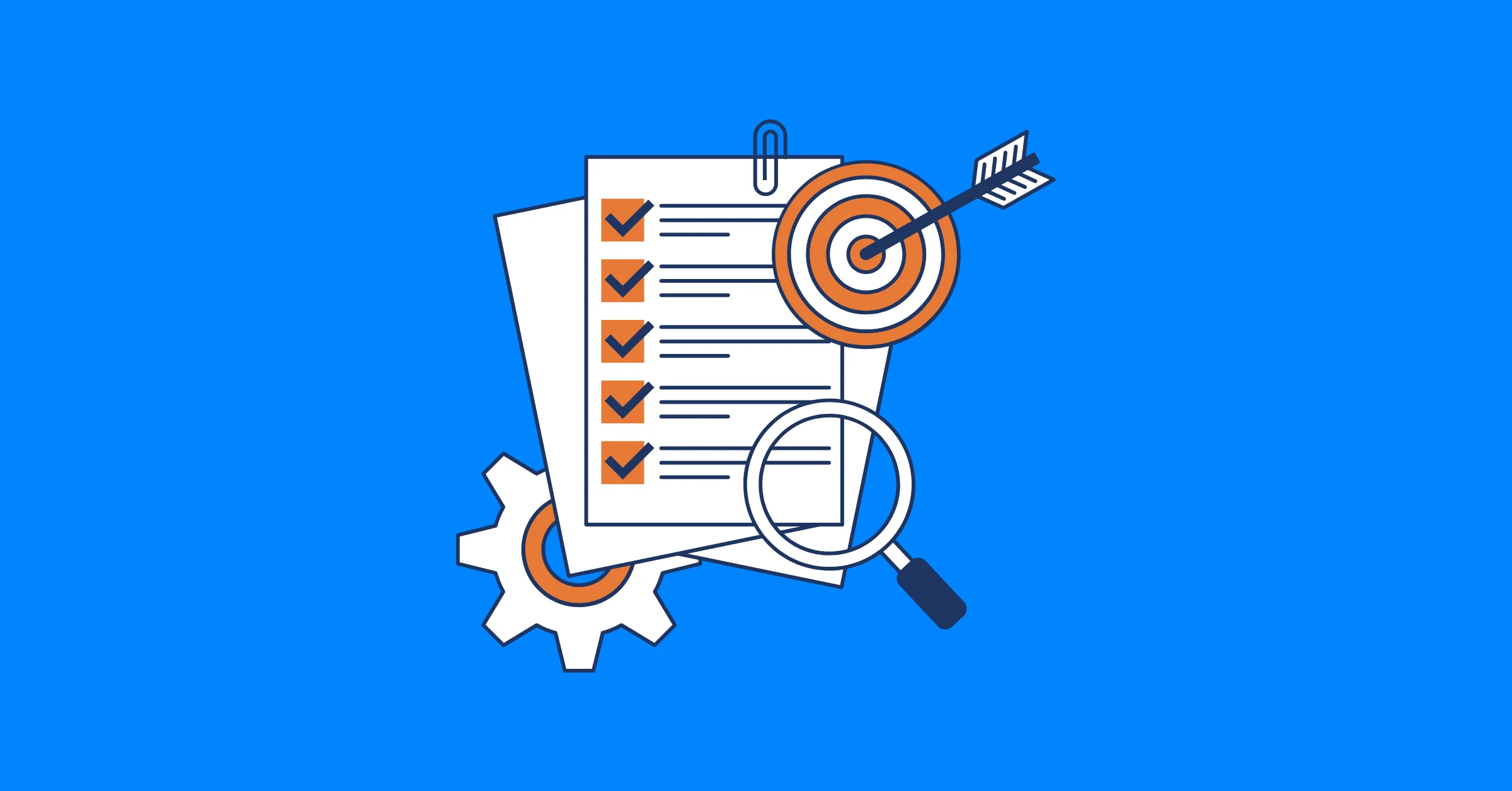
With the project defined and demand validated, this step is about pressure-testing the idea from every critical angle. Instead of evaluating feasibility broadly, break it down using the TELOS framework:
- Technical: List what needs to be built or implemented. Check whether your current systems, tools, and infrastructure can support it. Identify any gaps (e.g., missing integrations, scalability limits, or new technology required).
- Economic: Estimate the real cost—not just development, but also operations, maintenance, and potential risks. Then compare it against expected returns (revenue, savings, or strategic value).
- Legal: Identify any compliance requirements early. This includes contracts, data privacy, industry regulations, or local laws.
- Operational: Map how this will actually run day-to-day. Who owns what? What processes change? What new steps are introduced?
- Scheduling: Break the project into a rough timeline. Identify key milestones, dependencies, and potential delays.
👉 Practical tip: Treat each TELOS area like a quick checklist. If one area has major uncertainty or unanswered questions, pause and resolve it before moving forward. This is where most “good ideas” fail—and where strong projects become executable.
Step 4: Identify Risks and Develop Mitigation Strategies
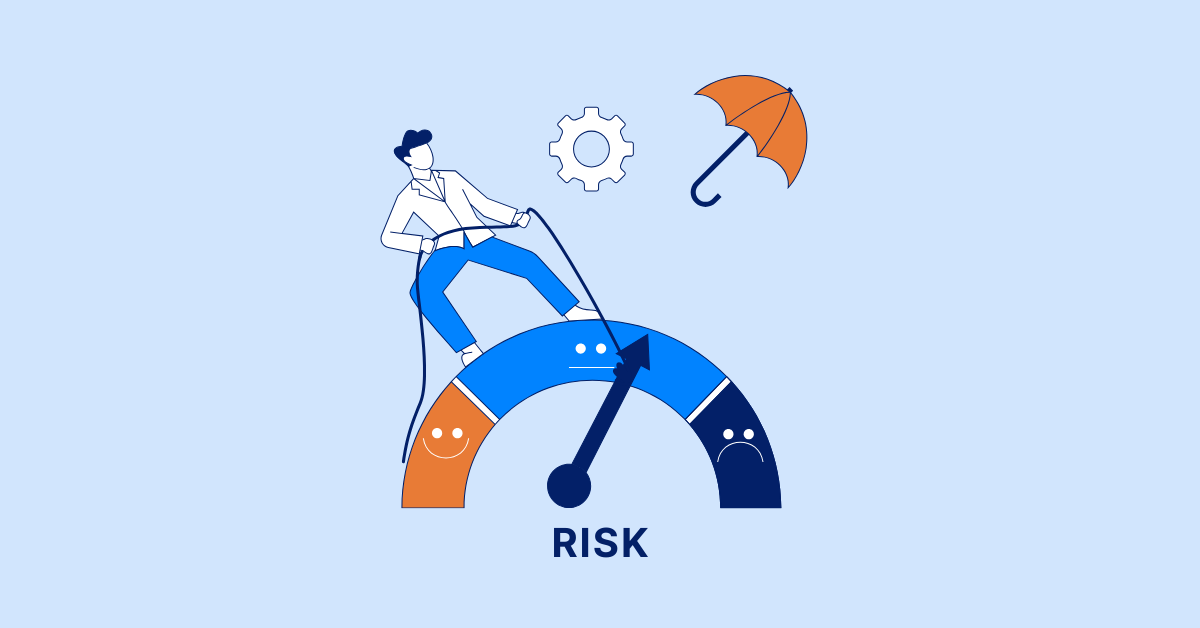
Every project carries risks, but a strong feasibility study anticipates them early. List all potential risks like technical failures, funding issues, market fluctuations, or staffing shortages and evaluate their likelihood and impact.
Then, outline mitigation strategies for each. For instance, if supplier reliability is a concern, propose backup vendors. If market demand is uncertain, plan for a limited pilot launch first. This proactive thinking doesn’t just strengthen the feasibility study, it shows you’ve thought beyond the surface.
Step 5: Make a Clear Recommendation (Go / No-Go / Revise)
After analyzing feasibility and risks, the final step is to turn your findings into a decision.
- Summarize key insights: What did you learn across TELOS, risks, and market validation?
- Weigh trade-offs: Are the benefits strong enough to justify the costs and risks?
- Define your recommendation:
- Go: Move forward as planned
- Revise: Adjust scope, timeline, or approach before proceeding
- No-Go: Stop the project to avoid wasted resources
- State conditions for success: What must be true for this project to work?
Step 6: Make the Final Decision
A feasibility study only creates value if it leads to clear next steps. Once a decision is made, define exactly what happens next.
- If Go:
- Move into detailed project planning
- Assign owners, timelines, and resources
- Break the project into executable tasks
- If Revise:
- Identify what needs to change (scope, budget, timeline, approach)
- Rework the plan and revalidate key assumptions
- Run a focused follow-up feasibility check
- If No-Go:
- Document why the project was stopped
- Capture key learnings and insights
- Share findings to inform future decisions
How TaskFord Supports Feasibility Studies
A feasibility study should not remain a static document. Its value comes from how well those insights are carried into execution.
TaskFord - the Integrated Work Delivery Platform helps teams move from evaluation to delivery by connecting planning, resources, and execution in one place.
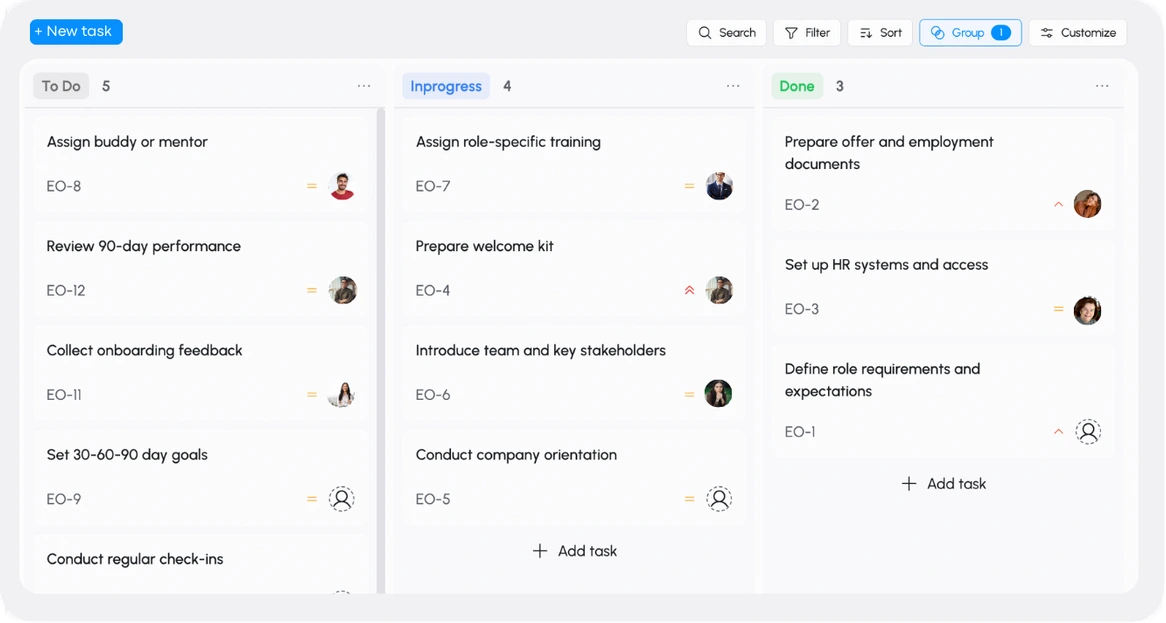
1. Turn Feasibility into Executable Work
Once a project is approved, TaskFord helps you translate high-level assumptions into structured tasks.
- Break scope into tasks, subtasks, and milestones
- Assign clear ownership for every piece of work
- Use boards to organize workflows and track status
This ensures your feasibility study doesn’t stay theoretical—it becomes a working plan.
2. Validate Capacity Before You Commit
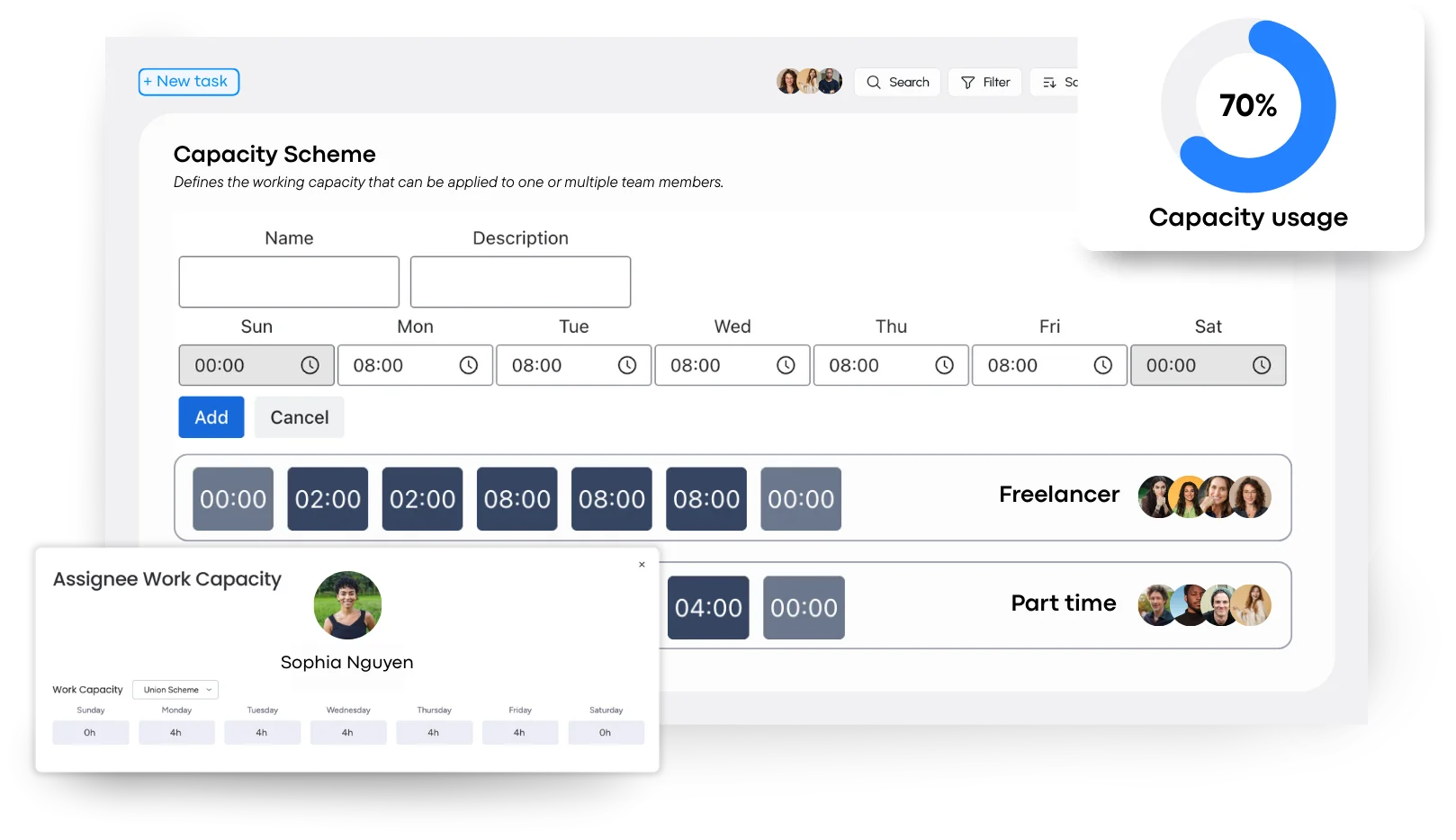
Feasibility often fails when teams underestimate workload. TaskFord makes capacity visible early.
- Assign tasks based on real team availability
- View workload across team members
- Spot overload or underutilization before execution starts
This helps confirm whether your plan is realistic with your current resources.
3. Map Dependencies and Identify Constraints
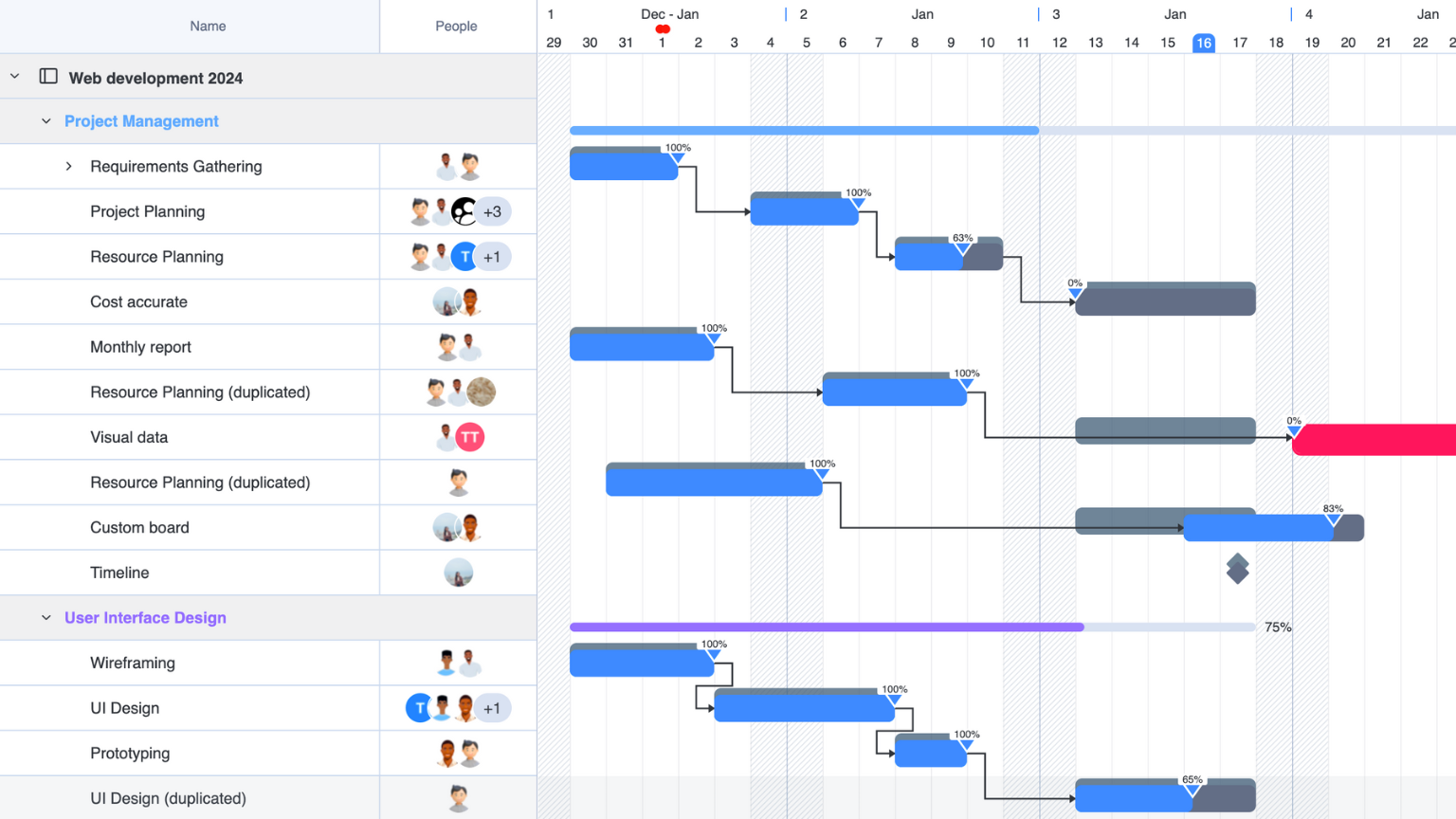
Many projects look feasible until dependencies are ignored. TaskFord helps you visualize how work connects.
- Link tasks and define dependencies
- Identify blockers that impact multiple workstreams
- Adjust sequencing to avoid delays
4. Track Progress Against the Plan
Feasibility is not a one-time check—it needs to be validated during execution.
- Monitor task progress in real time
- Compare actual progress with planned timelines
- Identify delays early and take corrective action
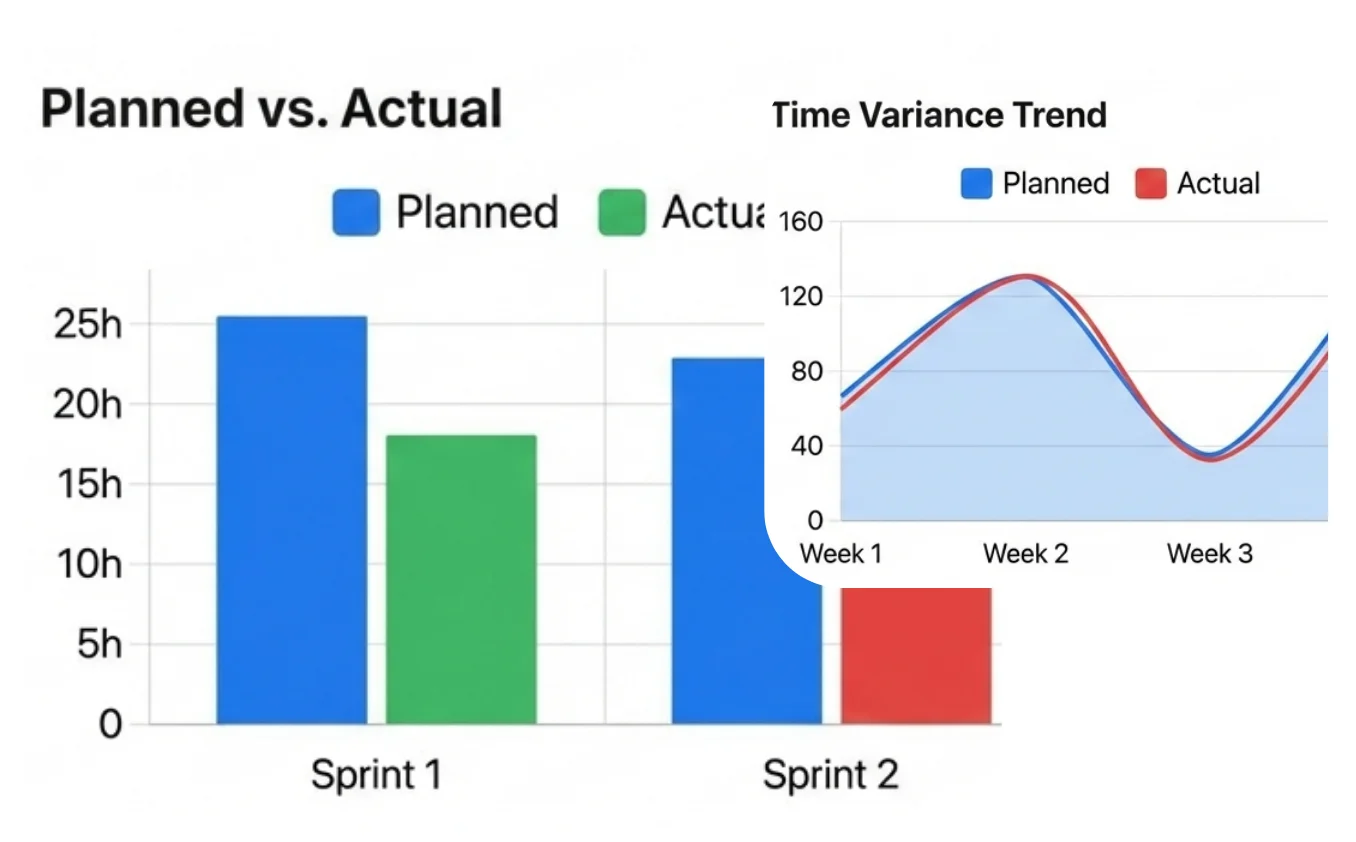
From Feasibility to Delivery
TaskFord closes the gap between planning and execution. It helps teams not only decide “Can we do this?” but continuously validate “Are we still on track?”
By connecting tasks, resources, and timelines, feasibility becomes part of everyday work—not just a one-time analysis.
Common Mistakes When Conducting a Feasibility Study
Even when teams attempt a feasibility study, errors in execution can weaken results.
- Starting with a solution, not a problem: Jumping into execution without validating the actual need
- Relying on assumptions: Making decisions without supporting data or evidence
- Underestimating costs and resources: Overlooking hidden costs or team capacity limits
- Ignoring operational reality: Not considering how the solution will work in day-to-day operations
- Overlooking risks: Focusing only on best-case scenarios without mitigation plans
- Treating it as a one-time exercise: Not revisiting assumptions during execution
- Unclear conclusions: Failing to provide a clear go / no-go / revise decision
Avoiding these pitfalls ensures the study remains a reliable decision-making tool throughout the project.
Benefits of Conducting a Thorough Feasibility Study
A well-executed feasibility study delivers clear, measurable advantages:
- Reduced risk: Identifies weak points early and prevents costly surprises.
- Informed investment: Provides data to justify funding and resource allocation.
- Improved stakeholder confidence: Builds trust by showing decisions are based on evidence.
- Efficient project initiation: Clarifies direction before planning begins.
- Better alignment: Ensures all departments understand the project’s value and limitations.
In essence, it is both a safety net and a roadmap for successful project management.
FAQ: Feasibility Study in Project Management
1. What is the difference between a Feasibility Study and a Business Case?
A feasibility study determines if a project can be done, while a business case explains why it should be done. The feasibility study comes first and provides data that informs the business case.
2. How long does a Feasibility Study usually take?
Depending on the project’s size and complexity, it can take anywhere from a few weeks to several months. The more variables involved, the more time needed for accurate assessment.
3. Who is responsible for approving the Feasibility Study results?
Typically, senior management or key stakeholders review and approve the report before giving the go-ahead for planning and implementation.
4. Can small businesses or startups conduct Feasibility Studies?
Yes. Even basic feasibility studies can save small businesses from costly mistakes. They can be scaled to fit available resources and still provide valuable insight.
5. Should a Feasibility Study be updated?
Yes. Market conditions, costs, and technologies change. Revisiting the study before major milestones keeps it relevant and accurate.
Conclusion
A Feasibility Study is not an optional extra in project management. It is a critical checkpoint that determines whether a project should move forward. Teams that take time to evaluate feasibility save time, money, and frustration later. They also gain a clearer understanding of what success actually requires.
Before launching your next big initiative, stop and conduct the step most teams forget. A thorough Feasibility Study can be the difference between a project that struggles and one that succeeds with confidence.
Frequently Asked Questions
What is a feasibility study in project management?
A feasibility study evaluates whether a project is realistic, financially viable, legally compliant, operationally practical, and achievable within the required timeline. It helps stakeholders decide whether to proceed, revise, or reject a project.
What are the five areas of a feasibility study?
The five main areas are technical, economic, legal, operational, and scheduling feasibility. Together, these areas form the TELOS framework and provide a structured way to evaluate whether a project is practical.
Who conducts a feasibility study?
A feasibility study is typically conducted by a project manager with support from financial, technical, legal, and operations experts. External consultants may also be involved when specialized knowledge or an independent assessment is needed.
When should a feasibility study be conducted?
A feasibility study should generally be conducted during the project initiation phase, before significant resources are committed. It can also be revisited when major changes to the project scope, budget, timeline, or assumptions occur.
What is the difference between a feasibility study and a business case?
A feasibility study determines whether a project can realistically be completed, while a business case explains why the organization should invest in it. The findings from a feasibility study can help support the business case.
Learn more
- What is Project Management? The Complete First Guide for Newbies
- 10 Leading Project Management Tools for Remote Teams - Expert Reviews 2026
- What is a Project Milestone? A Detailed Guide to Effective Project Management
Related Articles


How to Build and Manage a Product Roadmap with TaskFord






How to Build a Connected Project Timeline in TaskFord





What Are the Best Jira Alternatives for Scrum Teams?












How WBS Reveals Delivery Breakdown Before It’s Too Late





![How To Conduct a Profound Stakeholder Analysis [+ Free Template]](/marketing/blog/stakeholder-analysis.webp)









What to Look for in Scrum Tools (Beyond Kanban Boards)

![Project Management Calendar for Teams and Managers [Free Templates]](/marketing/blog/project-management-calendar.webp)



How to Define Project Deliverables: A Step-by-Step Guide



![RACI Chart in Project Management: Rules & Examples [Free Download]](/marketing/blog/raci-chart.webp)











![7 Must-Have Project Management Documents Every PO Should Know [Free Templates]](/marketing/blog/project-management-documents.webp)





![How to Create a Winning Project Plan for IT Projects [10 Steps Included]](/marketing/blog/how-to-create-a-project-plan.webp)



![Daily Standup Best Practices: Apply AI to Organize Meetings Successfully [2026 Trends]](/marketing/blog/daily-standup.webp)




![How to Create a Project Communication Plan: Step-by-Step Guide [+Free Template]](/marketing/blog/project-communication-plan.png)


![Master Project Procurement Management in 5 Steps [Download a free plan template]](/marketing/blog/project-procurement-management.webp)














Subscribe for Expert Tips
Unlock expert insights and stay ahead with TaskFord. Sign up now to receive valuable tips, strategies, and updates directly in your inbox.