How Long Is a Sprint in Agile? 1-Week vs 2-Week vs 4-Week Sprints
How long is a sprint in Agile? Learn how to choose the ideal sprint length to optimize project management, boost team performance, and deliver great value.
Agile project management has transformed how teams deliver value by breaking work into manageable cycles called sprints. But one question often sparks debate among Agile practitioners: How long is a sprint in Agile?
The answer isn’t one-size-fits-all. Sprint length can vary, typically one week, two weeks, or four weeks depending on the team, project, and goals. Choosing the right sprint duration is critical to balancing speed, quality, and adaptability. In this blog, we’ll dive into the nuances of sprint lengths and explore how each impacts project management and sprint planning. By the end, you’ll have a clear framework to decide what works best for your team.
What Is a Sprint in Agile?
A sprint in Agile is a short, fixed period where a team works through a set of prioritized tasks from the product backlog to deliver something usable. It’s a core part of project management, helping teams make steady progress with clear goals for each sprint.
Most sprints last one to four weeks, and that timeframe shapes how teams plan, refine tasks, and review their work along the way.
Why Sprint Length Matters in Agile Project Management
Sprint length in Agile project management has a direct impact on how teams plan, execute, and review their work. Choosing the right duration means balancing the project’s complexity, the team’s working style, and stakeholder expectations.
- Too short: Teams may feel rushed, leading to incomplete work or reduced quality.
- Too long: Feedback cycles slow down, making it harder to adapt and stay aligned with Agile principles.
Sprint length also influences how key activities play out:
- Planning & refinement: Shorter sprints require more frequent sessions, keeping teams aligned but increasing meeting time.
- Execution focus: Longer sprints allow deeper work but can reduce urgency.
- Velocity tracking: Short sprints provide quicker insights, while longer ones may delay visibility into performance.
Finding the right balance is essential. To do that, it helps to look at how different sprint lengths work in practice.
1-Week Sprints: Fast-Paced and Feedback-Driven
What Are 1-Week Sprints?
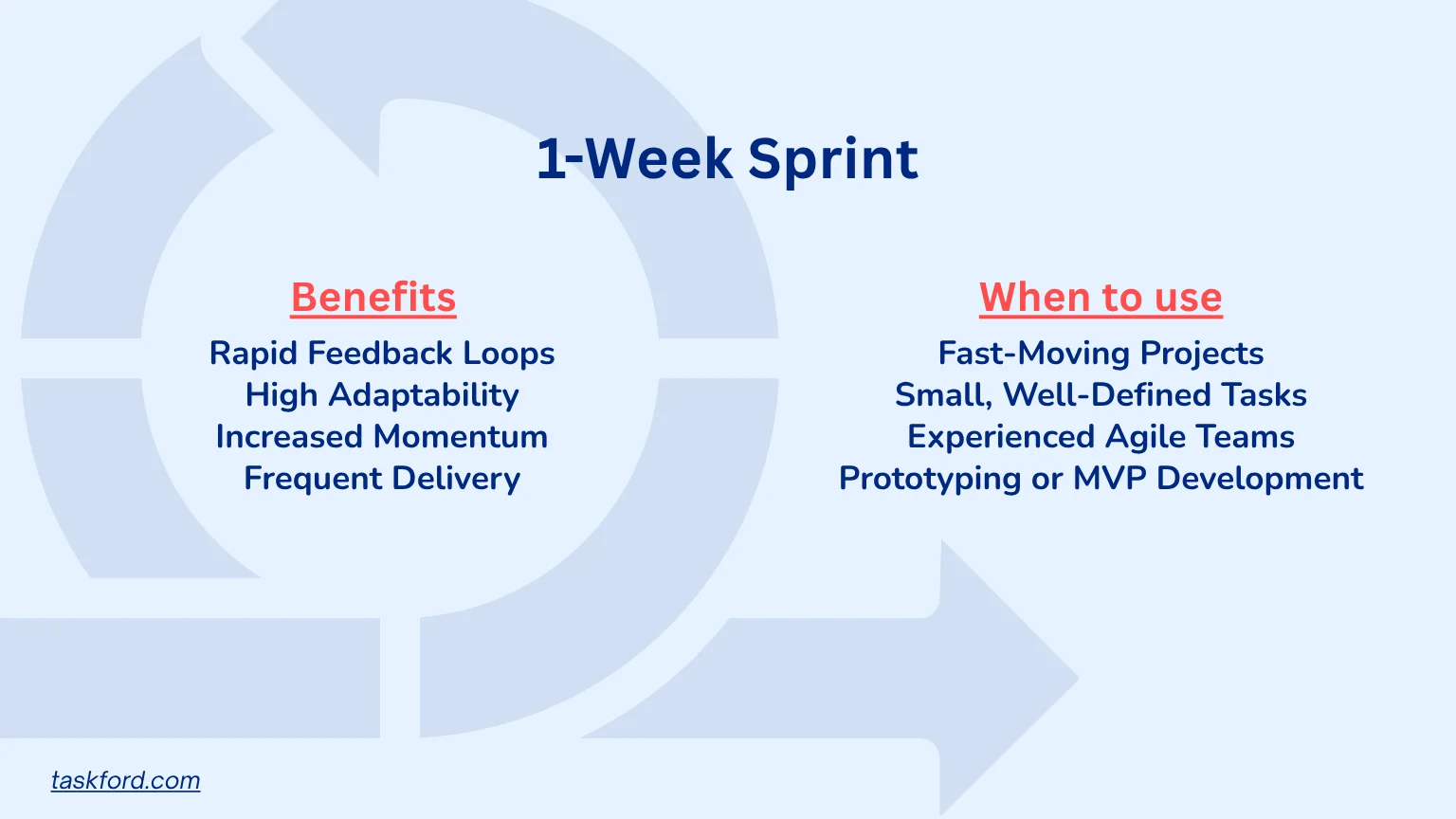
One-week sprints are the shortest commonly used duration in Agile. Teams plan, execute, and deliver a small set of tasks within five working days. These sprints are intense, requiring tight coordination and clear sprint goals to stay on track.
Benefits of 1-Week Sprints
- Rapid Feedback Loops: With a sprint review every week, teams get immediate feedback from stakeholders, enabling quick course corrections.
- High Adaptability: Short cycles allow teams to pivot fast in response to changing priorities or market demands.
- Increased Momentum: The fast pace keeps teams engaged and focused, ideal for high-energy environments.
- Frequent Delivery: Teams can showcase small, incremental progress weekly, building trust with stakeholders.
Challenges of 1-Week Sprints
- Planning Overhead: Sprint planning meetings and sprint refinement sessions happen weekly, which can consume significant time, especially for complex projects.
- Limited Scope: One week may not be enough to tackle larger tasks or complex features, leading to incomplete deliverables.
- Team Fatigue: The relentless pace can burn out team members if not managed carefully.
- Dependency Risks: If external teams or resources aren’t aligned with the rapid cadence, delays can occur.
When to Use 1-Week Sprints
One-week sprints work best for:
- Startups or Fast-Moving Projects: Teams in dynamic industries like tech startups or marketing campaigns benefit from quick iterations.
- Small, Well-Defined Tasks: Projects with modular, bite-sized deliverables fit well within a one-week timeframe.
- Experienced Agile Teams: Teams with strong Agile practices can handle the intensity of weekly cycles.
- Prototyping or MVP Development: When building minimum viable products (MVPs) or testing ideas, rapid feedback is critical.
For example, a mobile app development team might use one-week sprints to release small feature updates, gather user feedback, and refine their backlog in real-time.
2-Week Sprints: The Agile Sweet Spot
What Are 2-Week Sprints?
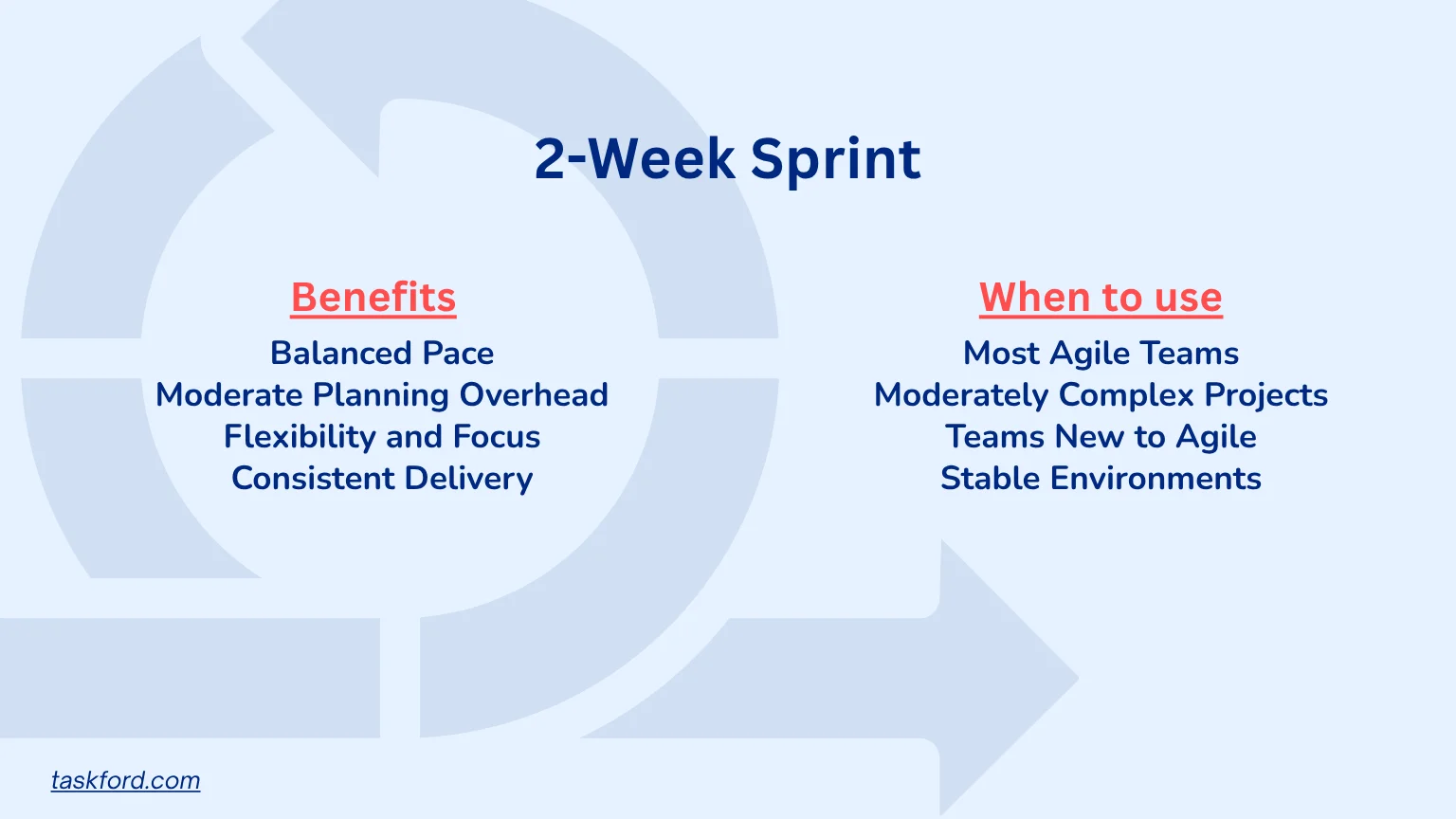
Two-week sprints are the most popular choice in Agile project management, striking a balance between speed and depth. Teams have ten working days to complete their sprint goals, with sprint planning and sprint review meetings occurring biweekly.
Benefits of 2-Week Sprints
- Balanced Pace: Two weeks provide enough time to tackle meaningful tasks without feeling rushed, reducing team stress.
- Moderate Planning Overhead: Sprint planning meetings and sprint refinement sessions occur less frequently than in one-week sprints, freeing up time for development.
- Flexibility and Focus: Teams can handle moderately complex tasks while still maintaining Agile’s iterative nature.
- Consistent Delivery: Biweekly deliverables keep stakeholders engaged without overwhelming them with constant updates.
Challenges of 2-Week Sprints
- Risk of Scope Creep: With more time, teams may take on overly ambitious sprint goals, leading to incomplete work.
- Slower Feedback: Feedback loops are less frequent than in one-week sprints, which may delay critical adjustments.
- Team Coordination: Larger teams may struggle to align within a two-week window if communication isn’t tight.
When to Use 2-Week Sprints
Two-week sprints are ideal for:
- Most Agile Teams: The two-week duration is a versatile fit for teams across industries, from software development to product design.
- Moderately Complex Projects: Projects requiring significant development but not extensive research or dependencies work well here.
- Teams New to Agile: Two weeks give newer teams enough breathing room to learn Agile practices like sprint planning and sprint refinement.
- Stable Environments: When priorities shift moderately, two-week sprints offer a good balance of planning and execution.
For instance, a SaaS company developing a new dashboard feature might use two-week sprints to design, code, test, and review the feature iteratively, ensuring steady progress without overwhelming the team.
4-Week Sprints: Deep Work for Complex Projects
What Are 4-Week Sprints?
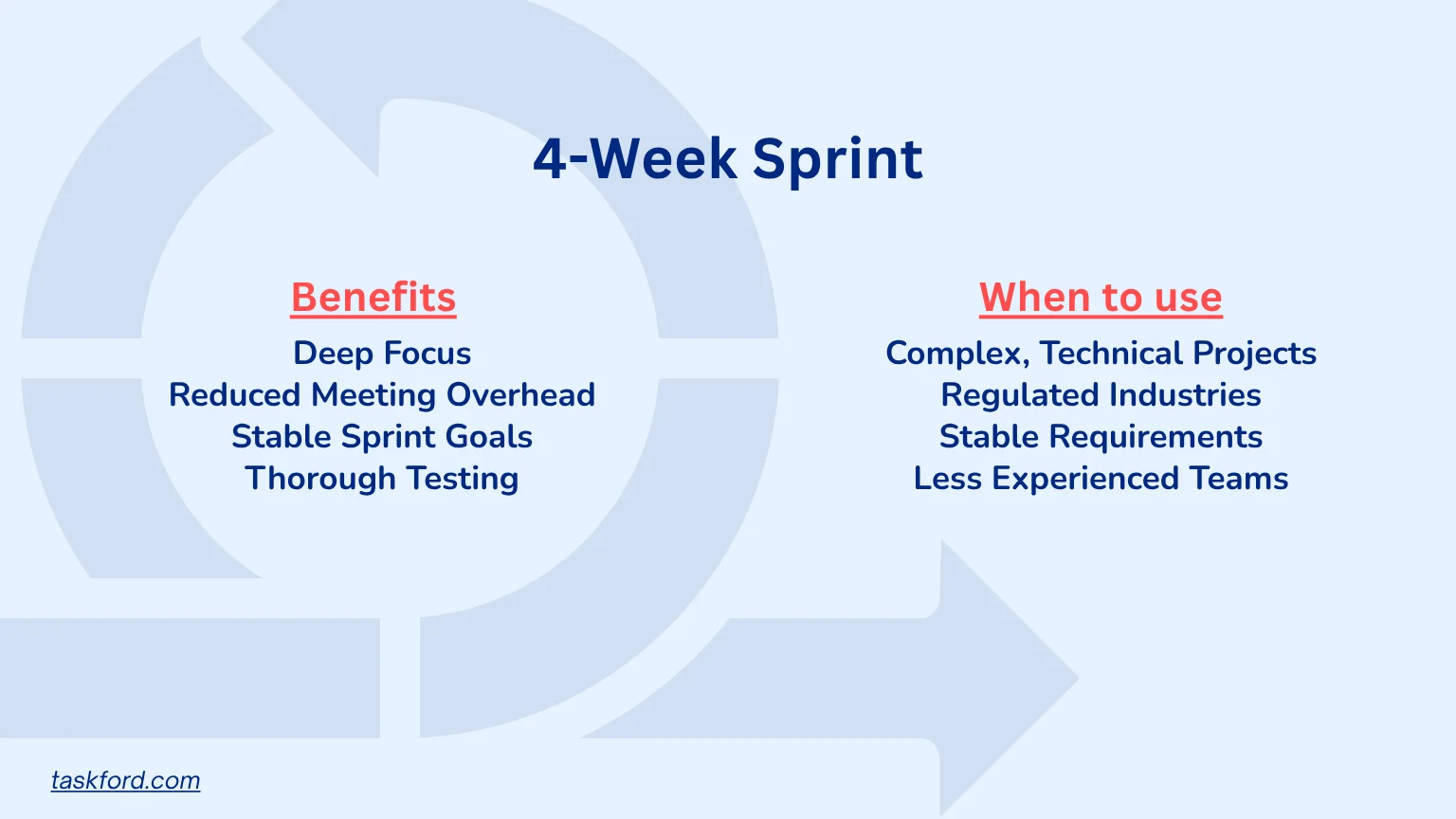
Four-week sprints, spanning roughly a month, are the longest standard sprint length in Agile. They allow teams to tackle substantial, complex tasks or deliverables, with sprint planning and sprint review meetings occurring monthly.
Benefits of 4-Week Sprints
- Deep Focus: Teams can dive into complex tasks, such as system integrations or large-scale features, without the pressure of a tight deadline.
- Reduced Meeting Overhead: Sprint planning meetings and sprint refinement sessions happen less often, giving teams more time for development.
- Stable Sprint Goals: Longer sprints allow for more predictable planning, especially for projects with fixed requirements.
- Thorough Testing: More time enables testing tasks like regression testing and quality assurance, critical for high-stakes deliverables.
Challenges of 4-Week Sprints
- Delayed Feedback: Waiting a month for a sprint review can slow down responses to stakeholder input or market changes.
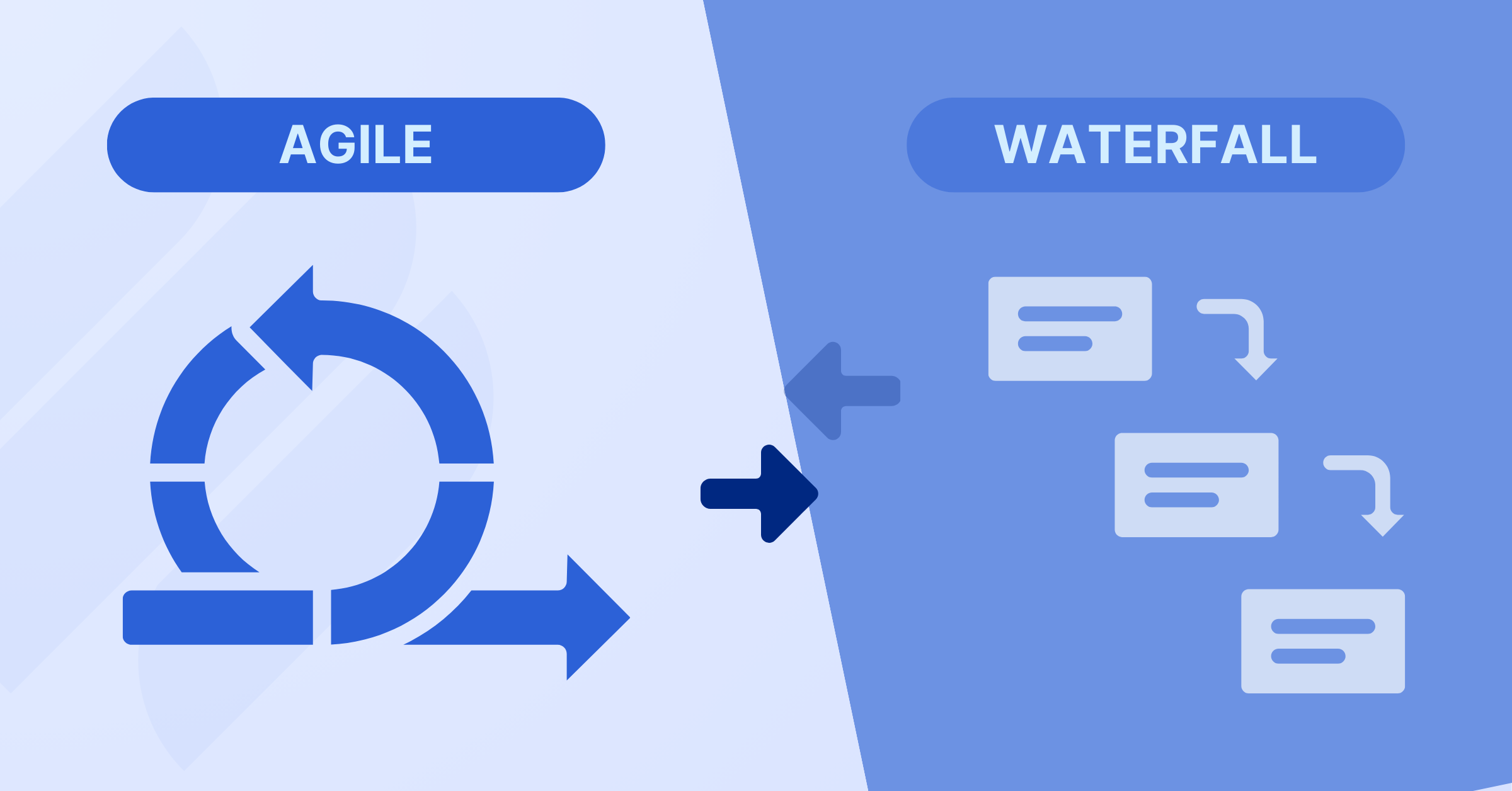
- Risk of Drift: Longer sprints can lead to losing sight of Agile’s iterative principles, resembling traditional waterfall approaches.
- Scope Creep: Teams may overcommit to ambitious goals, resulting in incomplete or rushed work by the sprint’s end.
- Reduced Agility: Longer cycles may make it harder to pivot quickly in fast-changing environments.
When to Use 4-Week Sprints
Four-week sprints are best for:
- Complex, Technical Projects: Projects like backend system overhauls or infrastructure upgrades that require deep focus and longer development cycles.
- Regulated Industries: Teams in healthcare or finance, where compliance and thorough testing are critical, may benefit from longer sprints.
- Stable Requirements: When project requirements are unlikely to change significantly, four-week sprints provide ample time to deliver polished increments.
- Less Experienced Teams: Teams still mastering Agile may find longer sprints less overwhelming, giving them time to refine processes.
For example, a team building a new payment processing system might opt for four-week sprints to ensure robust development, testing, and compliance checks before each sprint review.
Factors to Choose the Right Sprint Length for Your Team
So, how long is a sprint in Agile for your team? The answer depends on several factors:
- Project Complexity: Simple, modular tasks suit shorter sprints (1-2 weeks), while complex deliverables may require four weeks.
- Team Experience: Newer teams may benefit from two- or four-week sprints to ease into Agile practices, while seasoned teams can handle one-week sprints.
- Stakeholder Needs: If stakeholders demand frequent updates, shorter sprints are better. For less frequent but more polished deliverables, consider longer sprints.
- Market Dynamics: Fast-paced industries like tech or e-commerce favor one- or two-week sprints, while stable industries may lean toward four weeks.
- Team Size and Capacity: Larger teams with complex coordination may need longer sprints to align, while smaller teams can iterate quickly.
Comparison Table: 1-Week vs 2-Week vs 4-Week Sprints
| Factor | 1-Week Sprint | 2-Week Sprint | 4-Week Sprint |
|---|---|---|---|
| Pros | Quick feedback from sprint reviews, high adaptability, frequent delivery | Balanced pace, supports iterative sprint goals, consistent delivery | Deep focus, thorough testing, stable sprint planning |
| Cons | High sprint planning and refinement overhead, risk of fatigue, limited scope | Potential scope creep, slower feedback than 1-week sprints | Reduced agility, delayed sprint reviews, risk of drifting from Agile principles |
| Best For | Startups, MVPs, rapid prototyping needing fast iterations | General software development, iterative projects, teams new to Agile | Complex features, regulated industries, stable project requirements |
Practical Tips When Choosing Sprint Length
- Start with Two Weeks: If you’re unsure where to begin, two-week sprints are a safe and balanced starting point. They give your team enough time to complete meaningful work while still keeping feedback cycles relatively fast.
- Experiment and Reflect: Don’t treat sprint length as a fixed decision. Try different durations over a few cycles and evaluate the results during sprint reviews or retrospectives. Look at whether the team delivered quality work, met goals consistently, and maintained a sustainable pace.
- Align with Sprint Goals: Your sprint length should support clear and achievable goals. If goals regularly feel rushed or unfinished, the sprint may be too short. If work drags or loses urgency, it may be too long. Adjust based on how well goals are being met.
- Consider Planning and Refinement Effort: Shorter sprints require more frequent planning and refinement sessions. While this keeps teams aligned, it also takes time. Make sure your team can handle the meeting cadence without it disrupting actual work.
- Adapt as Needed: Agile is built on flexibility. As your project evolves, your sprint length can change too. What works in early development may not work later, so adjust based on team feedback, workload, and project needs.
Real-World Example: Sprint Length in Action
Imagine a software development team building an e-commerce platform. They start with four-week sprints to develop core features like user authentication and payment processing, allowing ample time for testing and compliance. As the project progresses and features become smaller and more iterative, they switch to two-week sprints to focus on UI enhancements and bug fixes, using sprint planning meetings to prioritize tasks.
For the final launch phase, they adopt one-week sprints to deliver frequent updates and incorporate user feedback quickly. This flexible approach ensures the team balances quality, speed, and adaptability throughout the project.
How to Apply TaskFord for Different Sprint Lengths
TaskFord is an integrated work delivery platform designed to support Agile methodologies like Scrum , helping teams manage sprints, tasks, and collaboration effectively across industries such as software development and marketing.
Sprint length changes how you plan, track, and measure work. Instead of changing your setup completely, you can adjust how you use TaskFord’s core views: Table View, Kanban, and Reporting Dashboard.
1. Plan Your Work in Table View
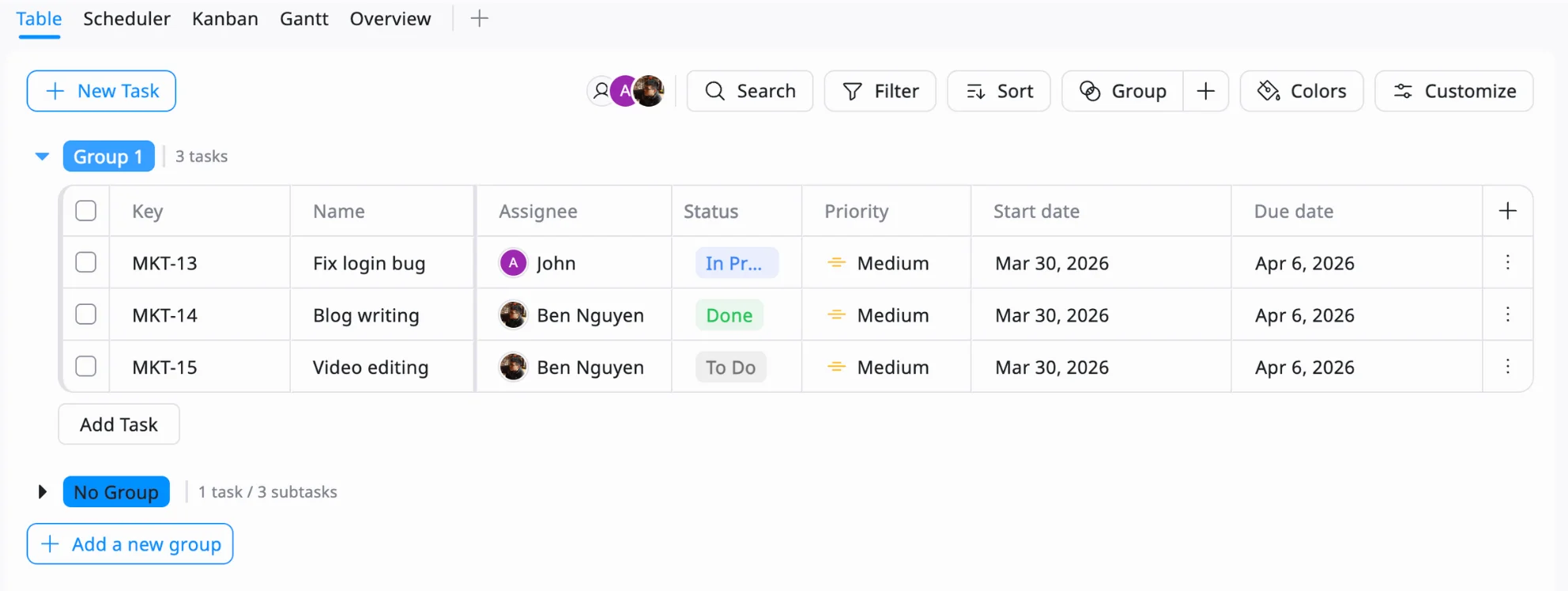
In Table View, your main job is to make sure tasks are realistic for the time you have while you are listing them.
- 1-week sprints:
- Keep tasks very small and specific
- Most tasks should be doable in 1–2 days
- Avoid combining multiple outcomes into one task
- Example: “Fix login bug on mobile” or “Update homepage headline text”
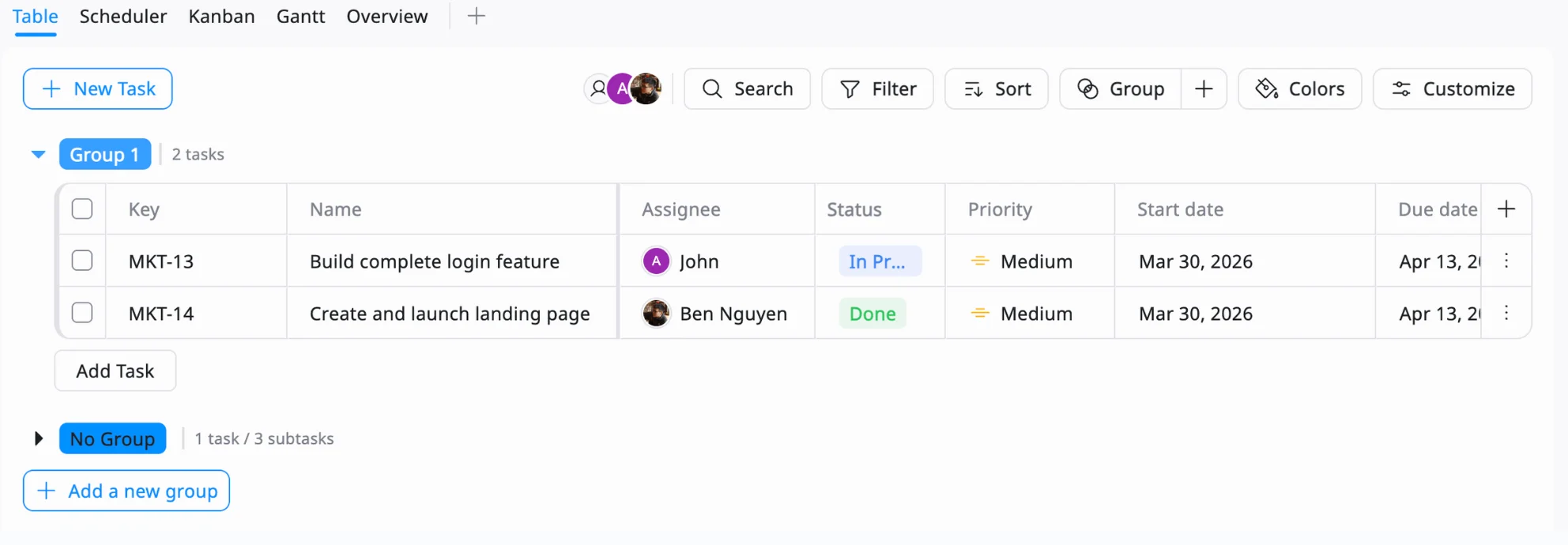
- 2-week sprints:
- Use a mix of small and medium tasks
- Group tasks that contribute to a clear deliverable
- Keep scope balanced, not overloaded
- Example: “Build complete login feature (API + UI)” or “Create and launch landing page”
- 4-week sprints:
- Break large work into smaller linked subtasks
- Add more detail to avoid confusion later
- Be strict with priorities to prevent scope creep
- Example: “Set up full payment system (design → development → testing)”
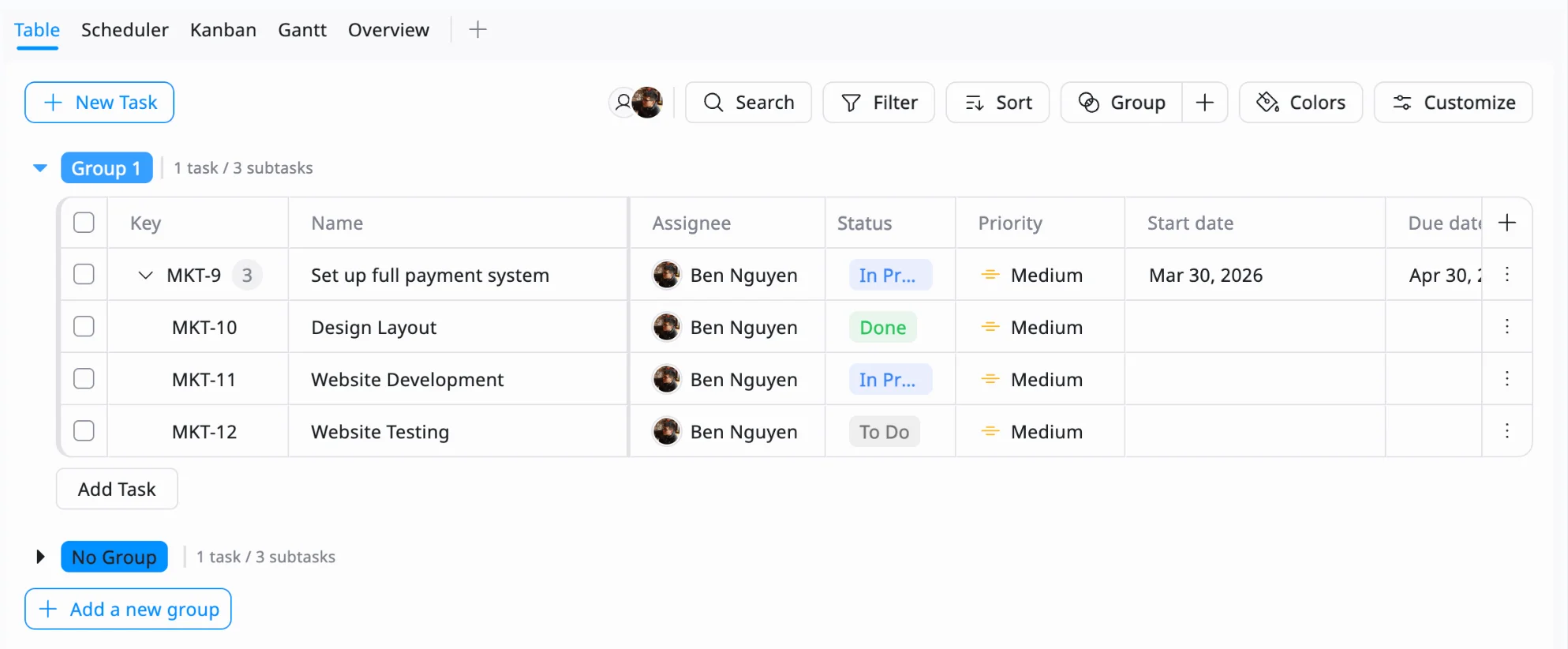
If tasks don’t match the sprint length, execution will break down later.
2. Track Execution in Kanban
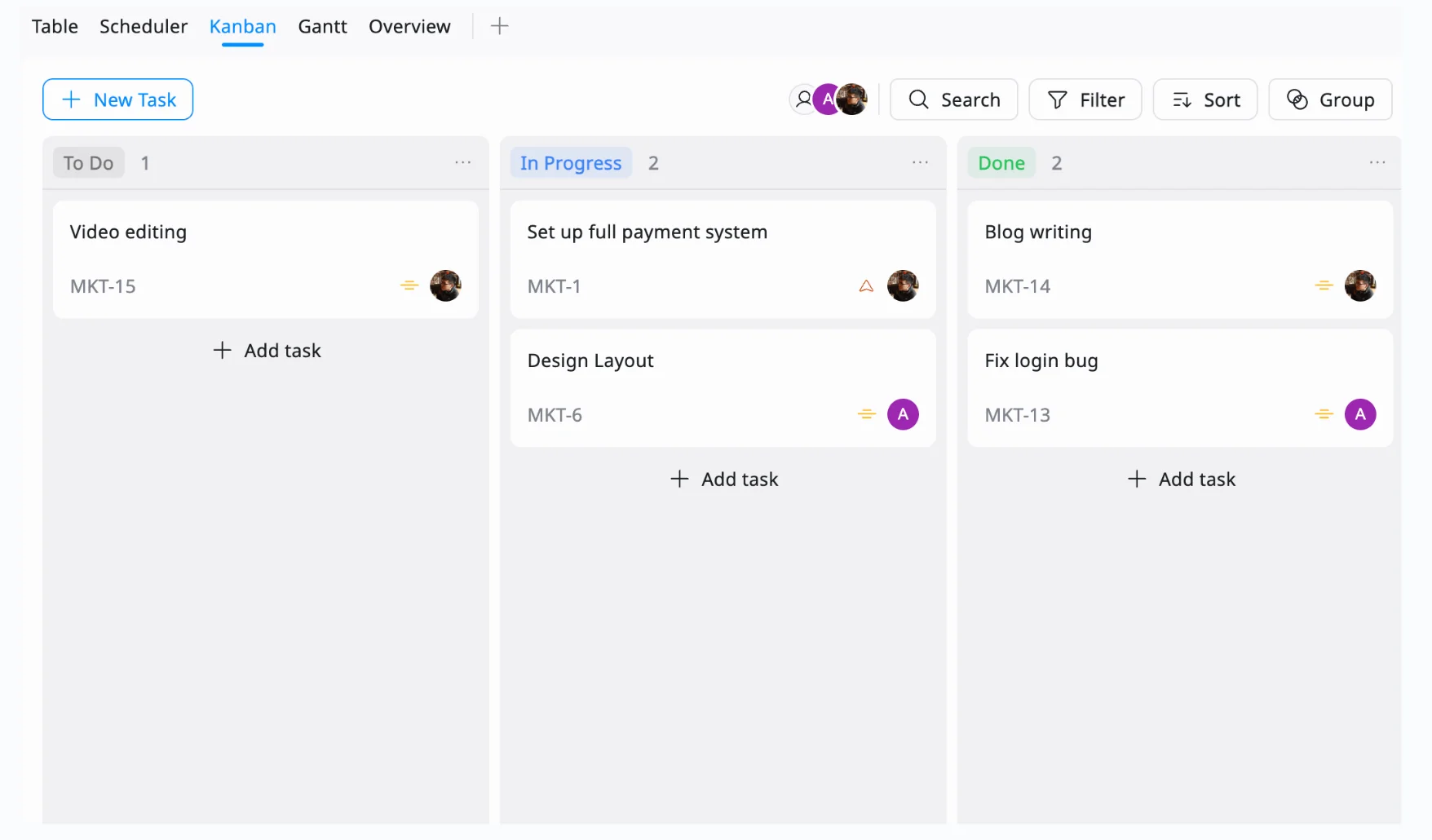
With Kanban, you can keep work moving consistently throughout the sprint. Here’s how you monitor how tasks flow across different types of sprints.
- 1-week sprints: Tasks should move quickly across columns, with most completed within a few days, and anything stuck in In Progress is a risk.
- 2-week sprints: Aim for a steady flow from start to finish, avoid starting too many tasks at once, and watch for mid-sprint slowdowns.
- 4-week sprints: Watch for slow starts and last-minute rushes, check progress regularly, and break down tasks that sit too long without movement.
Your Kanban board will quickly show if your sprint is too rushed or too slow.
3. Measure Performance in Reporting Dashboard
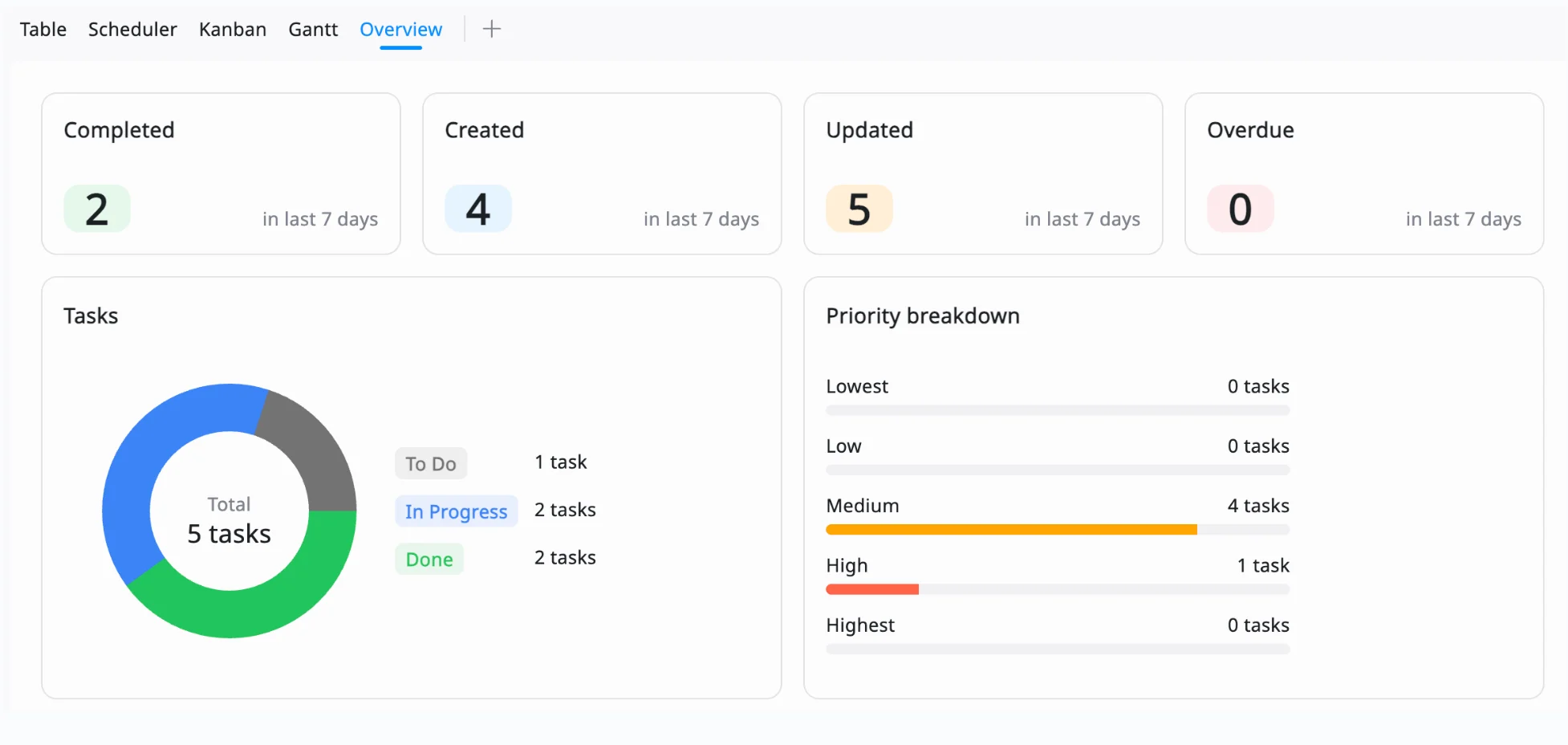
Use the Reporting Dashboard to evaluate results after or during the sprint.
- 1-week sprints: Track how many tasks are completed within the week and watch for unfinished tasks rolling over.
- 2-week sprints: Check for consistent progress across both weeks and avoid completion spikes only at the end.
- 4-week sprints: Monitor progress trends over time and watch for delayed completion or uneven delivery.
This helps you see whether your sprint length supports consistent delivery or not.
Frequently Asked Questions (FAQs)
1. What is the ideal sprint length in Agile?
There’s no single “best” sprint length, but most teams use 2 weeks as a standard. It offers a good balance between fast feedback and enough time to complete meaningful work.
2. Can sprint length be changed during a project?
Yes, but not frequently. Sprint length should stay consistent to maintain predictable velocity. If needed, adjust it between sprints based on team performance or project needs.
3. How does sprint length affect sprint velocity?
Shorter sprints provide quicker insights into velocity trends, while longer sprints may delay visibility but can stabilize output over time.
4. What happens if a team can’t finish work within a sprint?
Unfinished tasks are typically returned to the product backlog and reprioritized for the next sprint. This may also signal that the sprint scope or length needs adjustment.
5. How do you know if your sprint length is working?
If your team consistently delivers usable increments, meets sprint goals, and adapts quickly to feedback, your sprint length is likely effective. Frequent spillovers or rushed work may indicate it needs adjustment.
Conclusion: Finding Your Ideal Sprint Length
Choosing how long a sprint in Agile should be is a strategic decision that impacts project management, team morale, and delivery success. One-week sprints drive rapid feedback and adaptability but require intense focus. Two-week sprints offer a balanced approach, ideal for most teams and projects. Four-week sprints suit complex, stable projects but may sacrifice agility. By considering project complexity, team dynamics, and stakeholder needs, you can select a sprint length that maximizes value and keeps your team aligned with Agile principles.
Experiment with different durations, refine your sprint planning and sprint refinement processes, and use sprint reviews to assess what works best. Agile is about learning and adapting, so don’t be afraid to iterate on your sprint length to find the perfect fit for your team.
Related Articles
















How to Build and Manage a Product Roadmap with TaskFord

















How to Build a Connected Project Timeline in TaskFord












What Are the Best Jira Alternatives for Scrum Teams?



























How WBS Reveals Delivery Breakdown Before It’s Too Late











![How To Conduct a Profound Stakeholder Analysis [+ Free Template]](/marketing/blog/stakeholder-analysis.webp)



















What to Look for in Scrum Tools (Beyond Kanban Boards)



![Project Management Calendar for Teams and Managers [Free Templates]](/marketing/blog/project-management-calendar.webp)







How to Define Project Deliverables: A Step-by-Step Guide













![RACI Chart in Project Management: Rules & Examples [Free Download]](/marketing/blog/raci-chart.webp)



















![7 Must-Have Project Management Documents Every PO Should Know [Free Templates]](/marketing/blog/project-management-documents.webp)












![How to Create a Winning Project Plan for IT Projects [10 Steps Included]](/marketing/blog/how-to-create-a-project-plan.webp)




![Daily Standup Best Practices: Apply AI to Organize Meetings Successfully [2026 Trends]](/marketing/blog/daily-standup.webp)






![How to Create a Project Communication Plan: Step-by-Step Guide [+Free Template]](/marketing/blog/project-communication-plan.png)


![Master Project Procurement Management in 5 Steps [Download a free plan template]](/marketing/blog/project-procurement-management.webp)






































Subscribe for Expert Tips
Unlock expert insights and stay ahead with TaskFord. Sign up now to receive valuable tips, strategies, and updates directly in your inbox.