Project Planning: A Complete Guide for Large-Scale Project Success
Learn what project planning means in complex environments and discover advanced strategies to manage large-scale projects with greater control and predictable delivery.
If you search for project planning, you will find hundreds of checklists and templates.
But most of them focus on small, straightforward projects.
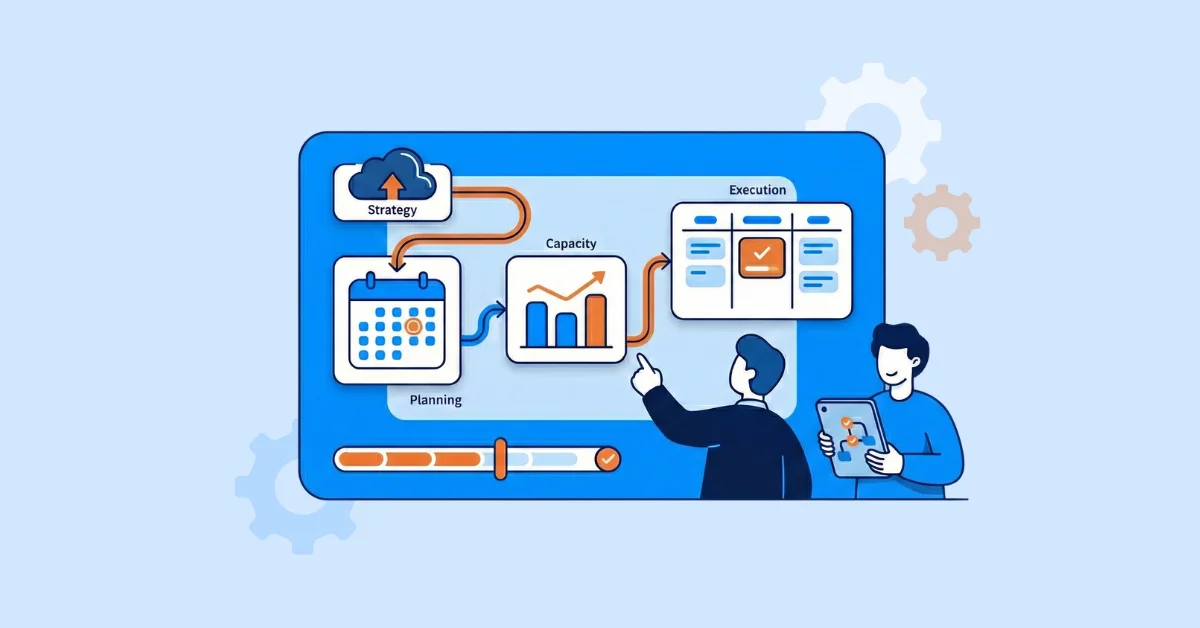
When you are planning a large-scale initiative — involving multiple teams, long timelines, strategic impact, and significant budgets — project planning becomes far more than creating a schedule. It becomes a structured system that connects strategy, resources, risks, and execution.
This guide will help you understand what project planning really means in complex environments — and how to do it effectively.
What Is Project Planning?
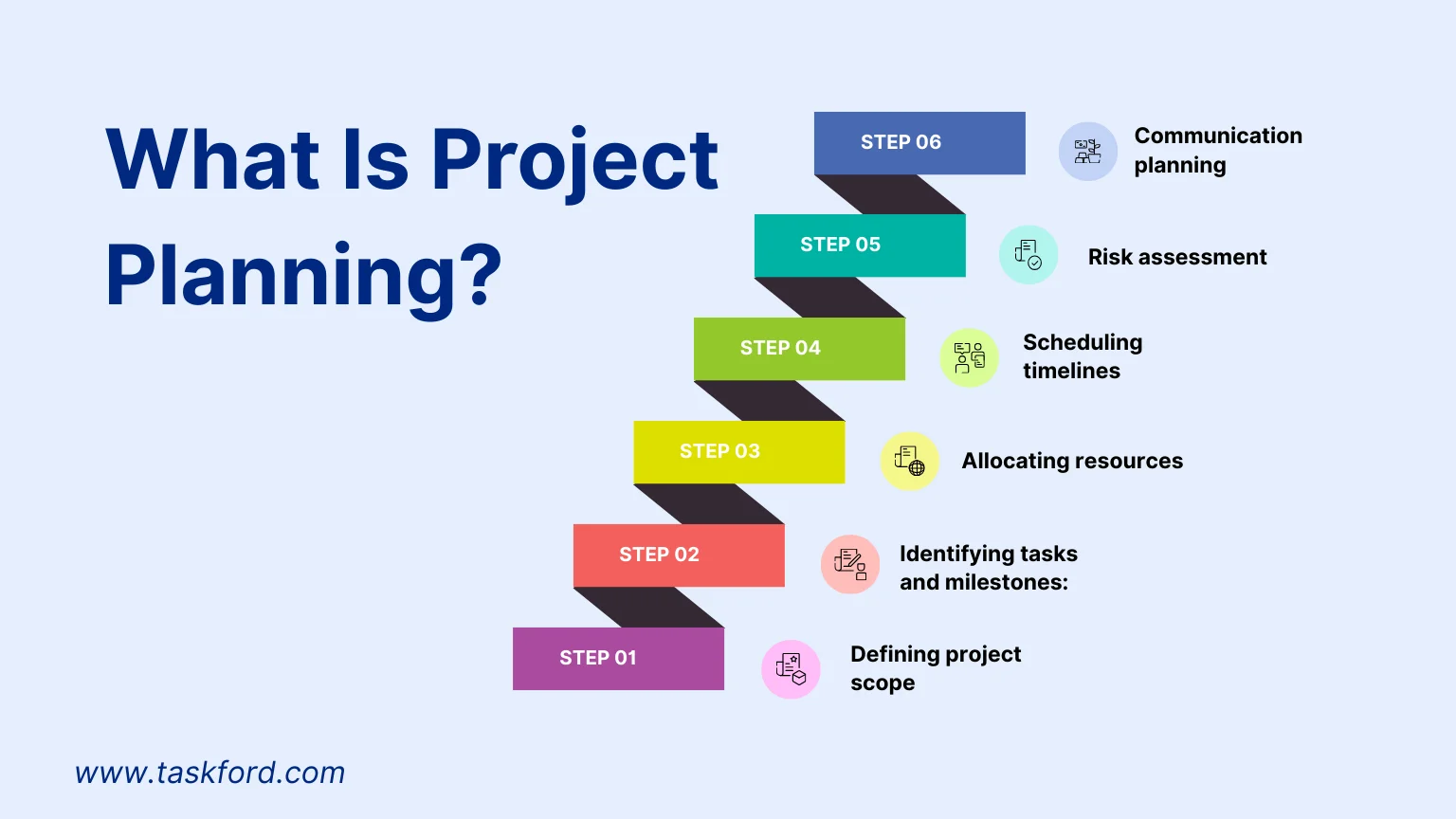
Project planning is the structured process of defining how a project will be executed, monitored, and delivered successfully.
It transforms a high-level idea or goal into a clear, actionable roadmap.
During project planning, teams determine:
- Project objectives and success criteria
- Scope and deliverables
- Tasks and milestones
- Timeline and schedule
- Resource allocation
- Budget estimates
- Risks and mitigation strategies
- Communication and governance structure
Project planning answers three critical questions:
- What needs to be done?
- Who will do it?
- When and how will it be completed?
For small projects, planning might be a simple task list. For large-scale projects, it becomes a structured system that aligns strategy, resources, dependencies, and risk control.
Why Project Planning Is Critical for Large-Scale Projects
In large-scale projects, complexity does not increase gradually — it multiplies.
You are often managing:
- Multiple departments working in parallel
- Cross-functional dependencies that must align perfectly
- External vendors and stakeholders with separate timelines
- Regulatory or compliance requirements
- Long delivery horizons with evolving priorities
Without structured project planning, small coordination gaps quickly escalate.
The result?
- Deadlines start to slip
- Dependencies break down
- Resources become overloaded
- Budgets exceed projections
- Leadership loses visibility and confidence
Detailed project planning brings structure to this complexity. It clarifies ownership, validates timelines against capacity, maps dependencies, and anticipates risk before execution begins.
For large-scale initiatives, strong project planning is not optional — it is what turns uncertainty into controlled, predictable delivery.
The Core Elements of Effective Project Planning
Effective project planning is not just about building a timeline. It is about designing a structured system that guides execution, manages risk, aligns stakeholders, and protects delivery outcomes.
Below are the essential elements every strong project planning process should include.
1. Clear Objectives and Defined Scope
Every project must start with clarity. What is the goal? What does success look like? What are the expected deliverables?
Just as important is defining what is not included. Clear scope boundaries prevent confusion and reduce scope creep. When everyone agrees on the objective and limits, execution becomes more focused and controlled.
Learn more: Scope in Project Management - How to Write a Scope That Works
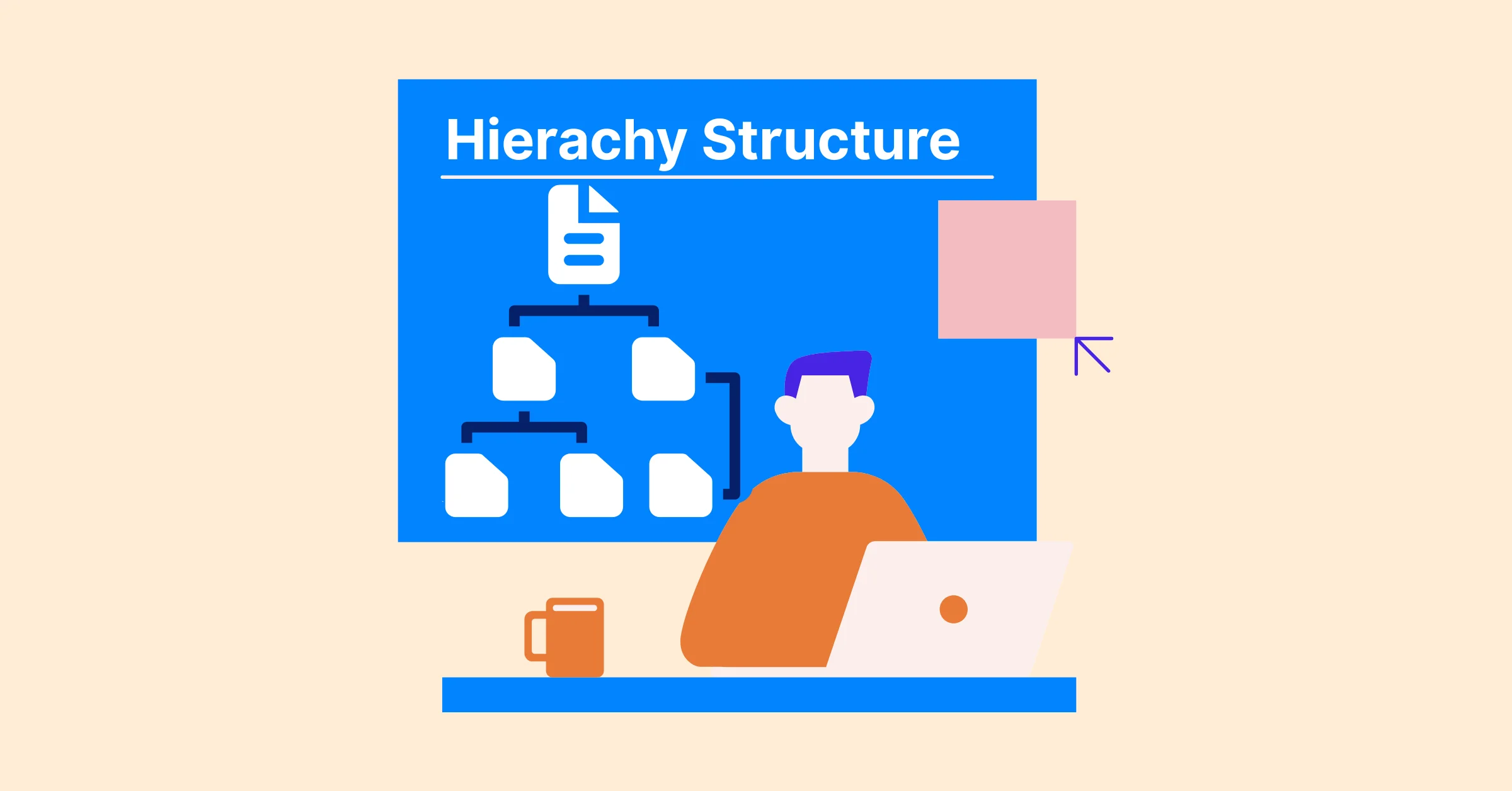
2. Work Breakdown Structure (WBS)
Large projects cannot be managed as a single block of work. A Work Breakdown Structure helps decompose the project into:
- Phases
- Major deliverables
- Specific tasks
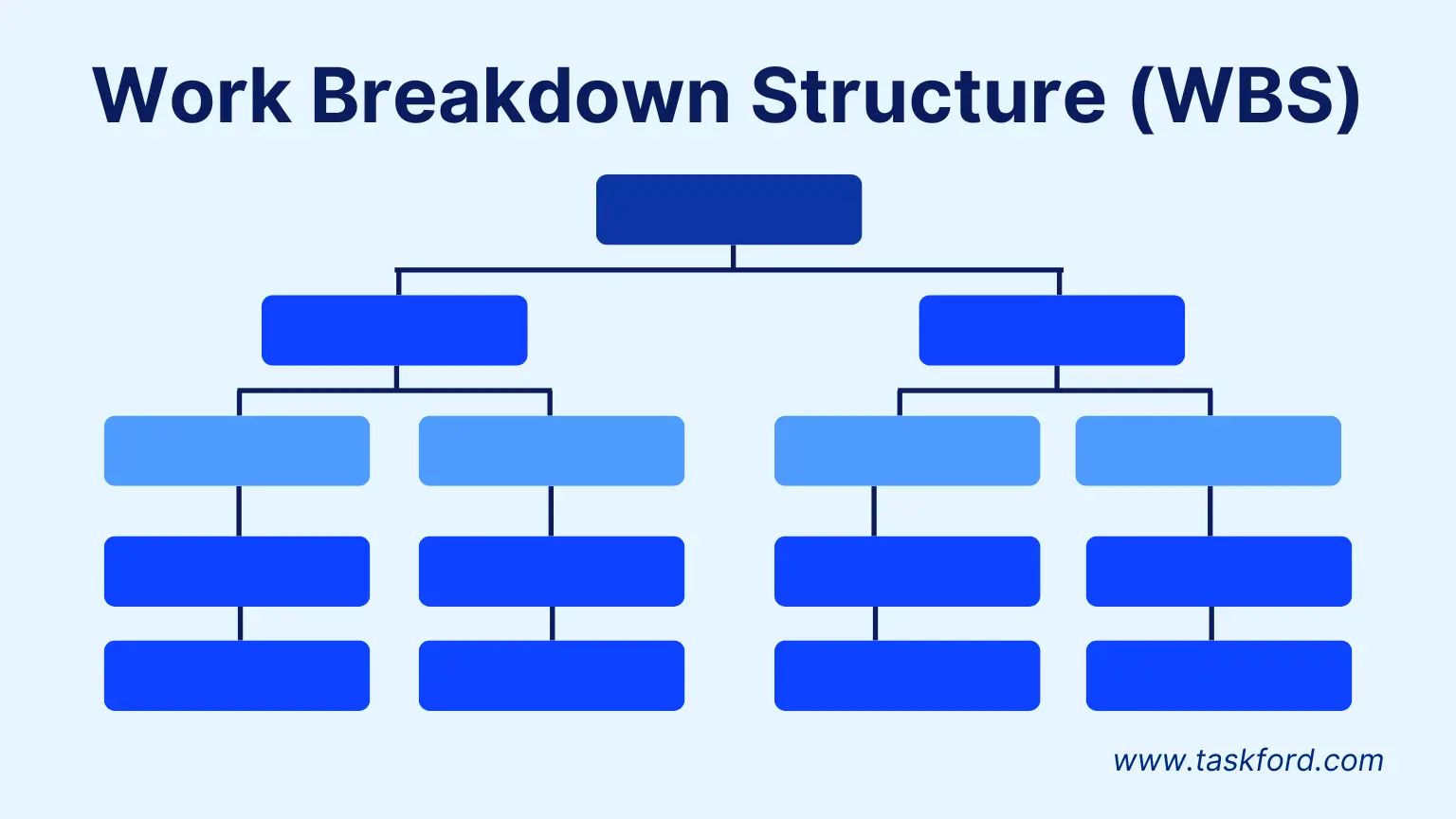
This structured breakdown improves estimation accuracy, clarifies ownership, and ensures no critical work is missed.
3. Realistic Project Schedule
A project schedule is more than a list of dates. Effective project planning includes:
- Task sequencing
- Duration estimates
- Milestones
- Critical path analysis
- Float and buffer management
Instead of setting optimistic deadlines, validate the schedule against real constraints such as dependencies, resource capacity, and external approvals.
Learn more: The Ultimate Guide to Project Scheduling - Your Key to Project Management Success.
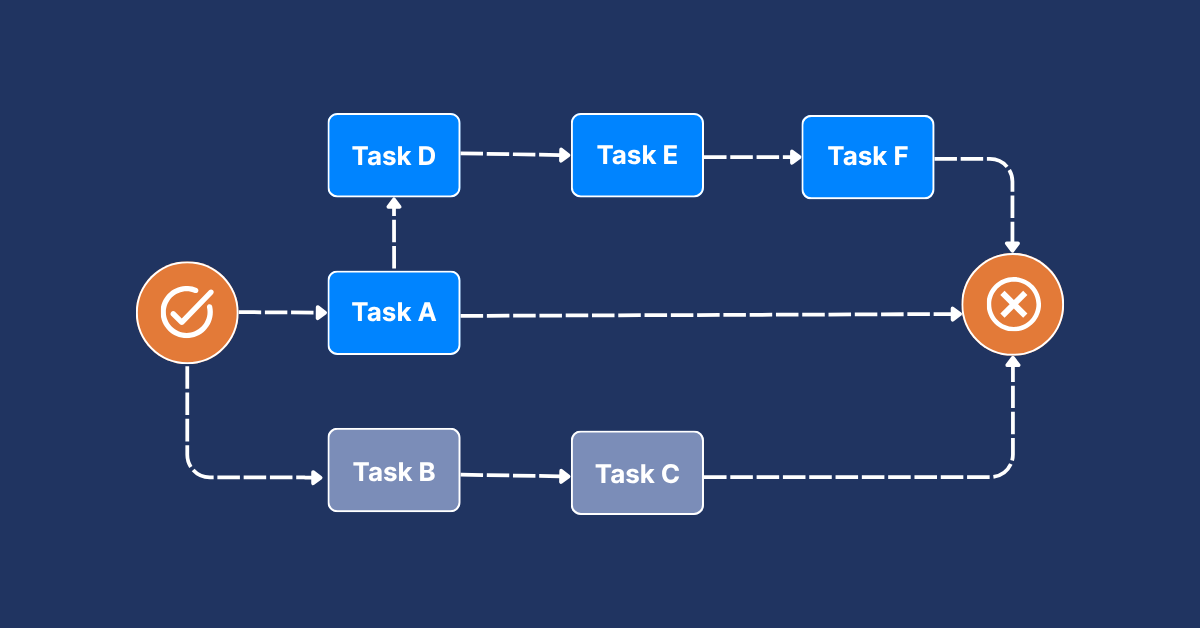
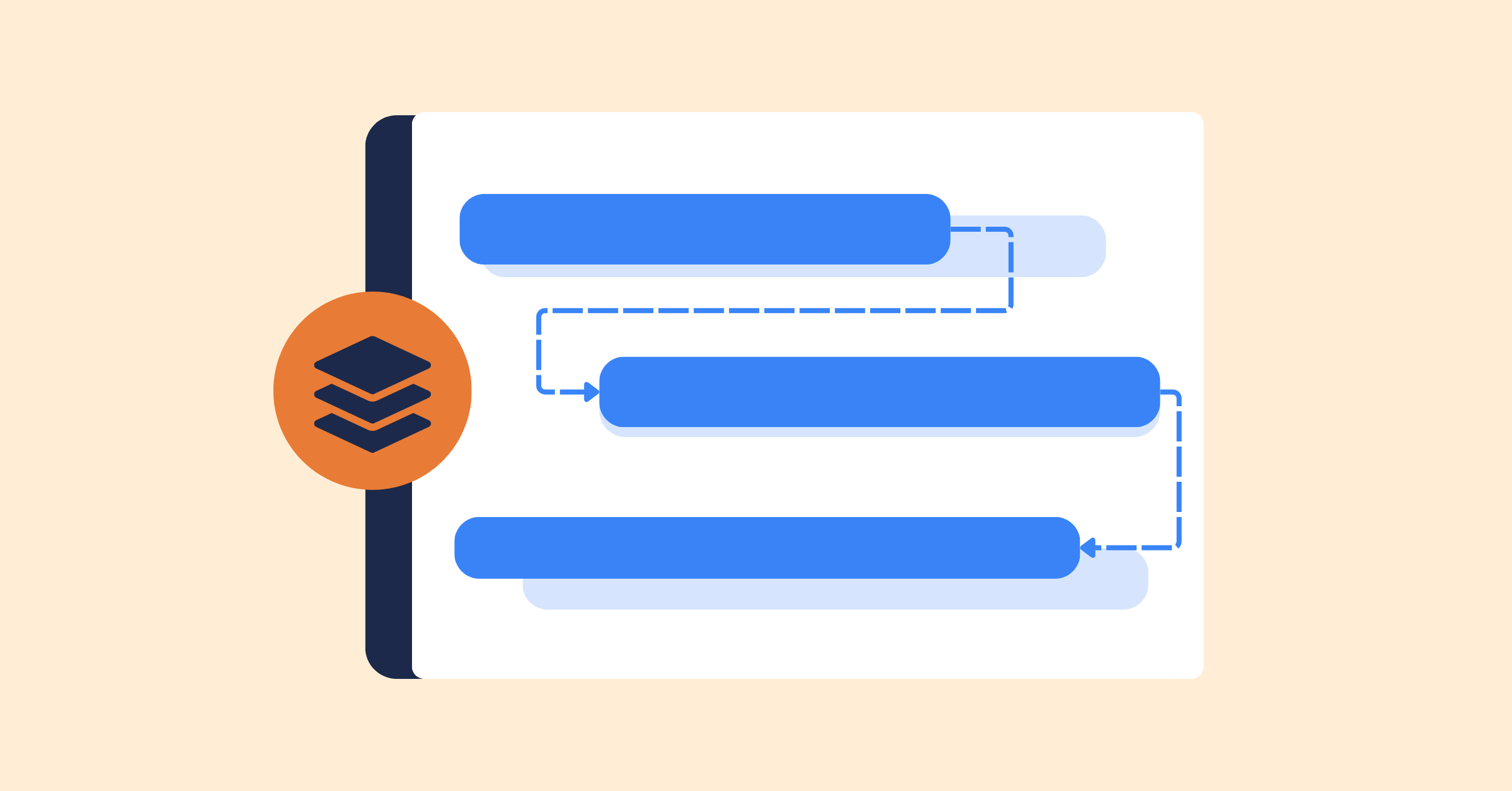
4. Dependency Mapping
In large projects, tasks are connected. One team’s output often becomes another team’s input.
If these connections are not identified early, delays spread quickly. Mapping dependencies helps teams understand how work flows and where bottlenecks may appear. This reduces surprises during execution.
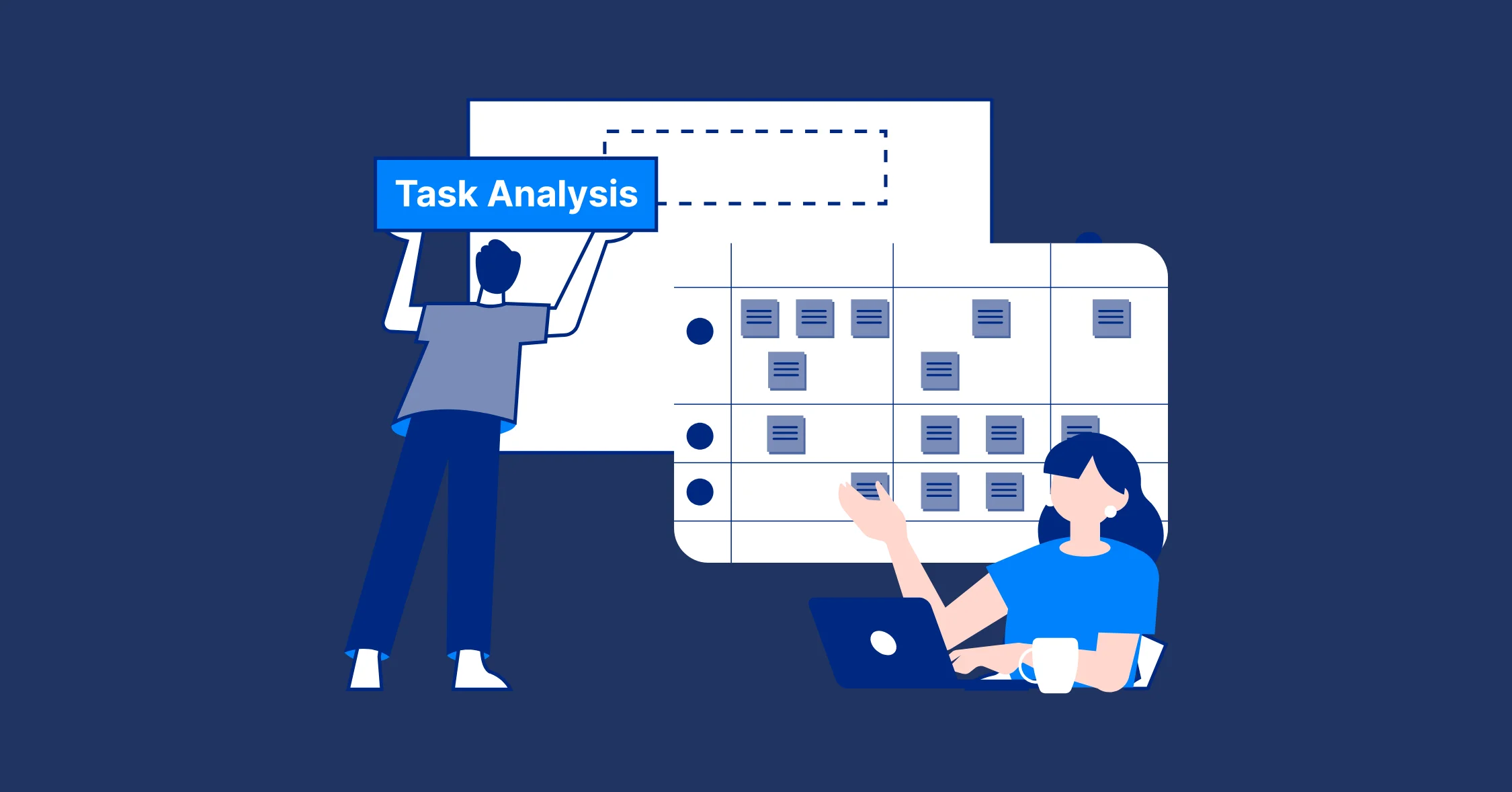
5. Resource and Capacity Planning
Projects are delivered by people, not plans.
Before finalizing the schedule, review team capacity. Do people have enough time? Are they working on other projects? Do they have the right skills?
Ignoring capacity leads to overload and missed deadlines. Planning with real availability in mind makes delivery more reliable.
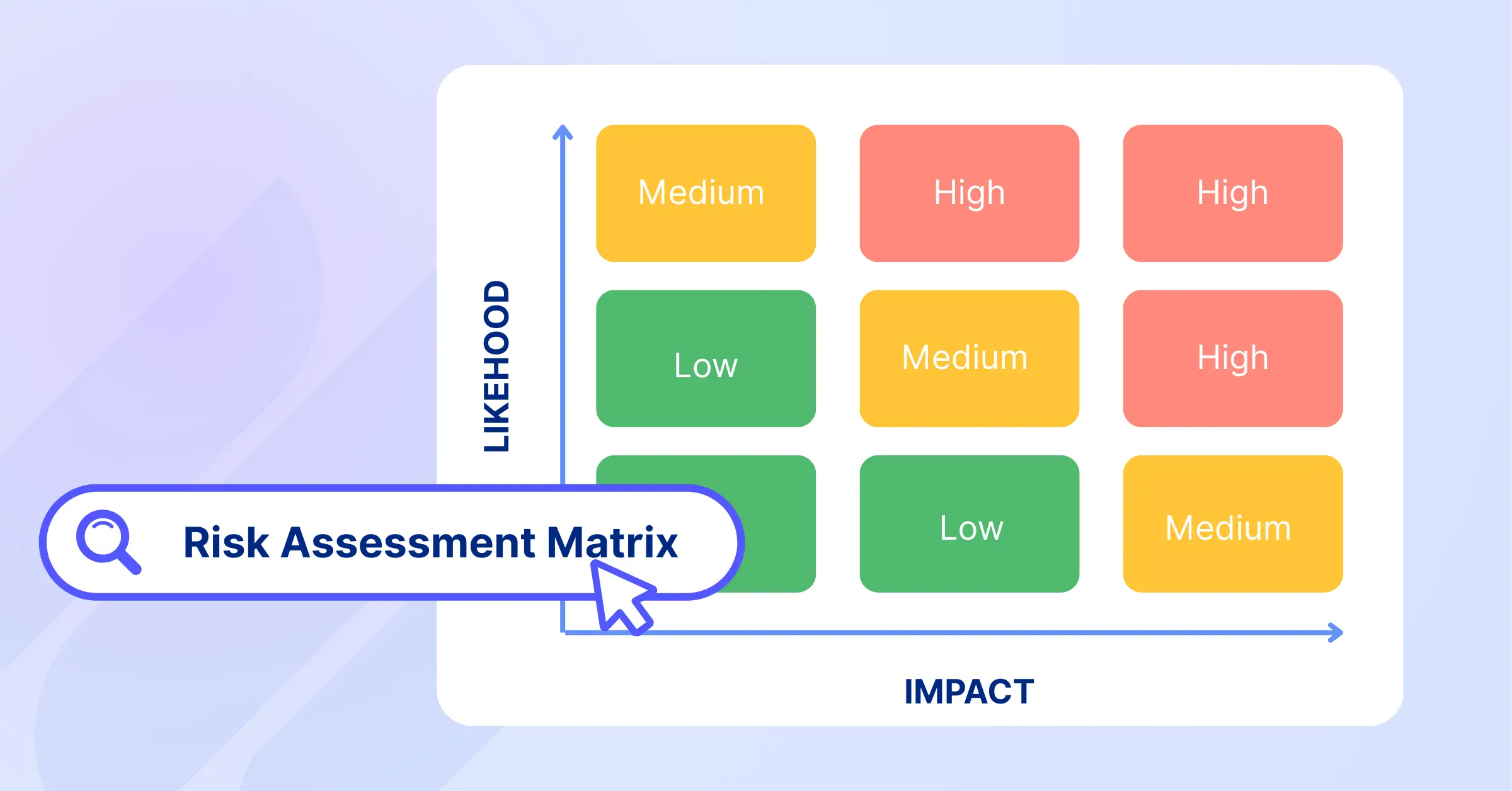
6. Integrated Risk Planning
Every project carries risk. Instead of hoping nothing goes wrong, identify potential issues early.
Ask:
- What could delay us?
- What could increase cost?
- What external factors might impact delivery?
When risks are identified in advance, mitigation strategies can be built into the plan. This increases resilience and control.
Learn more: Risk Management Plan Checklist: Everything You Need to Cover
7. Governance and Communication
Large-scale projects require structure. Clear decision-making authority, regular reporting, and defined communication channels keep everyone aligned.
Without governance, even a good plan can fall apart during execution. With clear oversight, issues are addressed quickly and accountability is maintained.
Advanced Project Planning Tips for Complex Projects
Large-scale projects require more than standard planning techniques. As complexity increases — with multiple teams, long timelines, and high strategic impact — planning must become more structured, data-driven, and adaptive.
Below are refined and practical advanced project planning techniques used in complex environments.
Tip #1. Plan at Multiple Levels, Not Just One Timeline
Large-scale projects cannot be controlled with a single high-level timeline. One view is never enough.
Advanced project planning starts with a Work Breakdown Structure (WBS) — a structured method for breaking the project into smaller, manageable components.
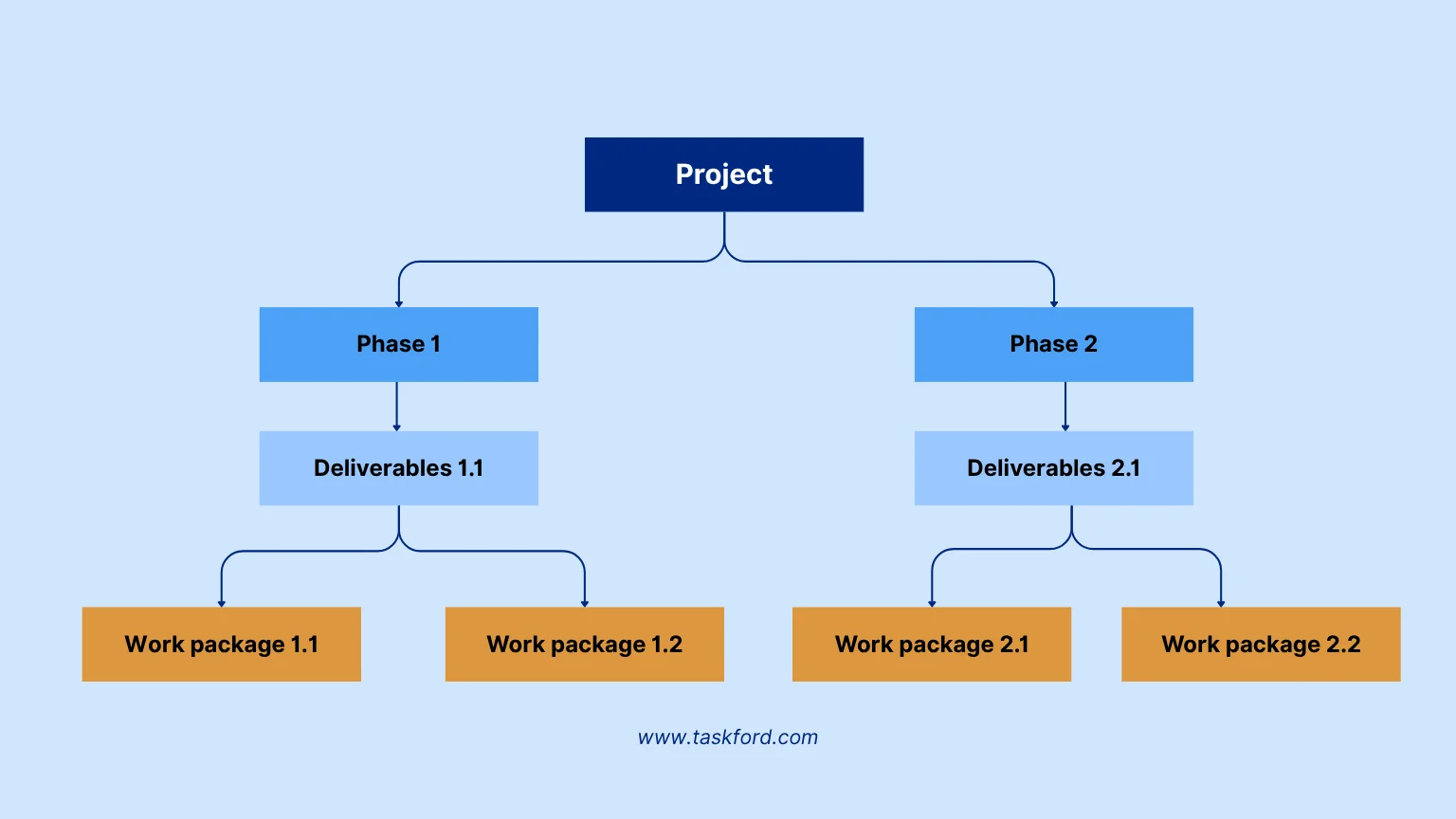
A WBS organizes the project into:
- Major phases
- Key deliverables
- Work packages
- Detailed tasks
This structured breakdown allows you to plan at multiple levels without losing alignment.
- At the top level, leadership sees strategic milestones and business outcomes.
- At the program level, managers track deliverables and cross-team dependencies.
- At the execution level, teams focus on clearly defined tasks.
Using a WBS ensures that complexity is reduced systematically. It improves estimation accuracy, clarifies ownership, and creates a scalable planning structure.
Without this layered approach, project plans either lack enough detail to guide teams or contain too much detail to support decision-making.
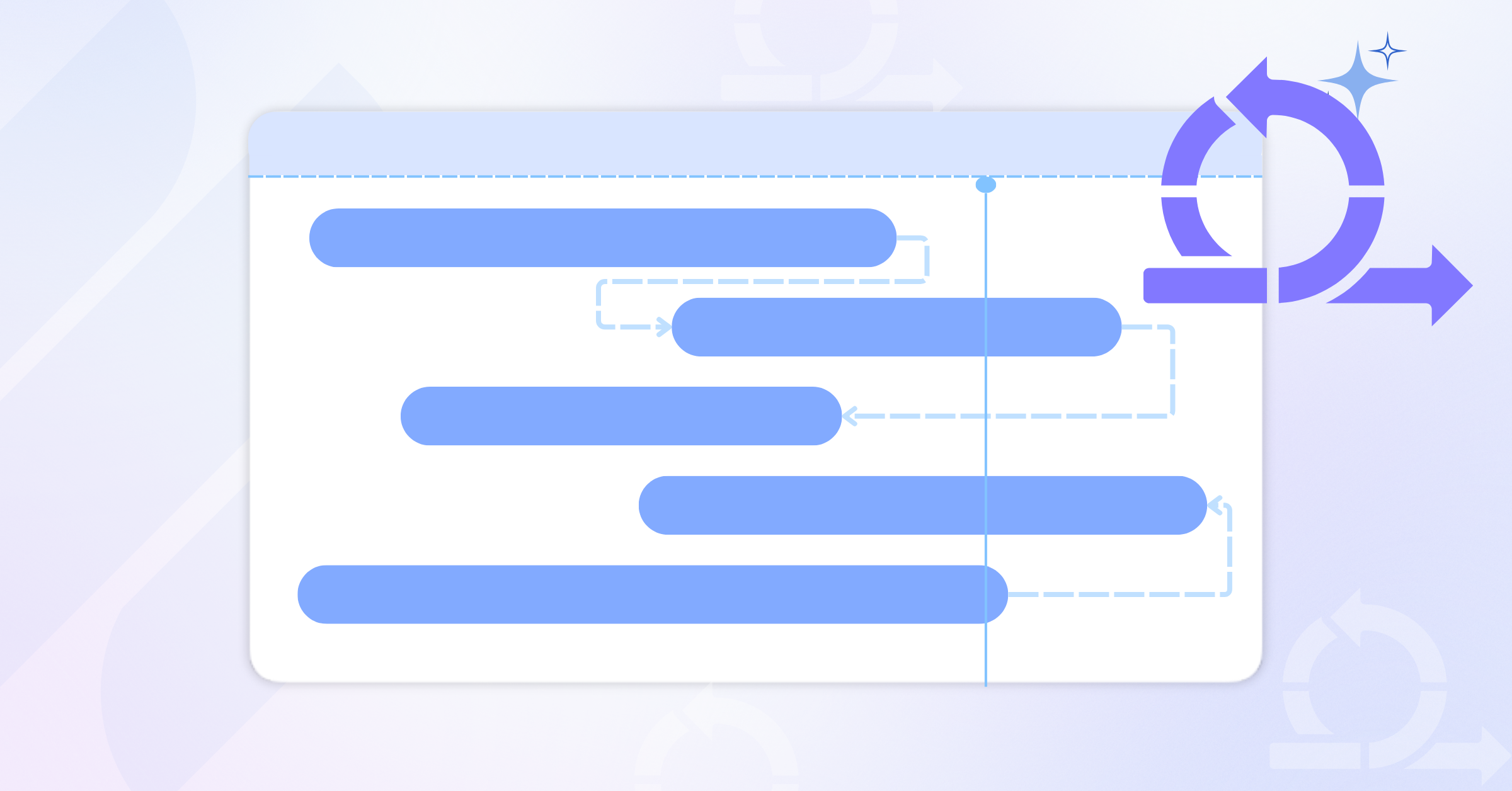
Tip #2. Design Dependencies Early
In large projects, delays often happen because task relationships were not clearly defined.
Many activities depend on others. One team may need to complete its work before another can begin. External approvals, vendors, or compliance steps can also affect progress.
Dependency mapping should be done at the beginning of project planning, not after execution starts.
Identify:
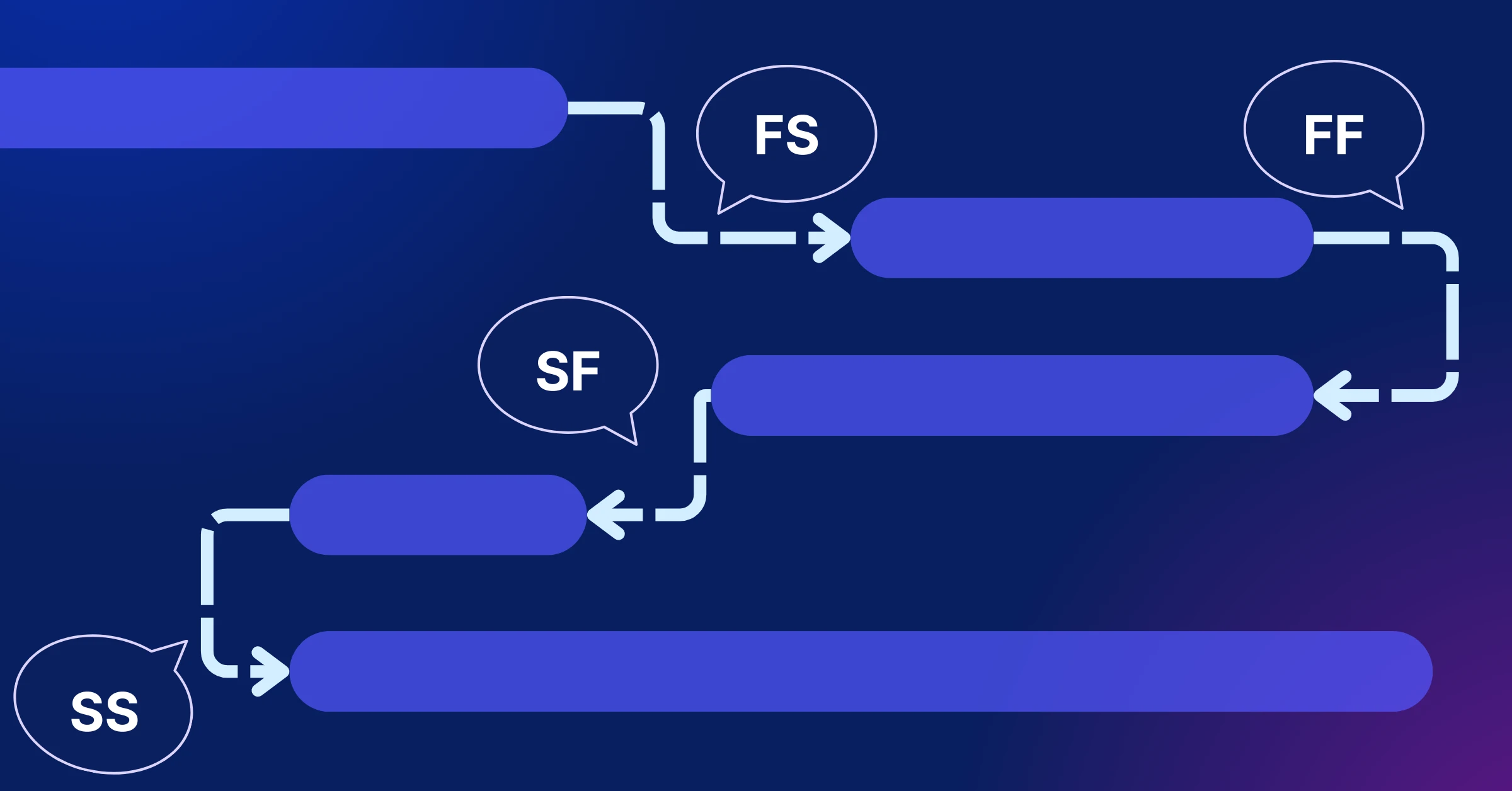
- Which tasks must be completed before others begin
- Where teams rely on each other
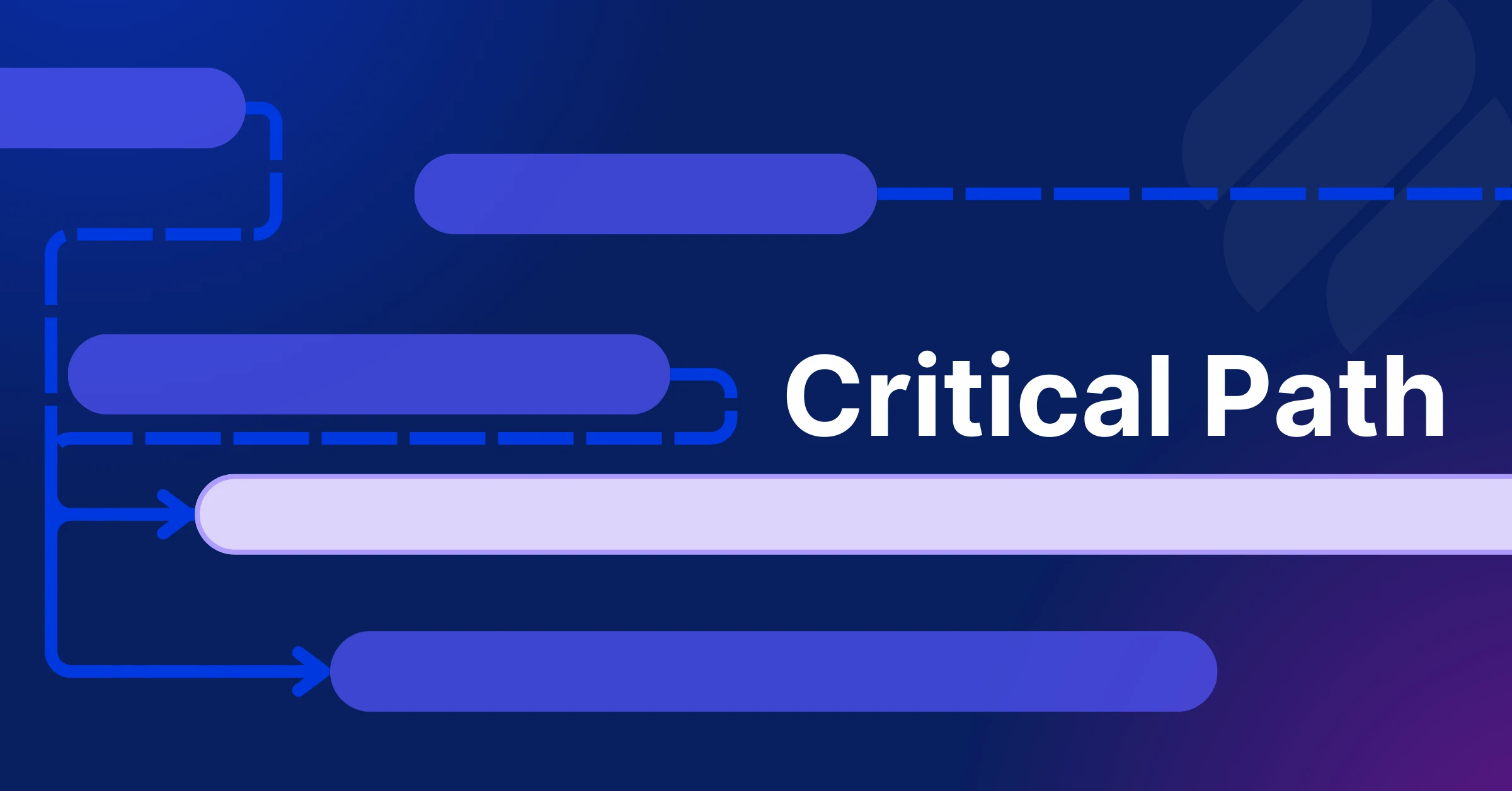
- Which sequence of tasks directly determines the final deadline (the critical path)
When dependencies are clearly mapped, coordination improves and delays are easier to control. In complex projects, understanding how work connects is just as important as defining the work itself.
Tip #3. Plan Resource Capacity – Not Just Task Assignments
In large-scale project planning, assigning tasks is not enough.
One of the most common mistakes is assuming that once a task has an owner, it will get done on time. But in reality, people are often working across multiple projects, handling operational responsibilities, and responding to unexpected demands.
Effective project planning requires capacity validation before timelines are finalized.
Instead of only asking “Who is responsible?”, also ask:
- How many hours per week are actually available?
- What other projects is this person committed to?
- Do they have the right skill level for this task?
- Are we overloading critical roles?
Capacity planning helps you:
- Set realistic deadlines
- Prevent burnout
- Avoid bottlenecks around key specialists
- Improve delivery predictability
In large projects, resources are a constraint — not an unlimited asset. Planning around real capacity, rather than ideal assumptions, is what separates optimistic schedules from achievable ones.
Tip #4. Build Risk Buffers Intentionally (Not Emotionally)
In complex projects, uncertainty is unavoidable. Delays, scope changes, and external disruptions can all affect the timeline.
Simply adding extra time “just in case” is not effective. Buffers should be placed deliberately and based on real risk exposure.
Instead, build structured buffers based on real risk analysis:
- Add contingency buffers at the phase level
- Protect critical milestones with schedule float
- Set aside management reserve for strategic risks
- Identify high-uncertainty tasks early
The goal is not to eliminate risk. It is to absorb disruptions without collapsing the entire plan. When risk buffers are intentional and visible, your schedule becomes resilient — not optimistic.
Tip 5. Connect Planning to Ongoing Execution Control
The biggest mistake in large-scale planning?
Treating the plan as a document instead of a live system.
Advanced planning includes:
- Weekly variance reviews
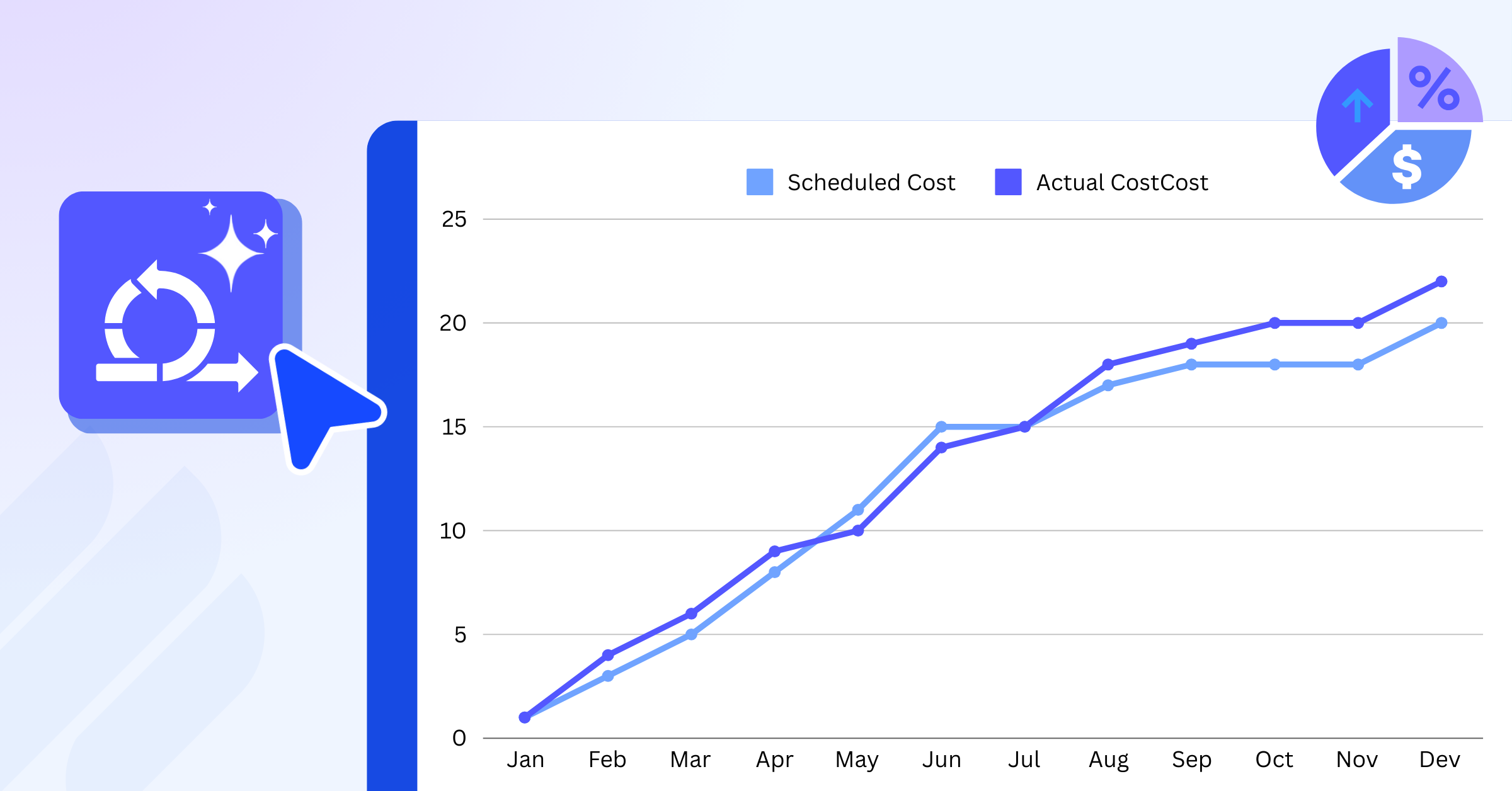
- Earned value or forecast tracking
- Rolling-wave planning (progressive detailing)
- Real-time status visibility
Planning does not stop at kickoff. It evolves as new data emerges.
Without continuous monitoring, even the best-designed plan will drift away from reality.
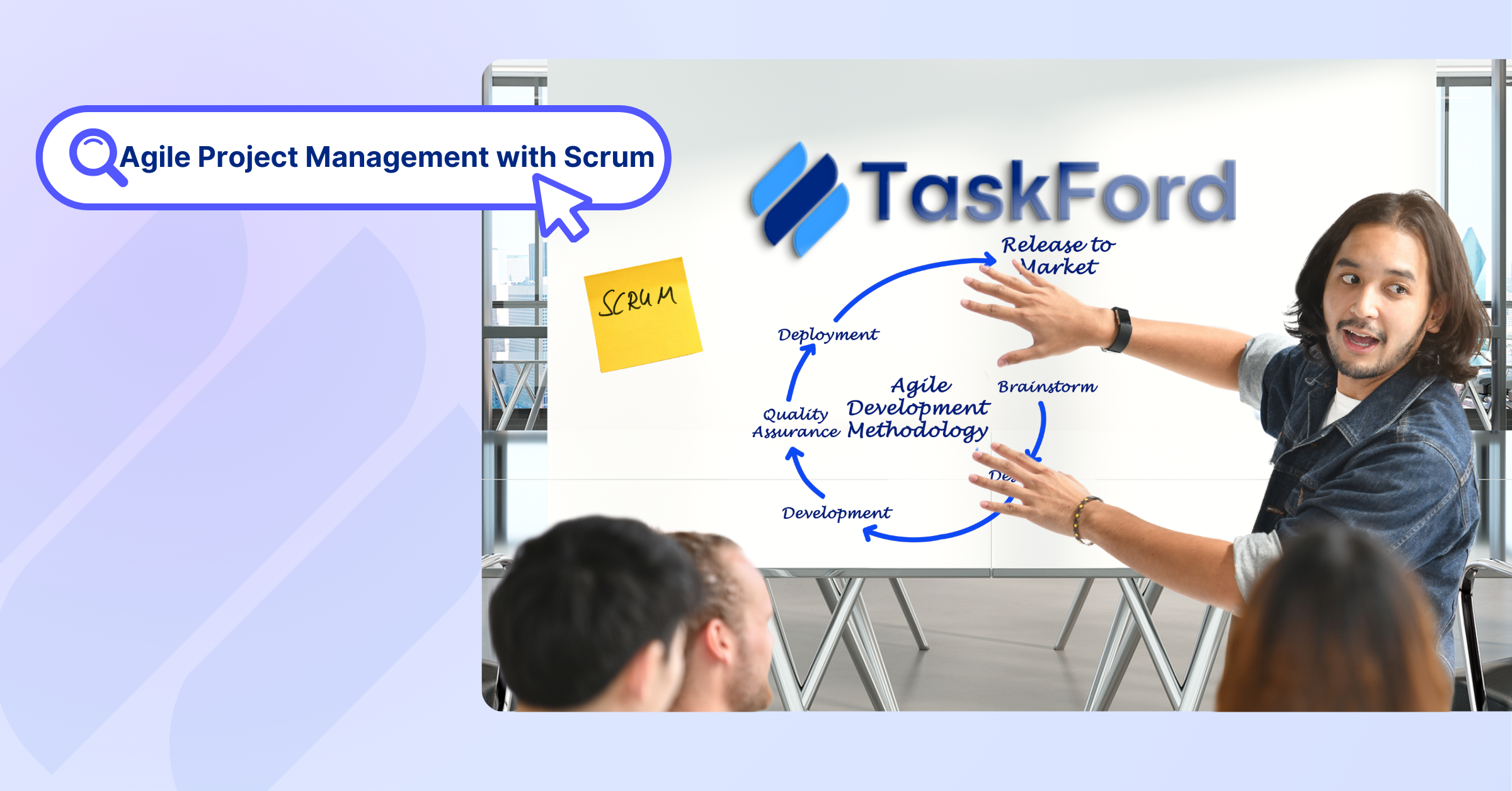
Tip #5. Use Scenario Planning and Agile Techniques
Large-scale projects rarely unfold exactly as planned.
Market conditions change. Priorities shift. Risks materialize. That’s why advanced project planning should not rely on a single fixed forecast.
Instead, use scenario planning:
- Model best-case, realistic, and worst-case timelines
- Test how resource changes affect delivery
- Identify which risks have the biggest impact
- Prepare response strategies in advance
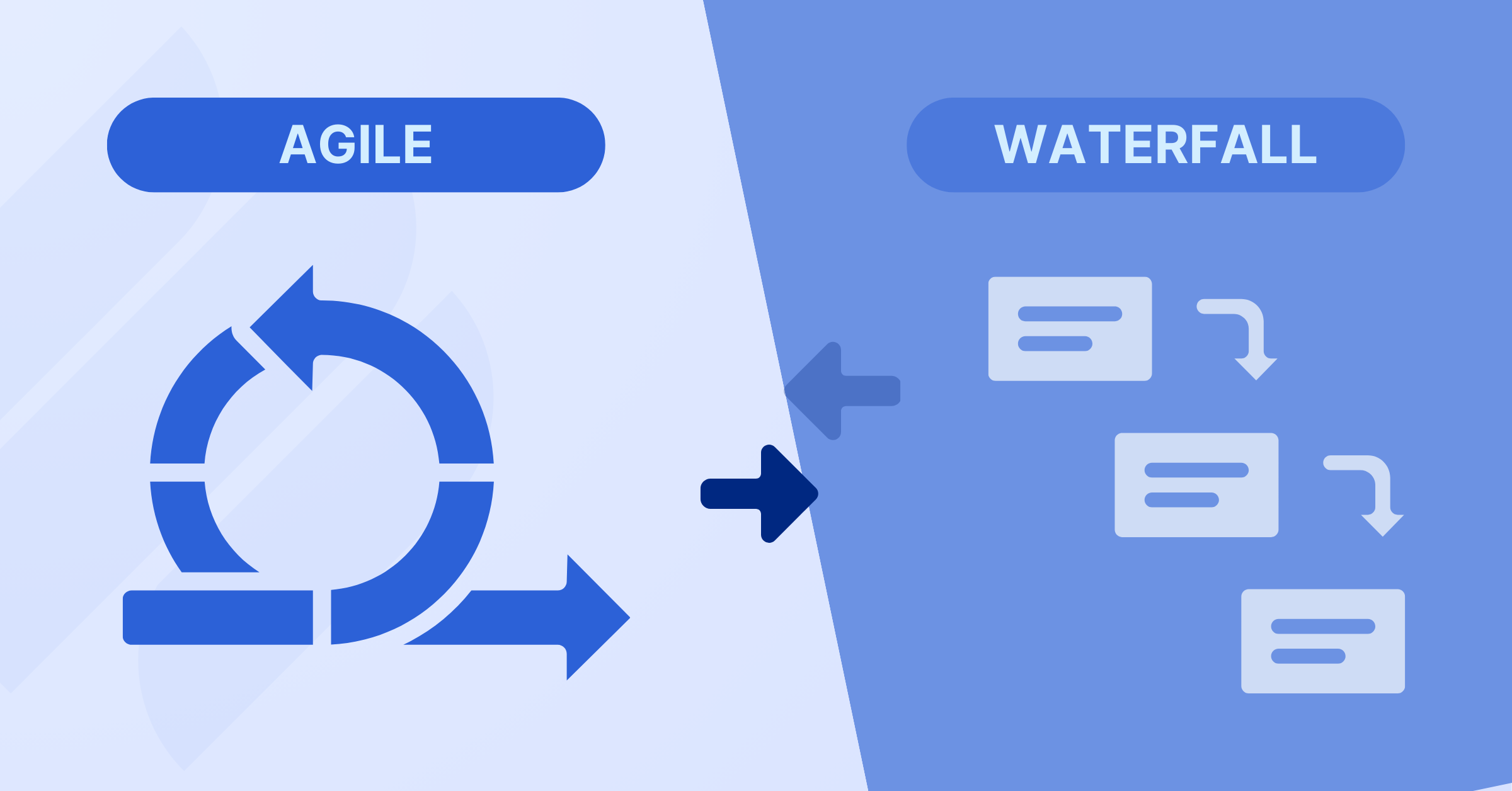
At the same time, apply agile techniques where possible:
- Break work into shorter delivery cycles
- Reprioritize based on real-time feedback
- Use rolling-wave planning to refine future phases
- Continuously reforecast outcomes
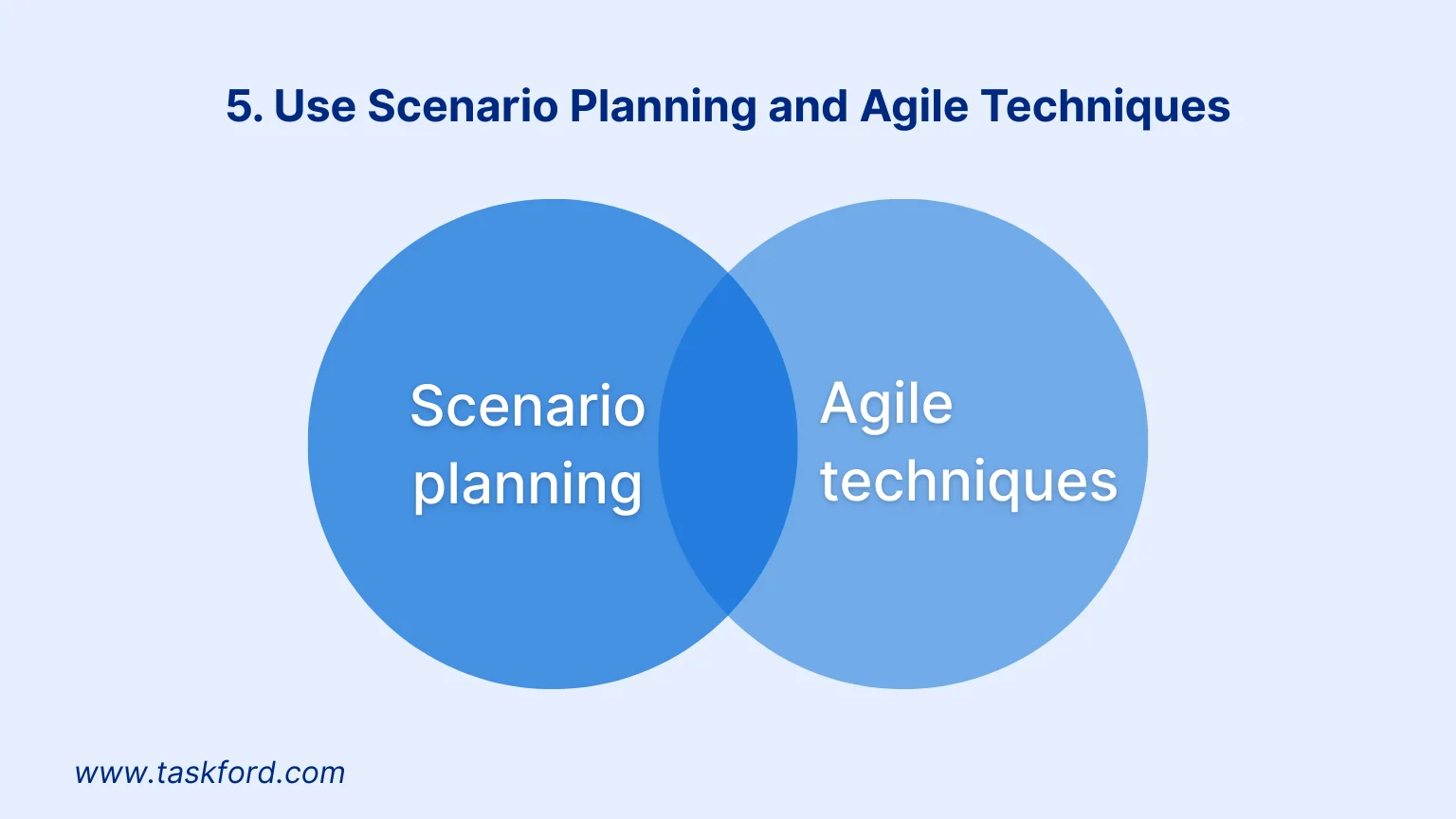
Scenario planning builds resilience. Agile techniques add adaptability.
Together, they make large-scale project planning more flexible, data-driven, and responsive to change — without losing overall strategic control.
How TaskFord Strengthens Project Planning at Scale
Large-scale project planning often fails not because the strategy is wrong — but because execution is disconnected from the plan.
As projects expand, teams struggle with:
- Multiple versions of timelines
- Unclear ownership across departments
- Resource conflicts between parallel initiatives
- Delayed visibility into delivery risks
TaskFord addresses these challenges by serving as an Integrated Work Delivery Platform that connects planning directly to execution.
With TaskFord, organizations can:
- Connect strategic objectives directly to project milestones
- Visualize cross-project dependencies in real time to prevent bottlenecks
- Plan and validate resource capacity before committing to deadlines
- Monitor workload distribution to prevent overload
- Track progress against plans with live data
- Forecast delivery outcomes early based on execution trends
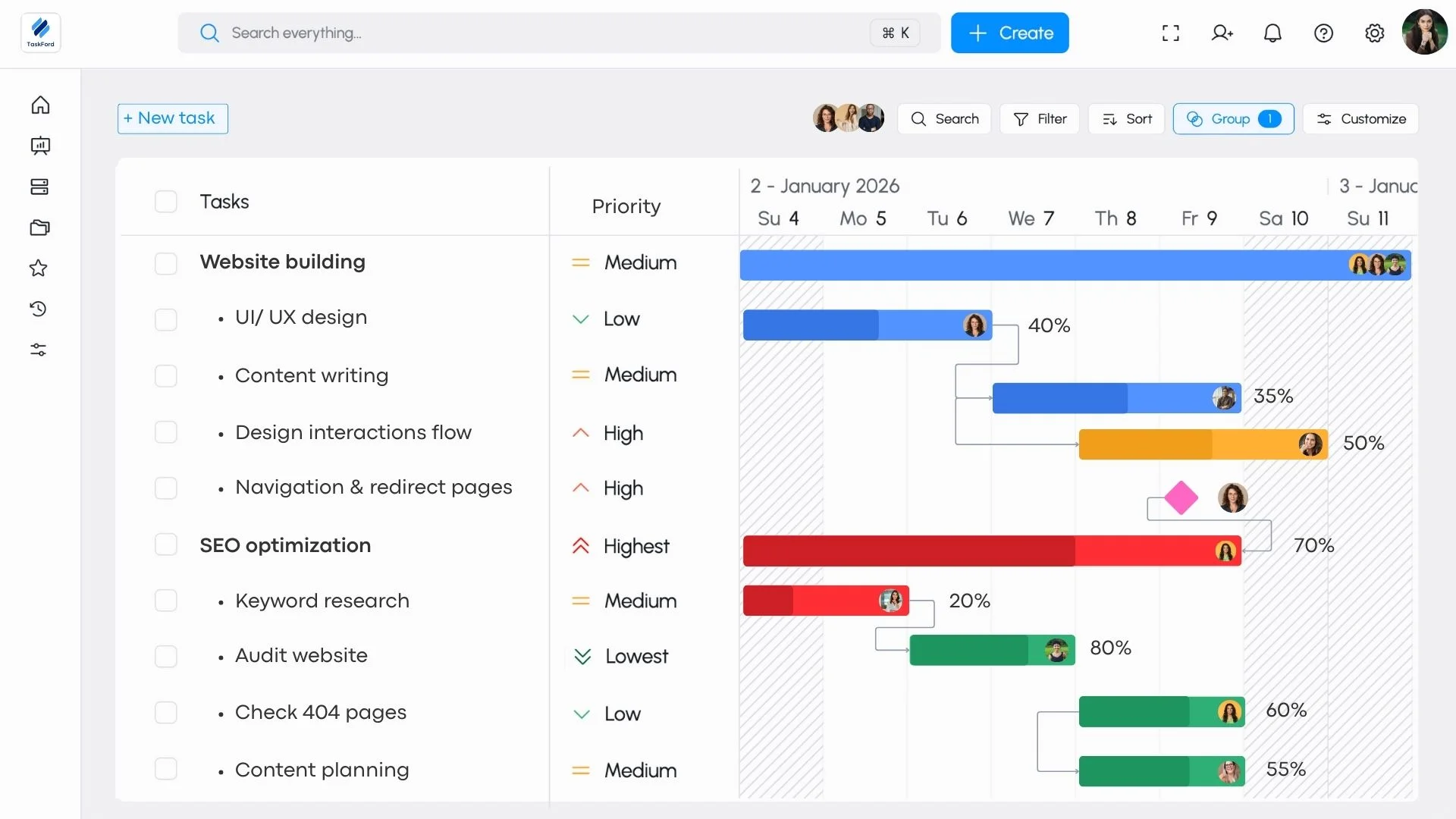
Instead of static project plans that become outdated, TaskFord enables dynamic planning that evolves as work progresses.
Conclusion
These five advanced tips - utilizing a Work Breakdown Structure, crafting a comprehensive resource management plan, embedding risk management, establishing clear communication channels, and leveraging scenario planning with agile techniques - provide project managers with a robust framework to navigate the complexities of large-scale projects. By implementing these strategies, you can enhance efficiency, reduce risks, and ensure alignment with project objectives.
Start integrating these approaches into your next project, refining them through consistent reviews and feedback.
Related Articles














How to Build and Manage a Product Roadmap with TaskFord














How to Build a Connected Project Timeline in TaskFord













What Are the Best Jira Alternatives for Scrum Teams?


























How WBS Reveals Delivery Breakdown Before It’s Too Late









![How To Conduct a Profound Stakeholder Analysis [+ Free Template]](/marketing/blog/stakeholder-analysis.webp)


















What to Look for in Scrum Tools (Beyond Kanban Boards)



![Project Management Calendar for Teams and Managers [Free Templates]](/marketing/blog/project-management-calendar.webp)







How to Define Project Deliverables: A Step-by-Step Guide










![RACI Chart in Project Management: Rules & Examples [Free Download]](/marketing/blog/raci-chart.webp)

















![7 Must-Have Project Management Documents Every PO Should Know [Free Templates]](/marketing/blog/project-management-documents.webp)











![How to Create a Winning Project Plan for IT Projects [10 Steps Included]](/marketing/blog/how-to-create-a-project-plan.webp)




![Daily Standup Best Practices: Apply AI to Organize Meetings Successfully [2026 Trends]](/marketing/blog/daily-standup.webp)







![How to Create a Project Communication Plan: Step-by-Step Guide [+Free Template]](/marketing/blog/project-communication-plan.png)


![Master Project Procurement Management in 5 Steps [Download a free plan template]](/marketing/blog/project-procurement-management.webp)
































Subscribe for Expert Tips
Unlock expert insights and stay ahead with TaskFord. Sign up now to receive valuable tips, strategies, and updates directly in your inbox.