7 Common Types of Risk in Project Management Every Manager Should Know
Explore 7 frequent risks in project management, offers practical examples, and shares actionable strategies to manage them, helping you keep your projects on track.
Project management involves navigating uncertainty to deliver successful outcomes. Risks - potential events that can derail a project - are a reality every manager must face. Understanding the common types of risks in project management is the first step to identifying, assessing, and mitigating them effectively.
This article explores seven frequent risks, offers practical examples, and shares actionable strategies to manage them, helping you keep your projects on track.
By addressing these risks proactively, you can minimize disruptions and improve project outcomes. Whether you’re managing a construction project, a software rollout, or a marketing campaign, these insights apply across industries. Let’s dive into the seven common types of risks every project manager should know.
What Are Project Management Risks?
Project management risks are uncertain events or conditions that may happen in the future and could affect a project’s scope, timeline, budget, quality, or overall goals—either positively or negatively.
In simple terms, a risk is something that might happen and could impact your project.
Risks can come from inside or outside the project:
- Internal risks – such as team conflicts, skill gaps, or resource shortages
- External risks – such as regulatory changes, market shifts, or supplier delays
Not all risks have the same level of importance. Some are unlikely but highly damaging, while others are more likely but have a smaller impact. That’s why it’s important to identify, assess, and prioritize risks early.
Having a clear risk management plan — supported by tools like a risk register or project management software, helps teams stay prepared, reduce surprises, and protect project outcomes.
Why You Need to Find the Risks Early
Identifying project risks early gives your team time to prepare before small issues become major problems. Instead of reacting to unexpected setbacks, you can plan responses, allocate resources effectively, and keep the project moving forward. Here are some of the biggest benefits of identifying risks early:
- Prevent costly surprises: Recognizing potential issues before they occur helps avoid unexpected delays, budget overruns, and last-minute changes.
- Improve decision-making: Understanding the risks allows project managers to make informed decisions about priorities, timelines, and resource allocation.
- Protect project objectives: Early risk identification makes it easier to keep the project aligned with its scope, schedule, budget, and quality goals.
- Increase stakeholder confidence: When stakeholders see that risks are being actively managed, they have greater confidence in the project’s success.
- Create effective contingency plans: Knowing what could go wrong gives your team time to develop mitigation strategies instead of scrambling to respond after problems arise.
- Reduce overall project uncertainty: While risks can’t always be eliminated, identifying them early makes projects more predictable and easier to manage.
Finding risks isn’t about expecting failure. It’s about being prepared. The earlier you identify potential threats, the more options you have to reduce their impact and keep your project on track.
7 Common Types of Risk in Project Management
This section outlines seven prevalent risks that can impact any project, from scope creep to external disruptions. Each risk type is explained with practical examples and actionable strategies to help project managers identify and mitigate them effectively, ensuring smoother project execution.
1. Scope Risk
What Is Scope Risk?
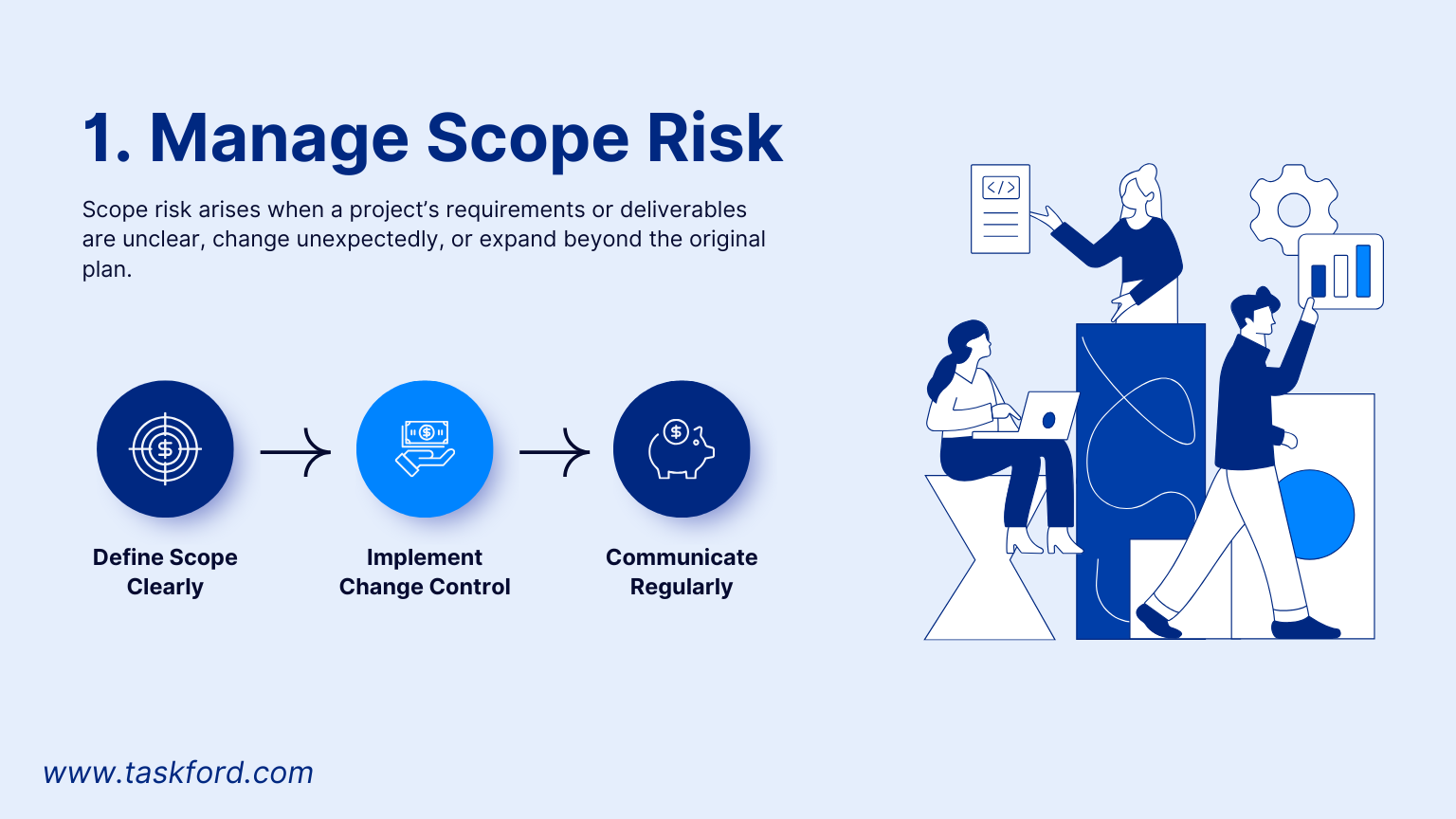
Scope risk arises when a project’s requirements or deliverables are unclear, change unexpectedly, or expand beyond the original plan - a phenomenon often called scope creep. This risk can lead to delays, budget overruns, and unmet expectations.
Example of Scope Risk
In a website development project, the client may request additional features, like a new payment gateway, after development begins. Without proper change management, these additions stretch resources and timelines, causing frustration.
How to Manage Scope Risk
- Define Scope Clearly: Use a detailed project charter and get stakeholder sign-off.
- Implement Change Control: Establish a formal process for approving scope changes.
- Communicate Regularly: Hold status meetings to align expectations with stakeholders.
Read Also: How to Use a Risk Assessment Matrix for Smarter Project Planning
2. Cost Risk
What Is Cost Risk?
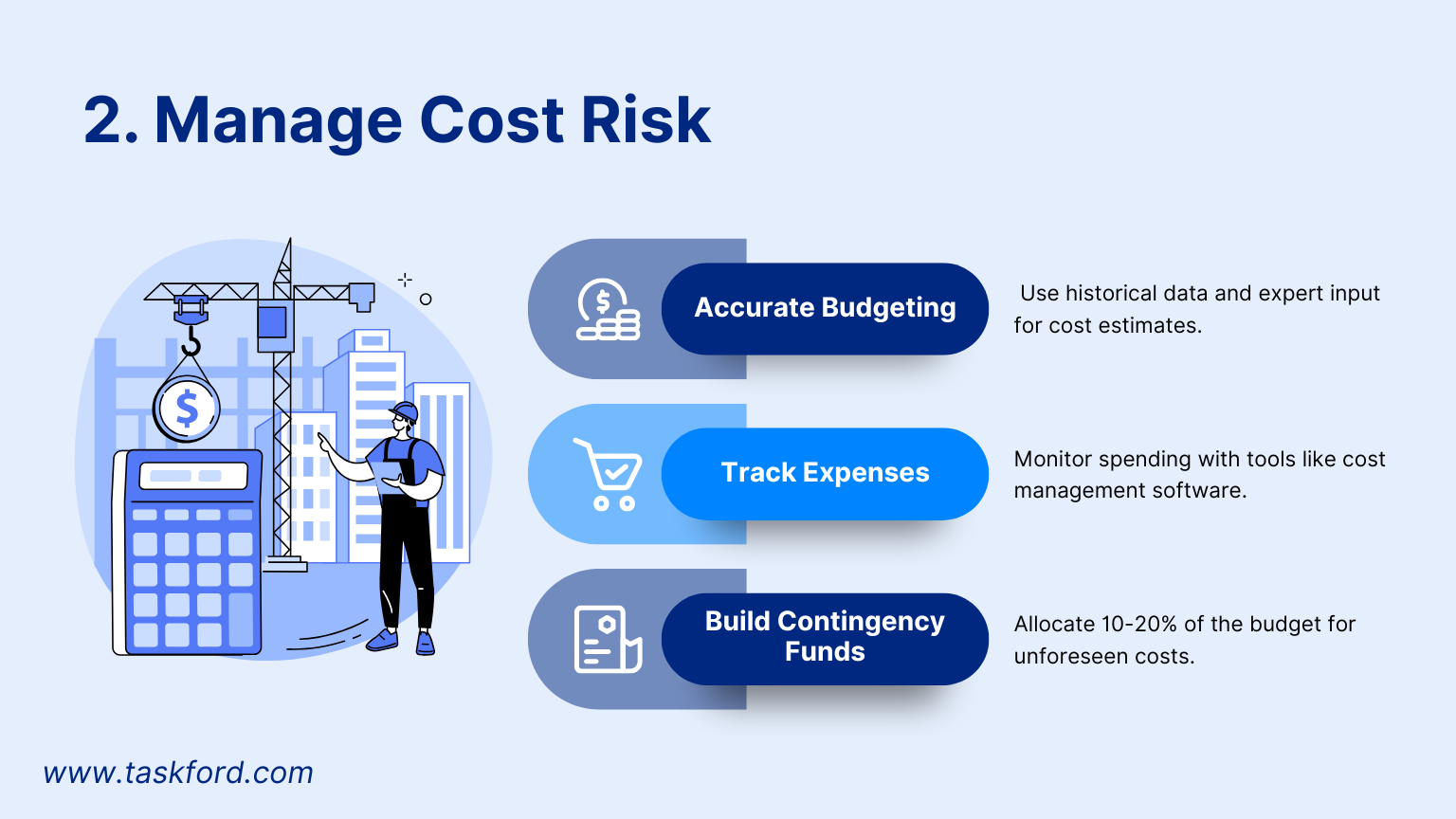
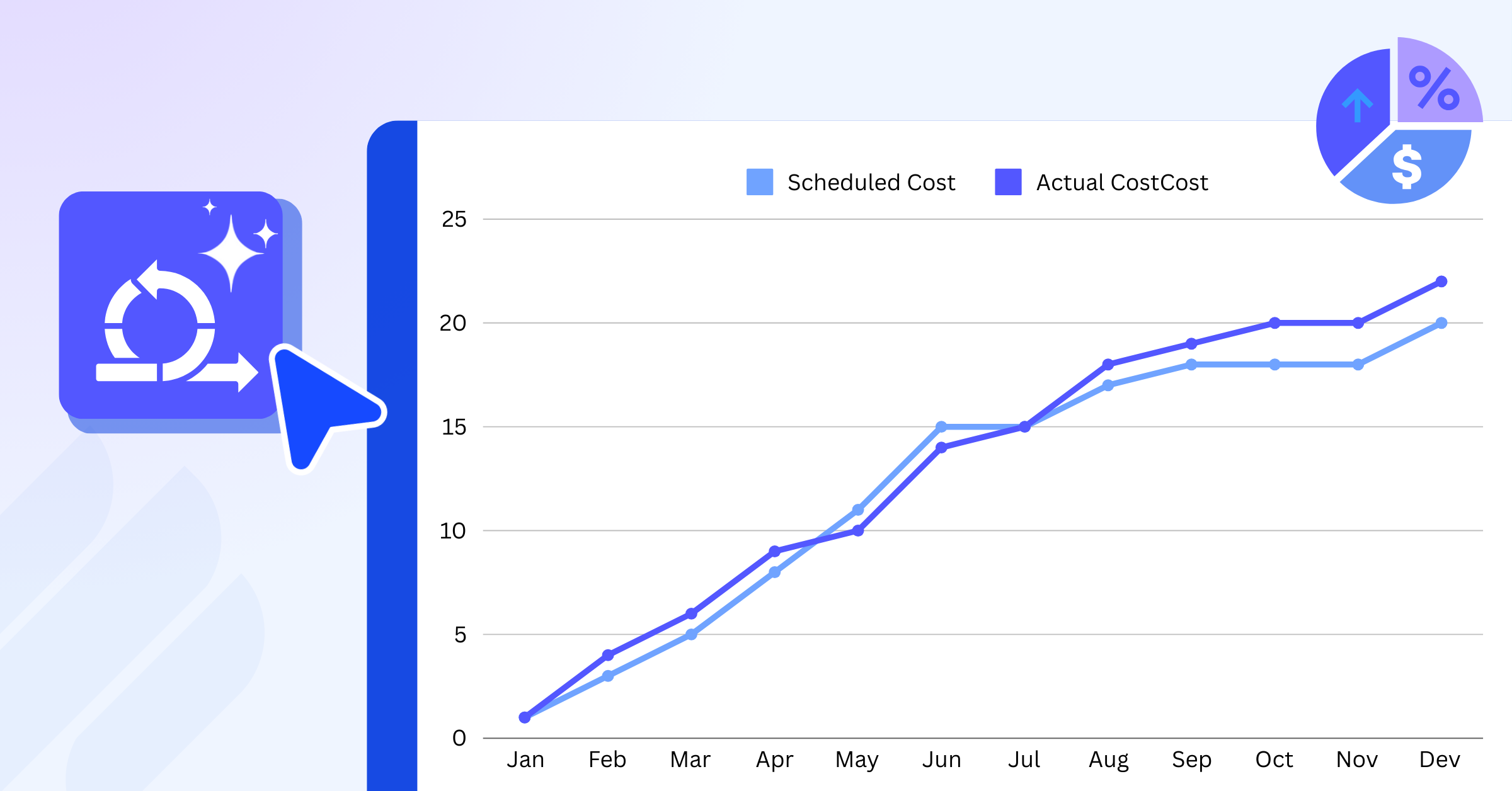
Cost risk occurs when a project exceeds its allocated budget due to poor estimation, unexpected expenses, or resource mismanagement. This can strain finances and jeopardize project completion.
Example of Cost Risk
In a construction project, underestimating material costs or encountering supply chain disruptions (e.g., a sudden increase in steel prices) can push expenses beyond the budget.
How to Manage Cost Risk
- Accurate Budgeting: Use historical data and expert input for cost estimates.
- Track Expenses: Monitor spending with tools like cost management software.
- Build Contingency Funds: Allocate 10-20% of the budget for unforeseen costs.
Read Also: A Step-by-Step Guide to Effective Project Cost Management
3. Schedule Risk
What Is Schedule Risk?
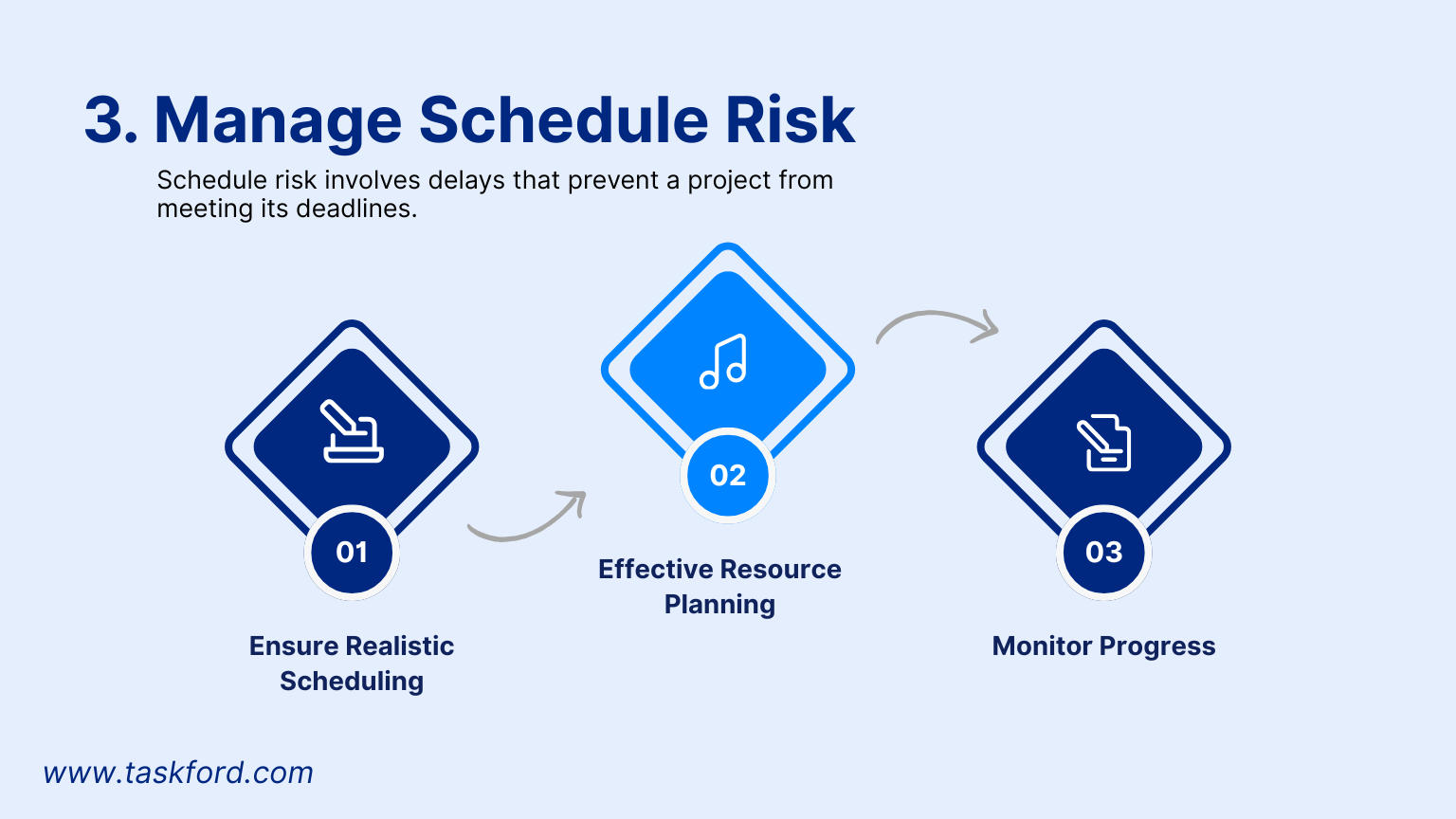
Schedule risk involves delays that prevent a project from meeting its deadlines. Causes include unrealistic timelines, resource shortages, or external dependencies.
Example of Schedule Risk
In a software development project, a key developer falling ill or a third-party vendor delaying API integration can push back the launch date.
How to Manage Schedule Risk
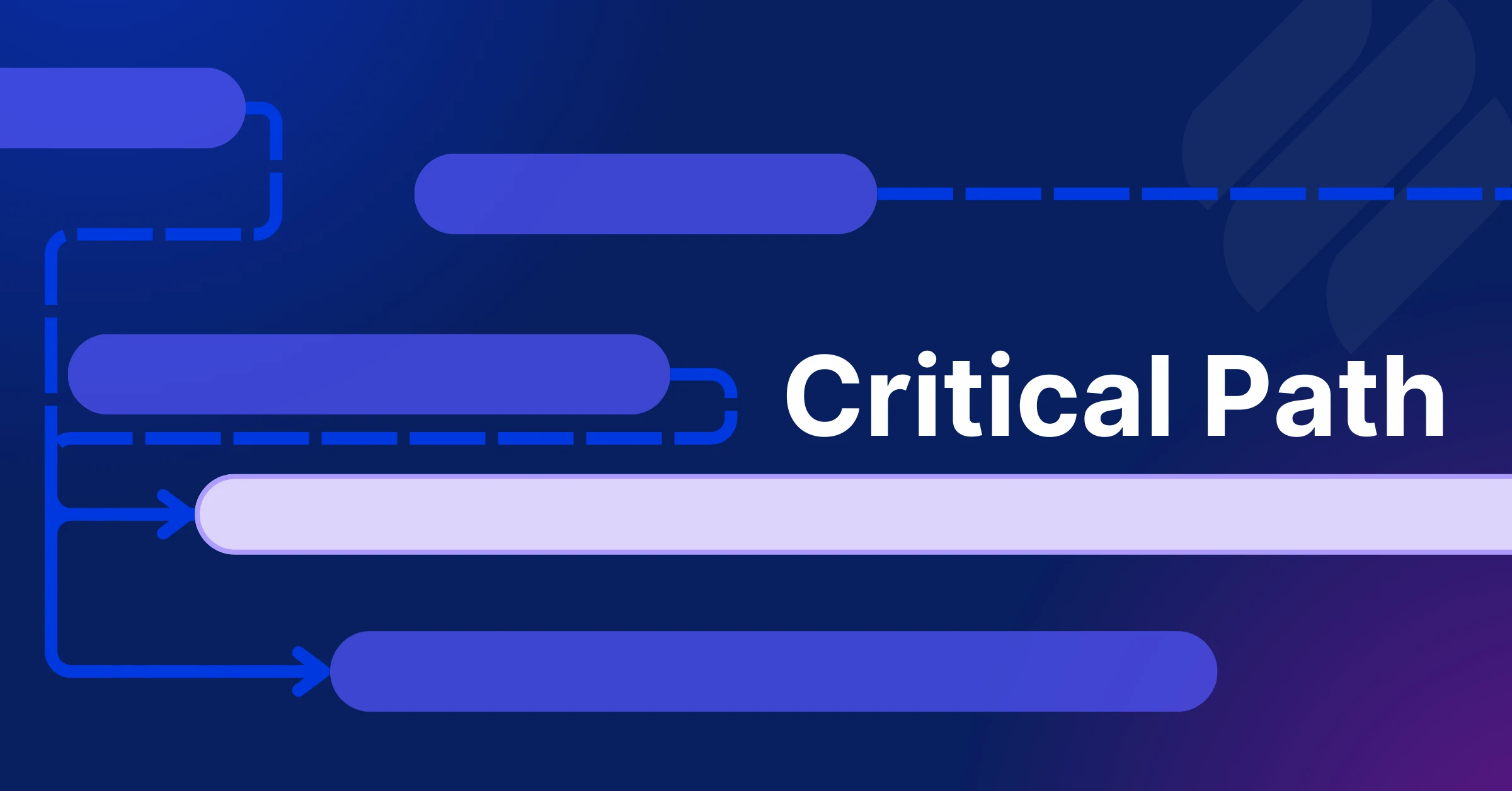
- Realistic Scheduling: Use techniques like Critical Path Method (CPM) to map timelines.
- Resource Planning: Ensure team availability and backup resources.
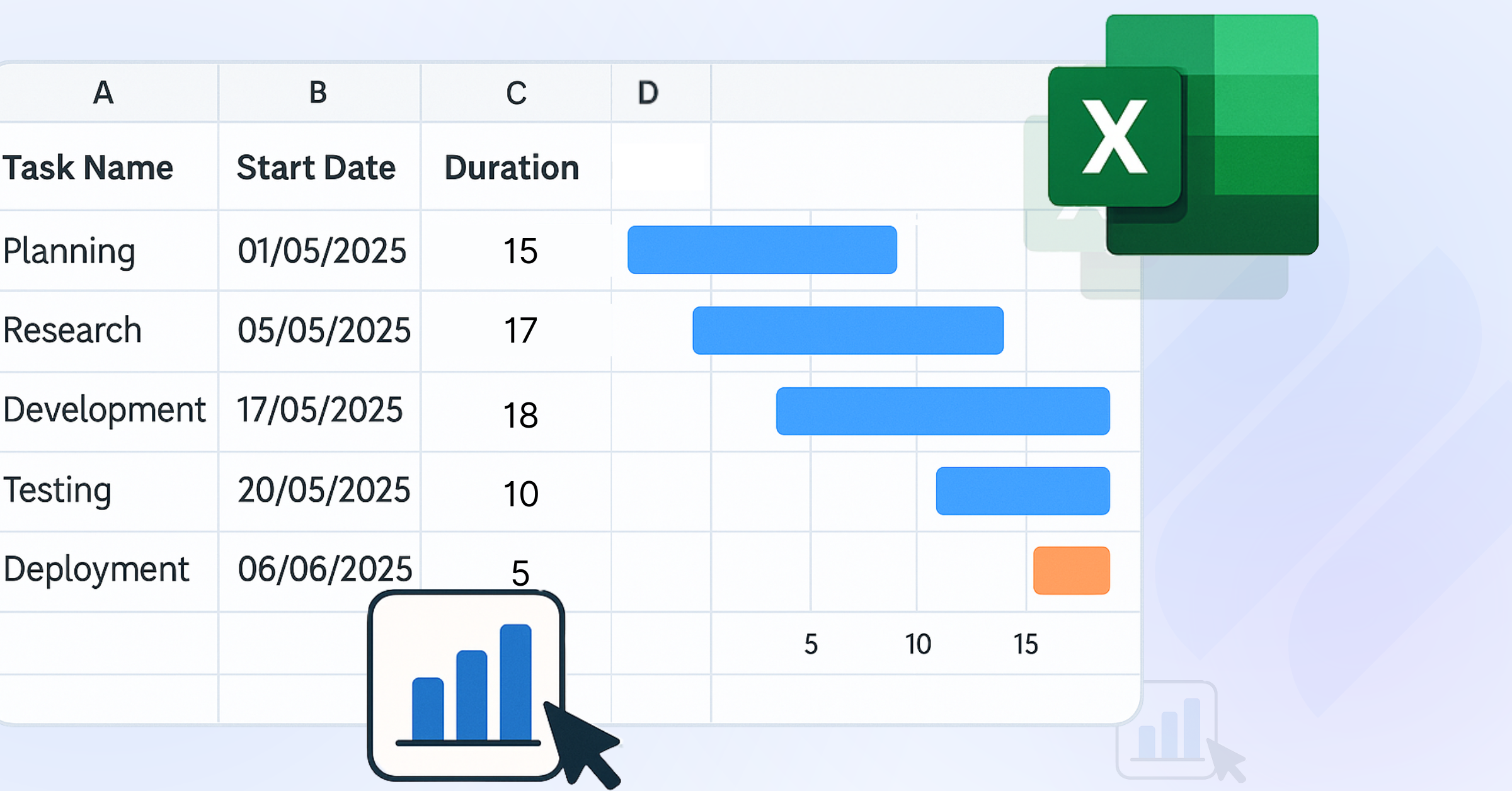
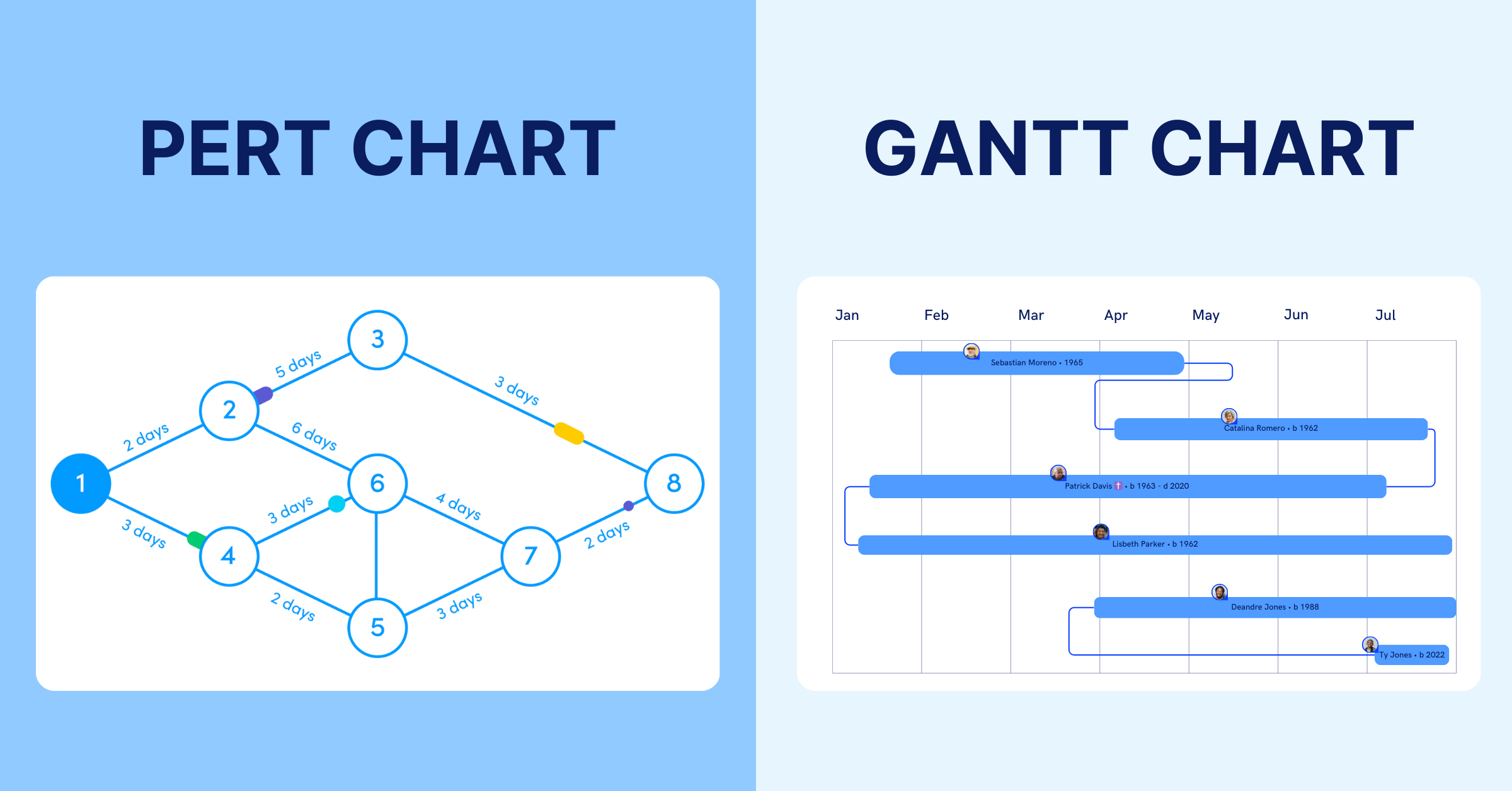
- Monitor Progress: Use Gantt charts or project management softwares to track milestones.
4. Resource Risk
What Is Resource Risk?
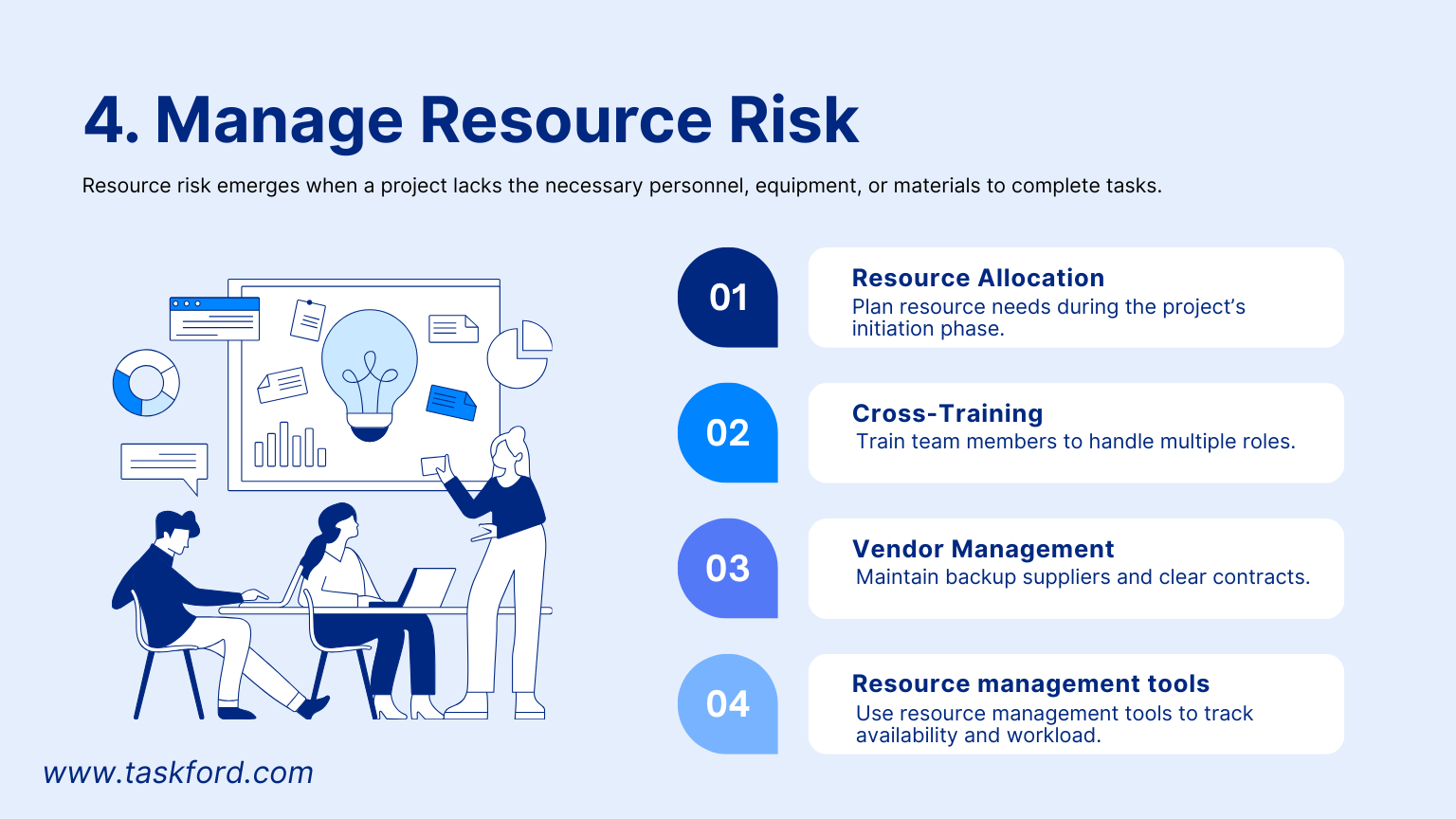
Resource risk emerges when a project lacks the necessary personnel, equipment, or materials to complete tasks. This can stem from overallocation, turnover, or supply issues.
Example of Resource Risk
In an event planning project, a key vendor failing to deliver equipment on time or a team member leaving mid-project can disrupt operations.
How to Manage Resource Risk
- Resource Allocation: Plan resource needs during the project’s initiation phase.
- Cross-Training: Train team members to handle multiple roles.
- Vendor Management: Maintain backup suppliers and clear contracts.
- Use resource management tools to track availability and workload.
5. Technical Risk
What Is Technical Risk?
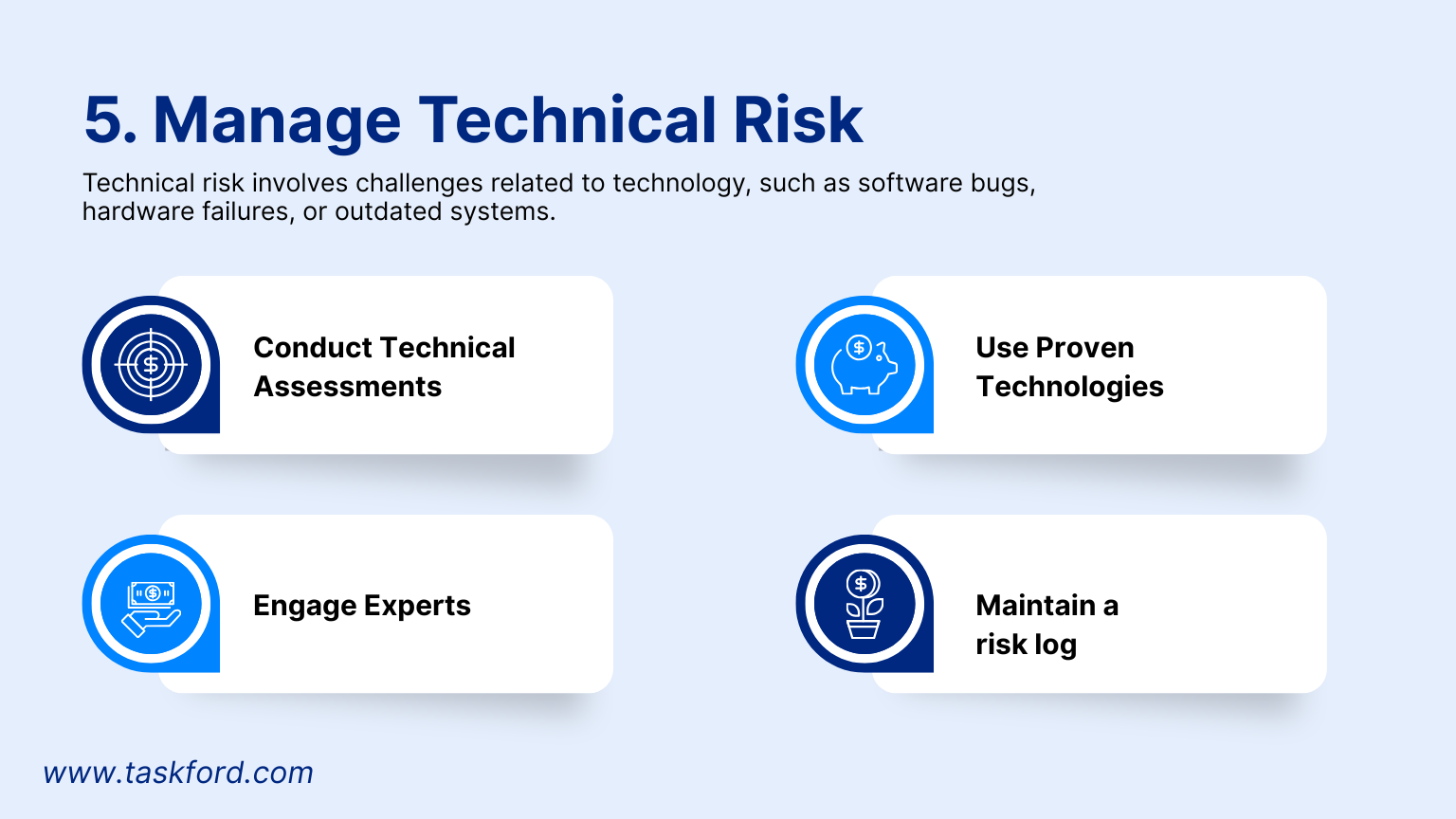
Technical risk involves challenges related to technology, such as software bugs, hardware failures, or outdated systems. These risks are common in IT and engineering projects.
Example of Technical Risk
In a cloud migration project, compatibility issues between legacy systems and new platforms can cause data loss or downtime.
How to Manage Technical Risk
- Conduct Technical Assessments: Test systems before full implementation.
- Use Proven Technologies: Avoid untested tools unless necessary.
- Engage Experts: Involve specialists for complex technical tasks.
- Maintain a risk log to document and monitor technical issues.
6. Operational Risk
What Is Operational Risk?
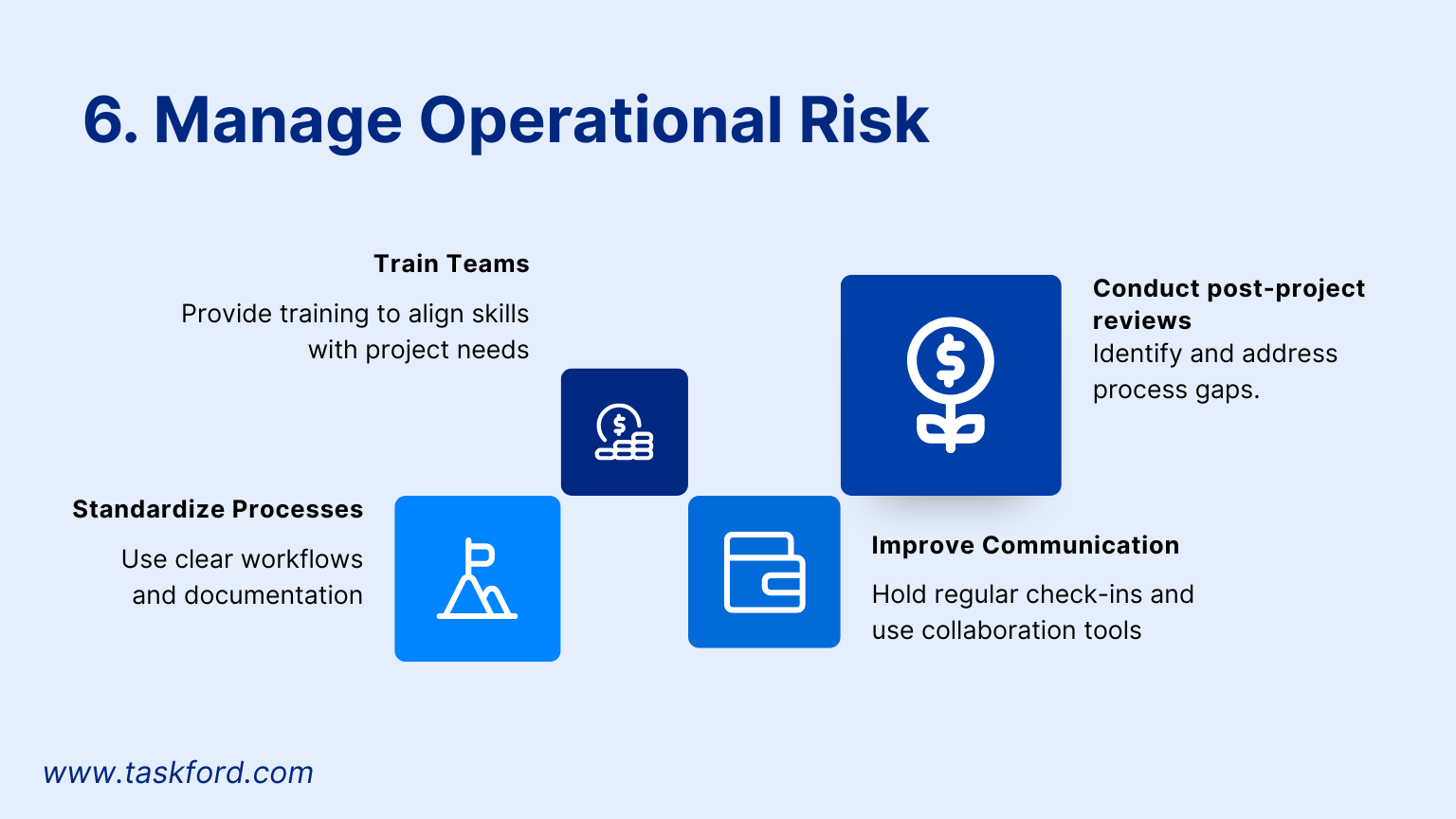
Operational risk stems from internal processes, systems, or team dynamics that disrupt project execution. Examples include poor communication, inadequate training, or process failures.
Example of Operational Risk
In a marketing campaign, miscommunication between the creative and media teams can lead to mismatched deliverables, delaying the launch.
How to Manage Operational Risk
- Standardize Processes: Use clear workflows and documentation.
- Train Teams: Provide training to align skills with project needs.
- Improve Communication: Hold regular check-ins and use collaboration tools.
- Conduct post-project reviews to identify and address process gaps.
7. External Risk
What Is External Risk?
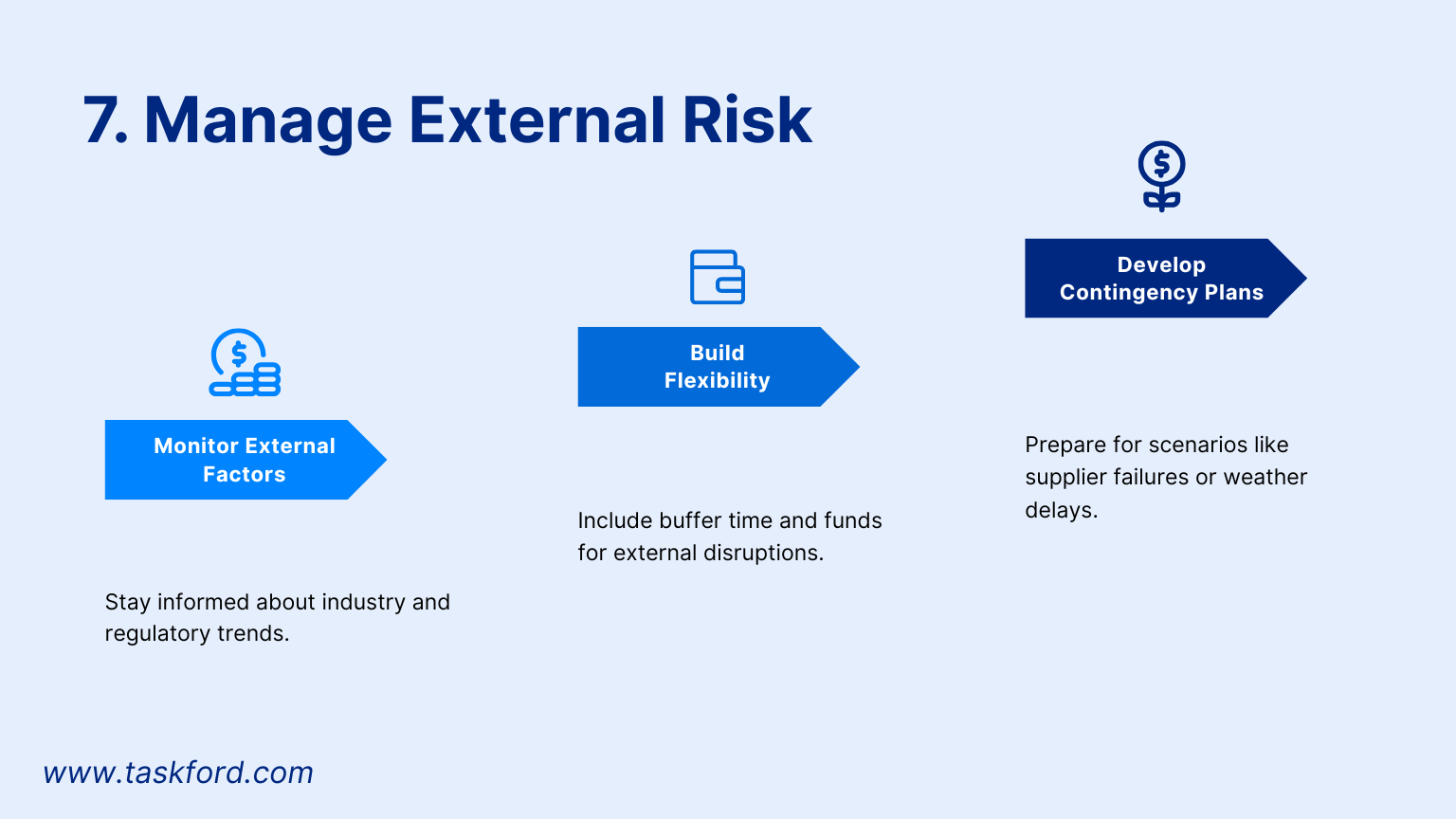
External risks come from factors outside the project team’s control, such as regulatory changes, market shifts, or natural disasters. These risks are often unpredictable but impactful.
Example of External Risk
In a construction project, new environmental regulations may require costly design changes, or a storm could delay outdoor work.
How to Manage External Risk
- Monitor External Factors: Stay informed about industry and regulatory trends.
- Build Flexibility: Include buffer time and funds for external disruptions.
- Develop Contingency Plans: Prepare for scenarios like supplier failures or weather delays.
Why Risk Management Matters
Ignoring risks can lead to project failure, wasted resources, and damaged reputations. A proactive risk management approach ensures you’re prepared for challenges, allowing you to deliver projects on time, within budget, and to stakeholders’ satisfaction. By understanding these seven common types of risks in project management - scope, cost, schedule, resource, technical, operational, and external - you can build a robust strategy to address them.
Read Also: Enterprise Risk Management (ERM): What It Means and How It Works
Practical Tools for Risk Management
- Risk Register: A document to log risks, their likelihood, impact, and mitigation plans.
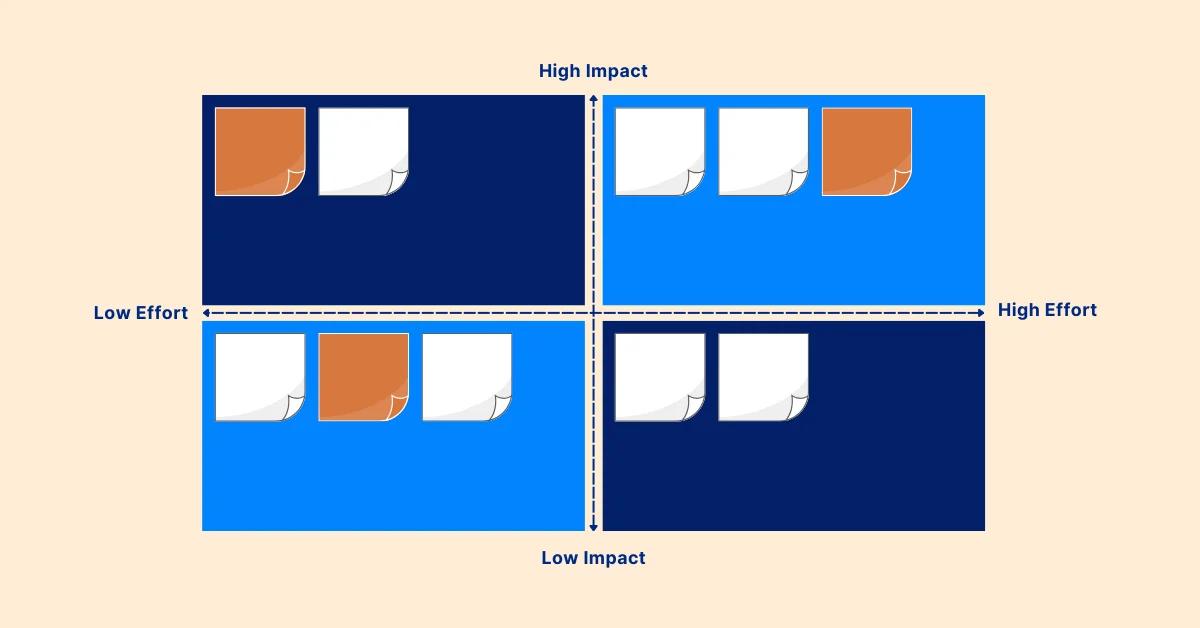
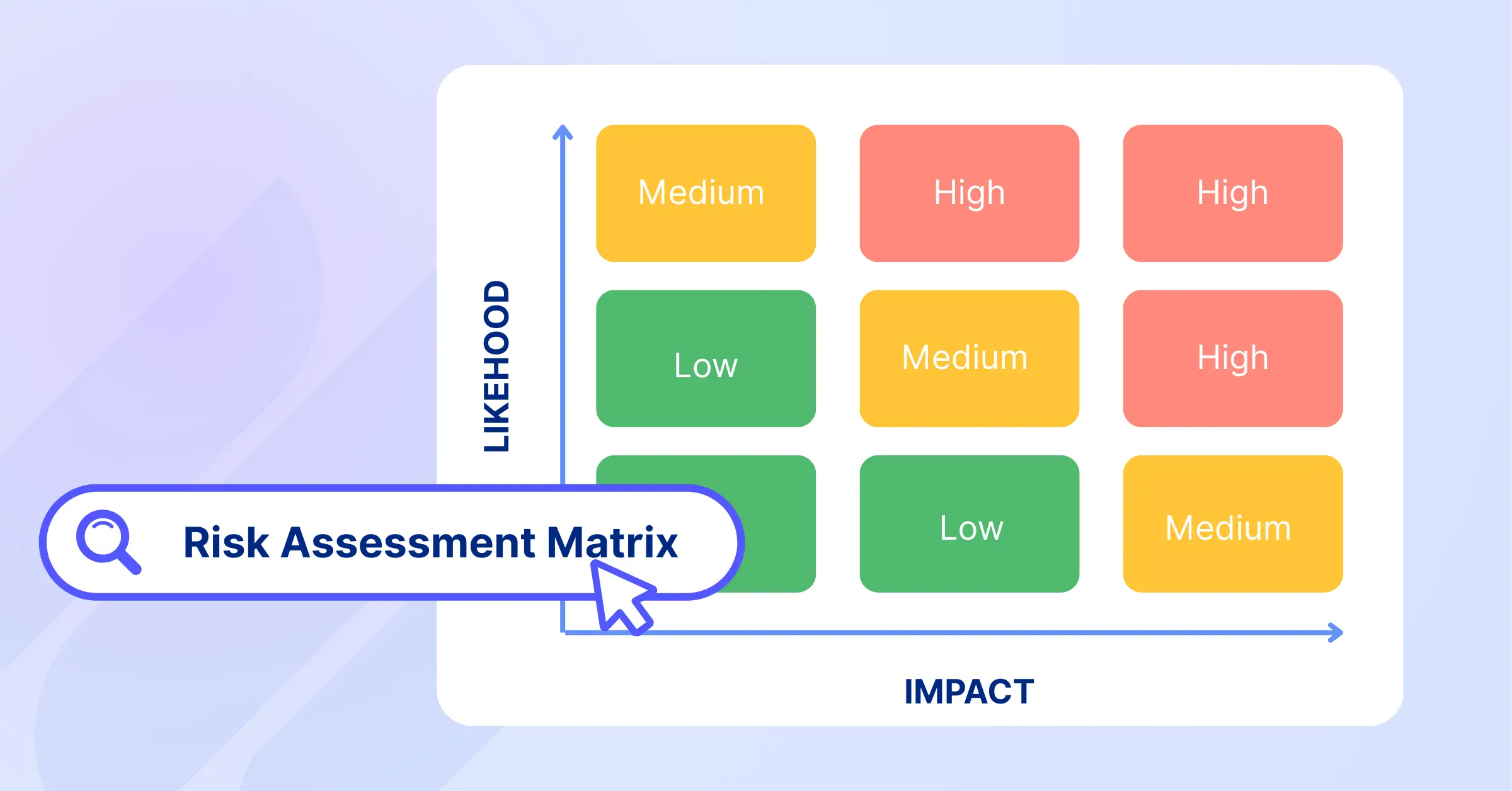
- Risk Matrix: A visual tool to prioritize risks based on severity and probability.
- Project Management Software: Tools like TaskFord help track risks, resources, and timelines in one place.
- Regular Reviews: Schedule risk assessments at key project milestones.
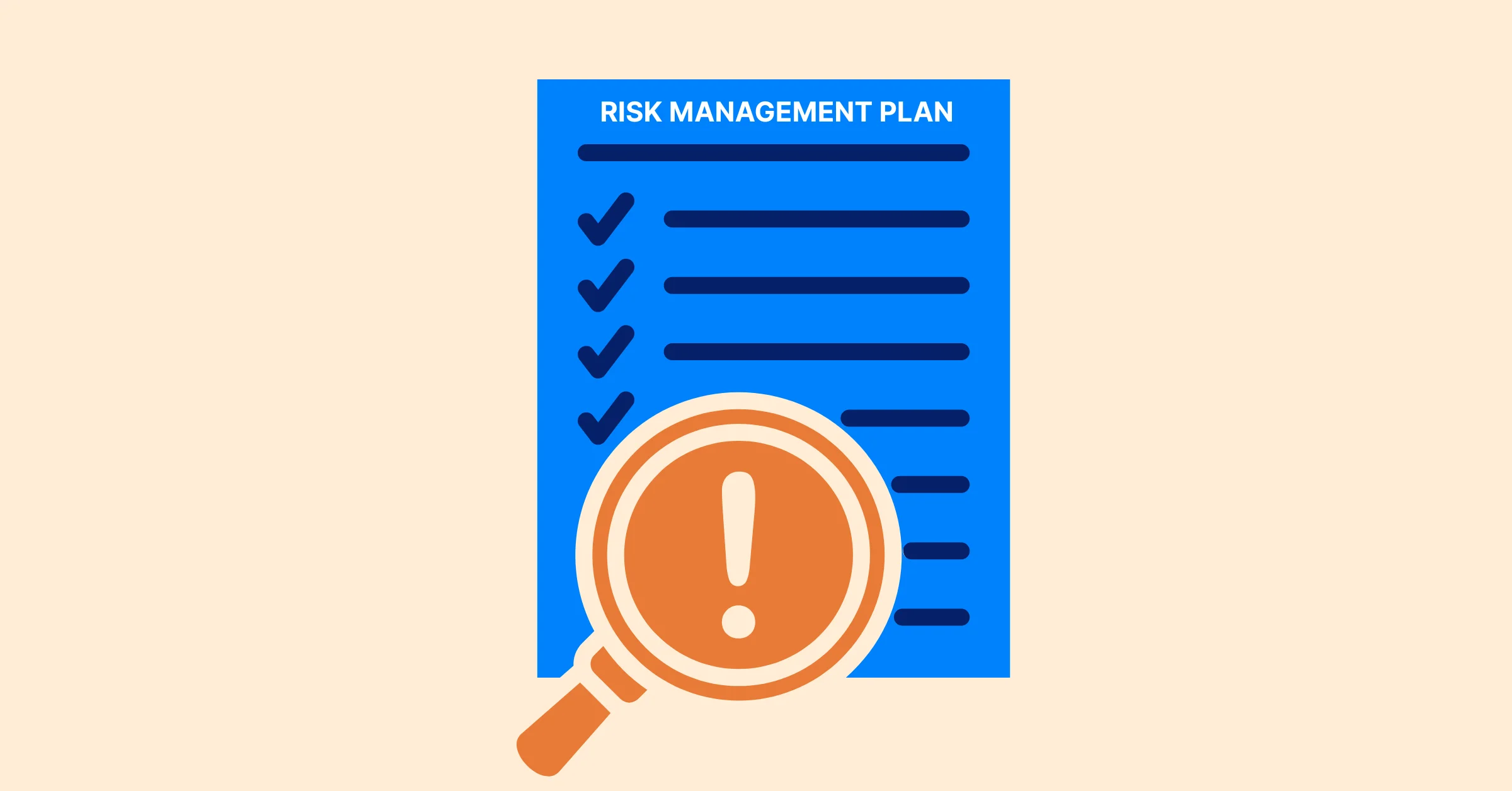
How to Build a Risk Management Plan
A risk management plan outlines how your project team will identify, assess, respond to, and monitor risks throughout the project lifecycle. It helps reduce surprises and improves delivery predictability.
Here’s a clear, step-by-step approach:
Step 1. Identify Potential Risks
Start by listing all possible risks that could affect your project.
How to do it:
- Brainstorm with the team
- Review past projects
- Analyze assumptions and dependencies
- Consider internal and external factors
The goal is to capture risks early—even if they seem unlikely.
Read also: Risk Management Plan Checklist - Everything You Need to Cover
Step 2. Analyze Probability and Impact
Not all risks are equally important. Assess each risk based on:
- Likelihood – How likely is it to happen?
- Impact – How serious would the effect be on scope, cost, timeline, or quality?
You can use a simple scale (Low / Medium / High) or a numerical scoring system.
Step 3. Prioritize Risks
Focus on the risks that are both:
- High probability
- High impact
These are your critical risks and should receive immediate attention.
Step 4. Define Risk Responses
For each major risk, decide how you will respond. Common strategies include:
- Avoid – Change the plan to eliminate the risk
- Mitigate – Reduce likelihood or impact
- Transfer – Shift responsibility (e.g., insurance, outsourcing)
- Accept – Monitor the risk without immediate action
Each response should include:
- Clear actions
- Assigned owner
- Timeline for review
Step 5. Assign Risk Owners
Every significant risk should have a responsible person. This ensures accountability and active monitoring.
Step 6. Create a Risk Register
Document all risks in a centralized log that includes:
- Risk description
- Probability and impact
- Priority level
- Response strategy
- Risk owner
- Status updates
Using project management software helps keep risks connected to tasks, timelines, and dependencies—ensuring they are actively managed, not forgotten.
Read Also: How To Build and Maintain a Risk Register
Step 7. Monitor and Review Regularly
Risk management is not a one-time activity. Review risks during:
- Weekly status meetings
- Major milestones
- Schedule or scope changes
Update probabilities, adjust mitigation plans, and add new risks as the project evolves.
Read Also: RAID Log in Project Management - When, Why, and How to Use It for Stakeholder Updates
Conclusion
Managing risks is a core skill for any project manager. By understanding the seven common types of risk in project management - scope, cost, schedule, resource, technical, operational, and external - you can anticipate challenges and keep your projects on track. Use tools like risk registers, matrices, and project management software to stay organized and proactive. With a solid risk management plan, you’ll be better equipped to deliver successful projects, no matter the industry.
Frequently Asked Questions
What are the main types of risks in project management?
The most common types of project risks include scope risk, cost risk, schedule risk, resource risk, technical risk, operational risk, and external risk. Each can affect a project’s timeline, budget, quality, or overall success.
What is the difference between a risk and an issue?
A risk is a potential event that may occur in the future and impact a project, while an issue is a problem that has already happened and requires immediate action.
How do you identify project risks?
Project risks can be identified through brainstorming sessions, stakeholder interviews, lessons learned from previous projects, SWOT analysis, risk checklists, and regular project reviews.
What is a risk register?
A risk register is a document used to record identified risks, their likelihood, potential impact, mitigation strategies, assigned owners, and current status. It helps teams monitor and manage risks throughout the project lifecycle.
How often should project risks be reviewed?
Risks should be reviewed regularly throughout the project, especially during status meetings, milestone reviews, and whenever there are significant changes to the project scope, schedule, budget, or resources.
Related Articles




How to Build and Manage a Product Roadmap with TaskFord







How to Build a Connected Project Timeline in TaskFord






What Are the Best Jira Alternatives for Scrum Teams?
















How WBS Reveals Delivery Breakdown Before It’s Too Late





![How To Conduct a Profound Stakeholder Analysis [+ Free Template]](/marketing/blog/stakeholder-analysis.webp)










What to Look for in Scrum Tools (Beyond Kanban Boards)

![Project Management Calendar for Teams and Managers [Free Templates]](/marketing/blog/project-management-calendar.webp)




How to Define Project Deliverables: A Step-by-Step Guide

![RACI Chart in Project Management: Rules & Examples [Free Download]](/marketing/blog/raci-chart.webp)







![7 Must-Have Project Management Documents Every PO Should Know [Free Templates]](/marketing/blog/project-management-documents.webp)






![How to Create a Winning Project Plan for IT Projects [10 Steps Included]](/marketing/blog/how-to-create-a-project-plan.webp)


![Daily Standup Best Practices: Apply AI to Organize Meetings Successfully [2026 Trends]](/marketing/blog/daily-standup.webp)



![How to Create a Project Communication Plan: Step-by-Step Guide [+Free Template]](/marketing/blog/project-communication-plan.png)


![Master Project Procurement Management in 5 Steps [Download a free plan template]](/marketing/blog/project-procurement-management.webp)














Subscribe for Expert Tips
Unlock expert insights and stay ahead with TaskFord. Sign up now to receive valuable tips, strategies, and updates directly in your inbox.