Templates
Cash Flow Management
Cash Flow Management Template
Get Free Template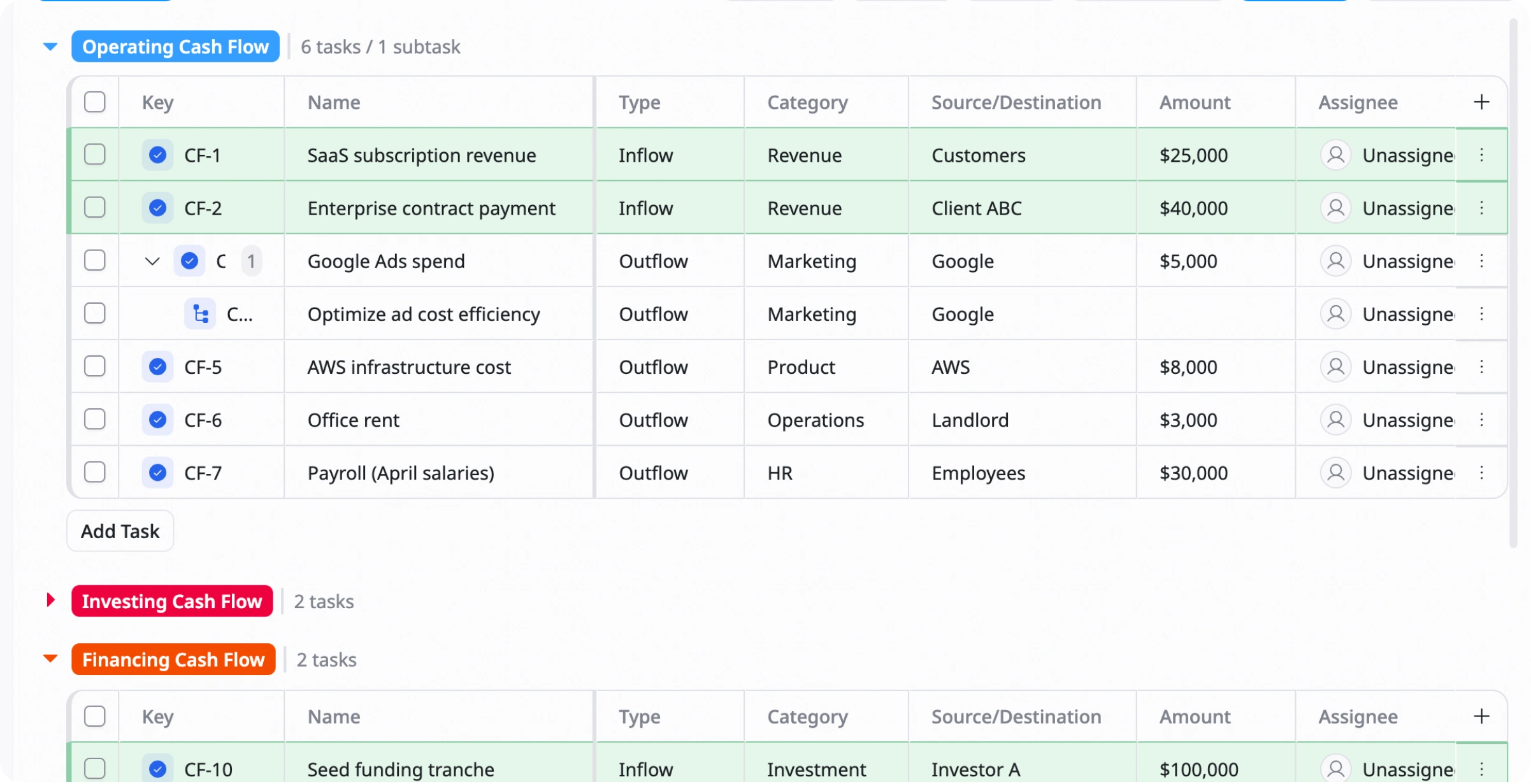
Description
This Cash Flow Management Template helps you track money coming in and going out so you can understand your cash flow and maintain healthy finances.
Best for
Finance teams
Small business
Startups managing cash flow
Key Features
Cash inflow
Cash outflow
Net Cash Flow
Reports
What is a Cash Flow Management Template?
A Cash Flow Management Template is a ready-to-use tool that helps you track and manage money coming in and going out of your business or personal finances.
It gives you a clear view of your cash inflows, outflows, and net cash flow over time so you can understand your financial position, avoid cash shortages, and make better financial decisions.
What’s included in this Template?
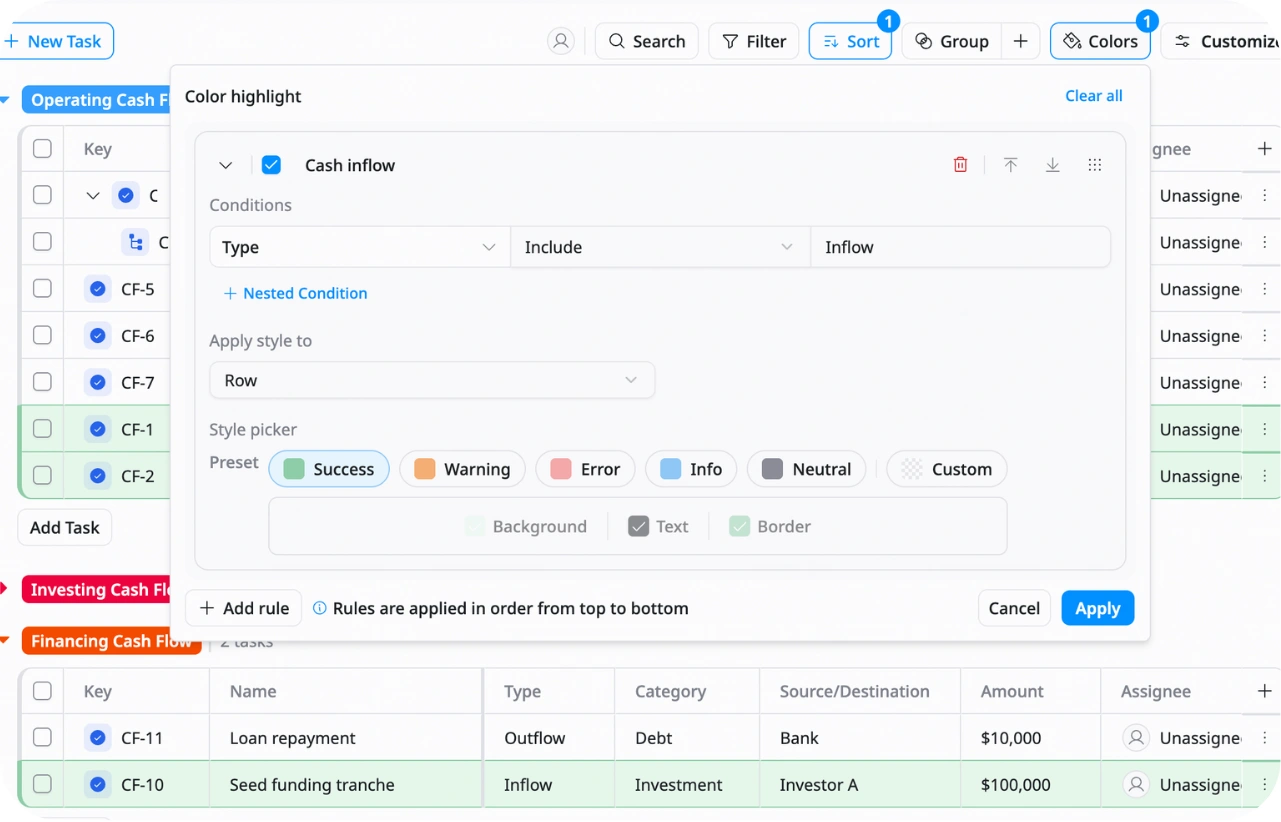
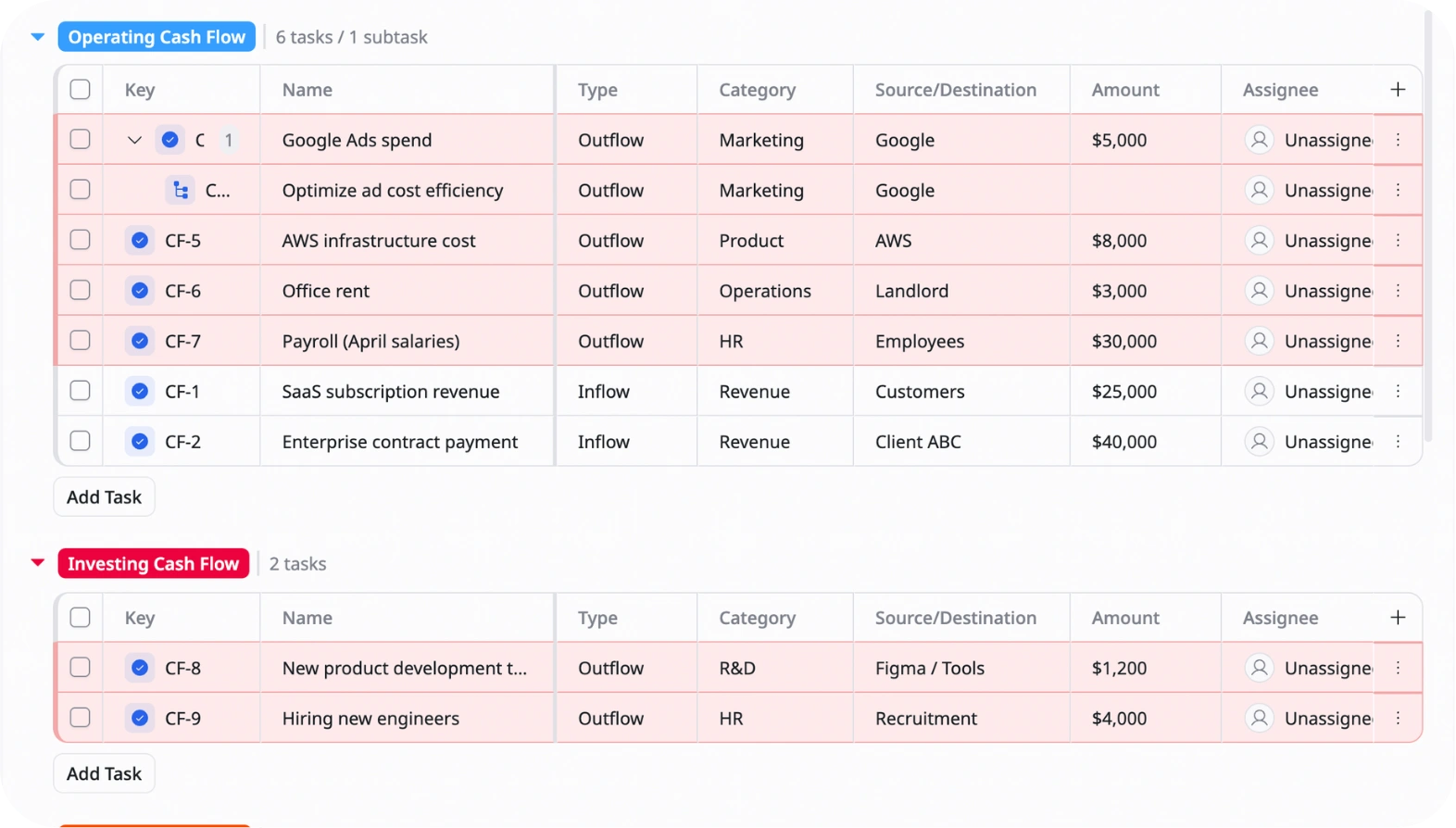
Cash inflow tracker
Record all incoming money such as revenue, payments, or investments
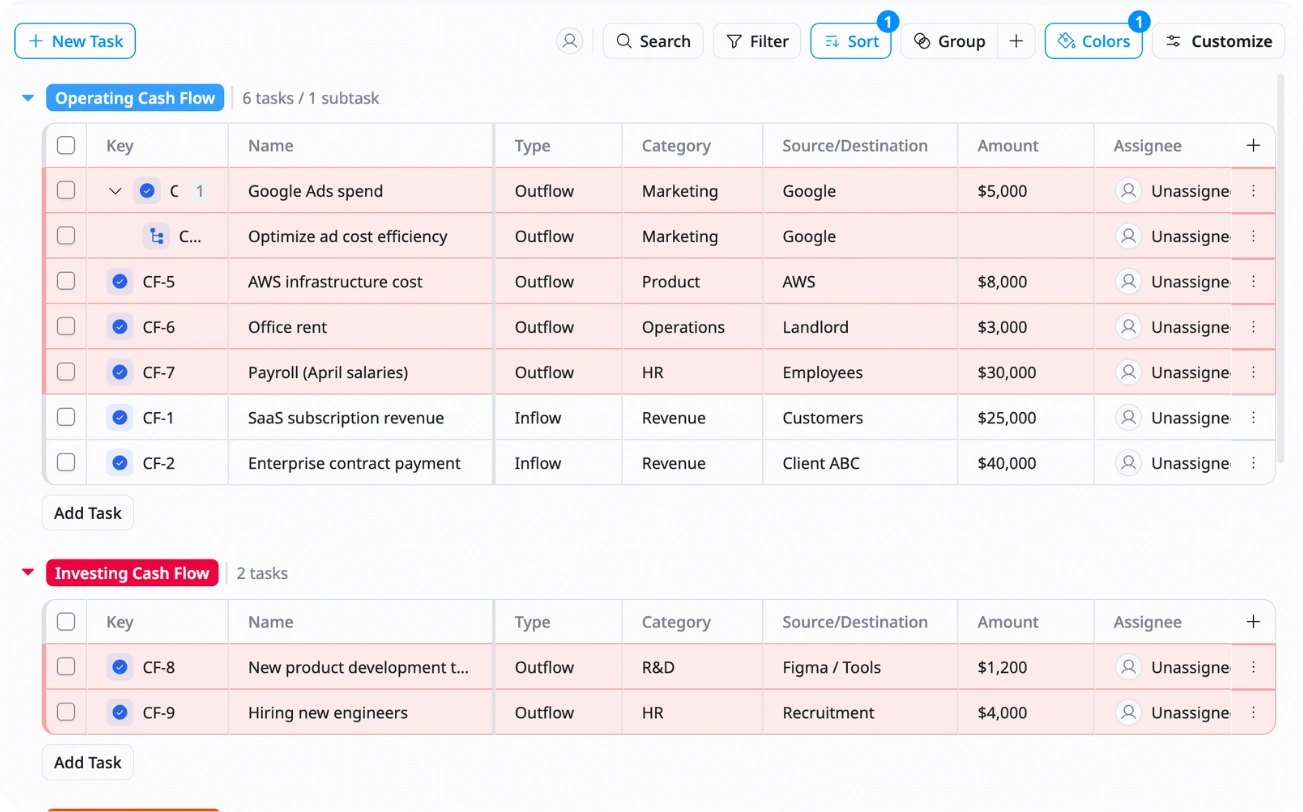
Cash outflow tracker
Track all expenses like rent, salaries, and operations
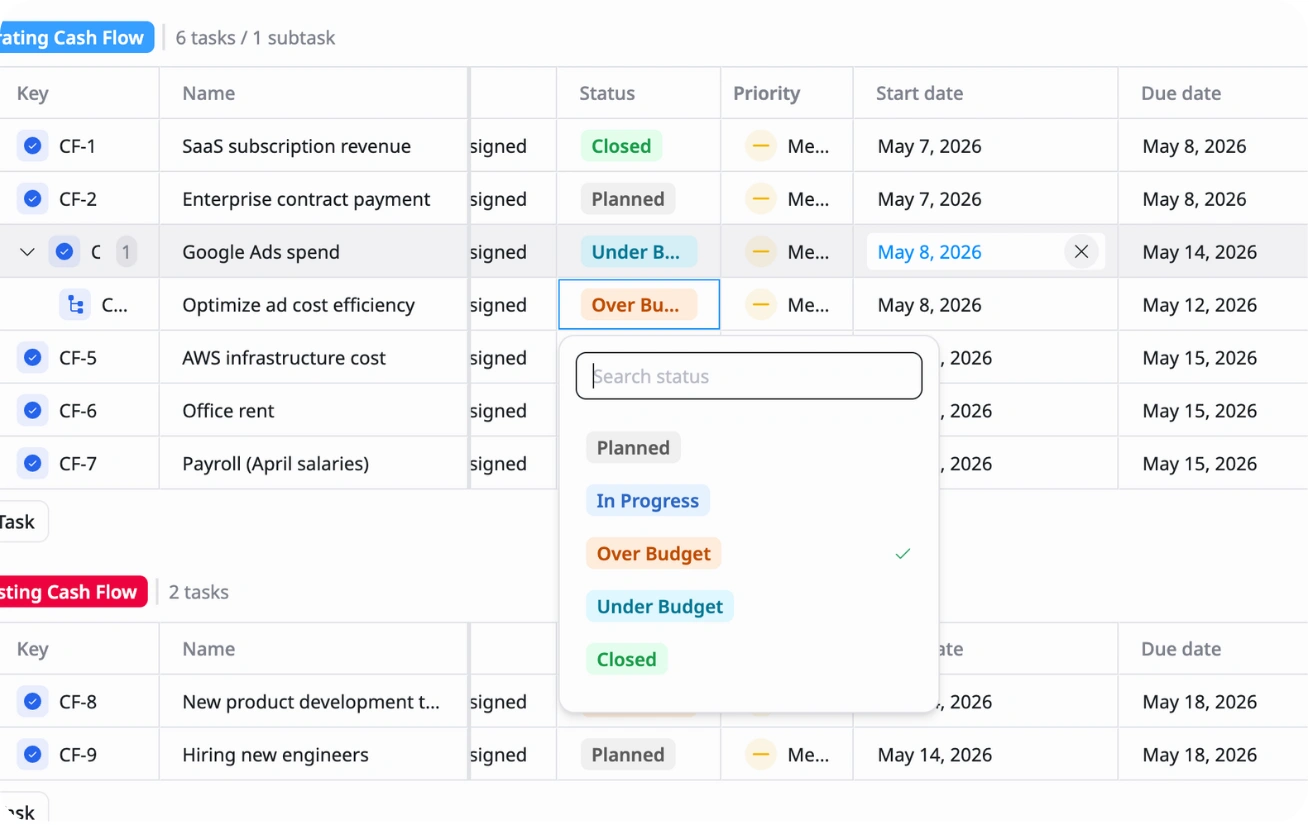
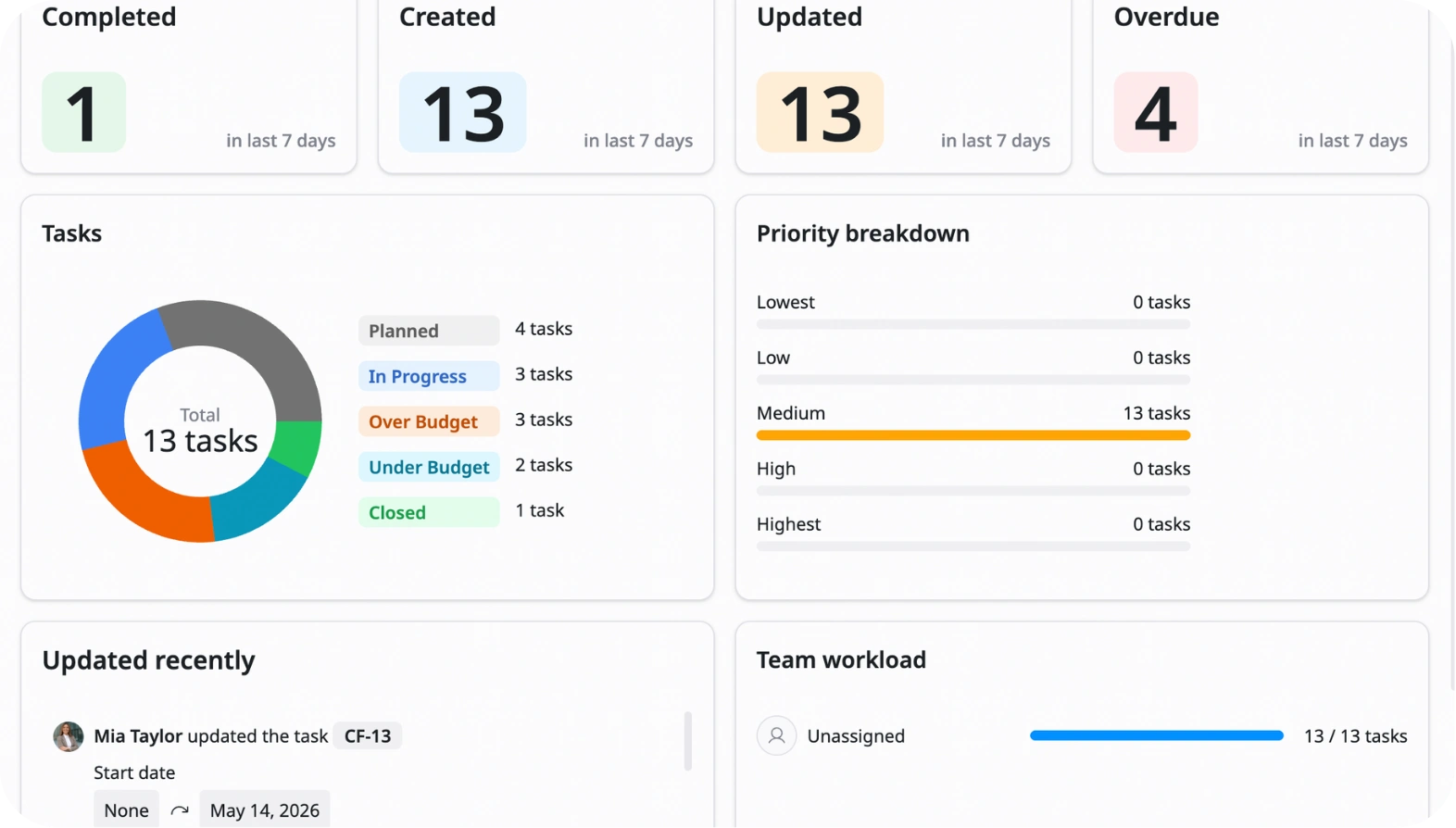
Cash flow status
See overall financial position like positive, neutral, or negative cash flow
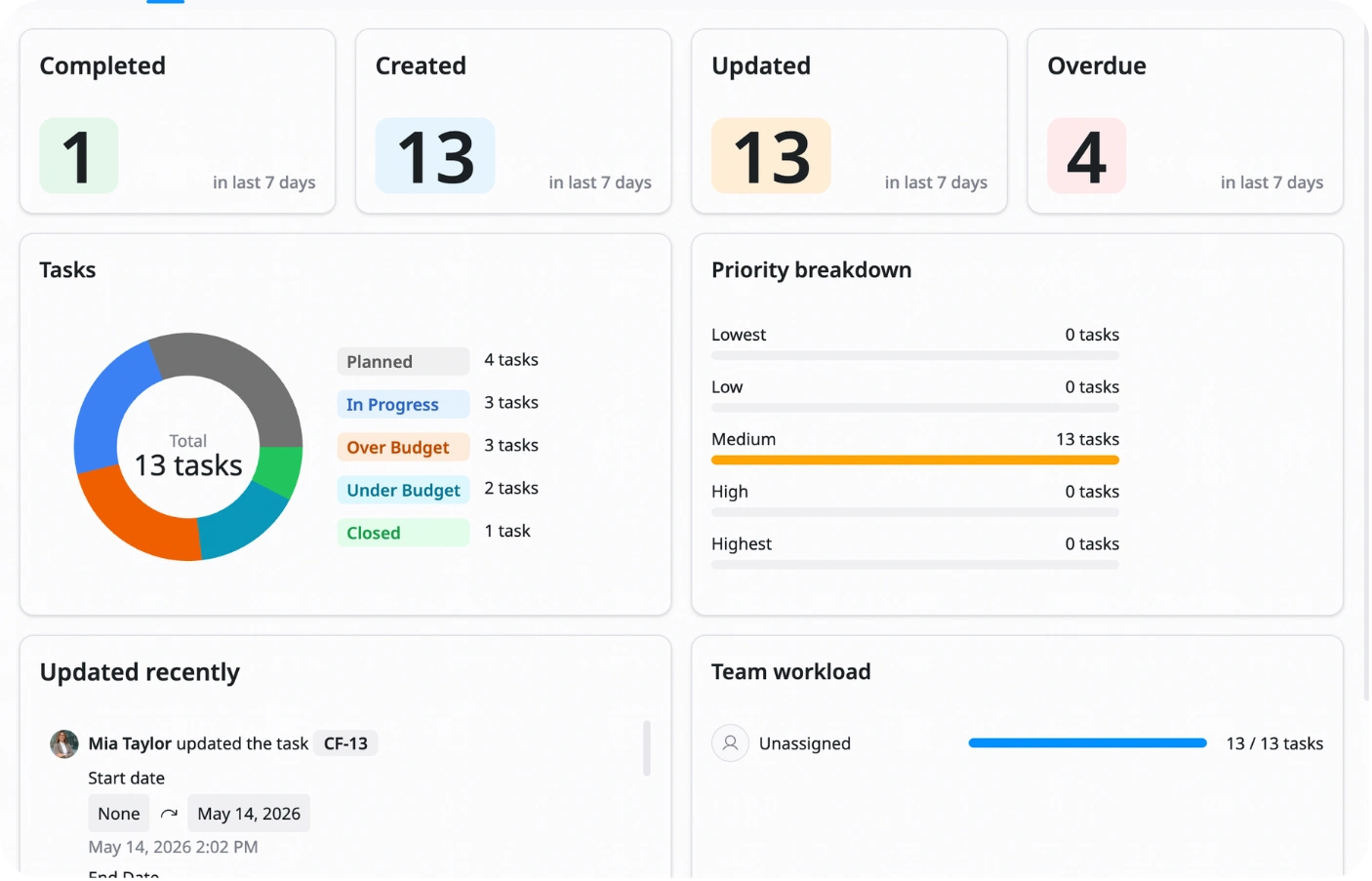
Reports & charts
Visualize cash movement trends clearly
Why use this Cash Flow Management Template?
Managing cash flow manually can lead to unexpected shortages or poor financial planning. This template helps you clearly see how money moves in and out of your business.
With this template, you can:
- Track cash movement clearly: Know exactly what comes in and goes out
- Avoid cash shortages: Identify risks early before they become problems
- Improve financial planning: Make better decisions based on real data
- Forecast future cash flow: Plan ahead with confidence
This helps you maintain financial stability and make smarter business decisions.
How to use this Cash Flow Management Template?
1
Set initial balance
Start by entering your opening cash balance at the beginning of the period
2
Record cash inflows
Add all incoming money like sales, payments, or loans when they actually hit your account
3
Track cash outflows
Log all expenses such as rent, salaries, inventory, and taxes
4
Calculate net cash flow
Use the formula: Opening Balance + Inflows - Outflows = Closing Balance
This shows your real cash position
5
Update regularly
Refresh your data weekly or monthly to keep your cash flow accurate and up to date
Advanced tips
13-week rolling forecast
Instead of tracking cash monthly, use a weekly 13-week forecast (one quarter). This helps you see future cash gaps early and gives you time to prepare financing if needed

Track recurring expenses separately
Separate cash flow into operating, investing, and financing activities to understand where money is coming from
Example:
Operating: sales revenue
Investing: equipment purchase
Financing: loans
This helps you see if your business is truly self-sustaining

Apply zero-based budgeting
Create multiple versions of your cash flow: Best Case, Worst Case, and Most Likely. Update them based on real business changes
Example:
Sales drop 20% → Worst Case scenario
This helps you prepare for different financial situations