What Should Consulting Firms Remember From Every Client Meeting?
Learn what consulting firms should remember from every client meeting, from goals and requirements to decisions, ownership, deadlines, and follow-up actions.
Have you ever missed an important point discussed in a client meeting?
If you’re a consulting firm, you can’t afford to miss even a small detail the client shared with you. Whether it’s the meeting purpose, project deadline, or something else, you have to be attentive and ready to respond.
Before we jump straight into understanding what to remember from every client meeting, let’s briefly talk about why some consulting firms can fail to remember essential details and what they should remember from client meetings.
Why Consulting Firms Fail to Remember Details From a Client Meeting
Consulting firms fail to remember meeting details for many reasons. For example, they may lack a system to document crucial points from client conversations.
To fix this problem, it’s important to clearly identify the reasons why consulting firms fail to remember crucial client details:
- Taking raw notes during the meeting is faster and easier, but sometimes you could miss the crux of the message.
- Consultants try to write down every detail the client discusses, which shifts their attention to taking notes rather than listening to the client.
- The lack of clarity on certain points hurts later on. It’s better to clear the doubts during the meeting instead of relying on guesswork afterward.
- The absence of a cohesive system that shares crucial information across team members becomes prominent, especially when specific client instructions are trapped in one person’s mind rather than being available to the entire team.
These were some of the reasons why this could happen. Now, let’s discuss what consulting firms should do to get prepared for a client meeting.
How Consulting Firms Should Prepare for a Client Meeting
The following steps are a must before meeting the client:
Study the Client’s Profile
Make sure you have done your homework by understanding the client’s business model, industry, developments, and challenges beforehand. This is especially important during client onboarding, when you first learn about the client’s needs and expectations.
Set the Meeting Objective
Decide what you want to achieve in the client meeting, whether you want to pitch new ideas or provide an update on an ongoing project. Setting a clear meeting objective helps achieve the meeting goal.
Prepare Relevant Questions
Brainstorm before the meeting and prepare deep, focused questions to understand the client’s thought process, priorities, growth plans, and product development. Asking relevant questions gives you clarity. Thus, you’ll be able to deliver better.
Anticipate Possible Concerns
Before you meet with the client, think about their possible concerns and objections. In fact, clarifying the possible concerns can save you a lot of time. It will help you prepare for the meeting.
Brace Yourself to Satisfy the Client
The main goal is client satisfaction. Be prepared not just to address the client’s possible concerns, but also to provide the solution to satisfy them. It shows that you care about your clients.
Consider these points before meeting with the client.
What Exactly “Consulting Firms Should Remember” From Every Client Meeting?
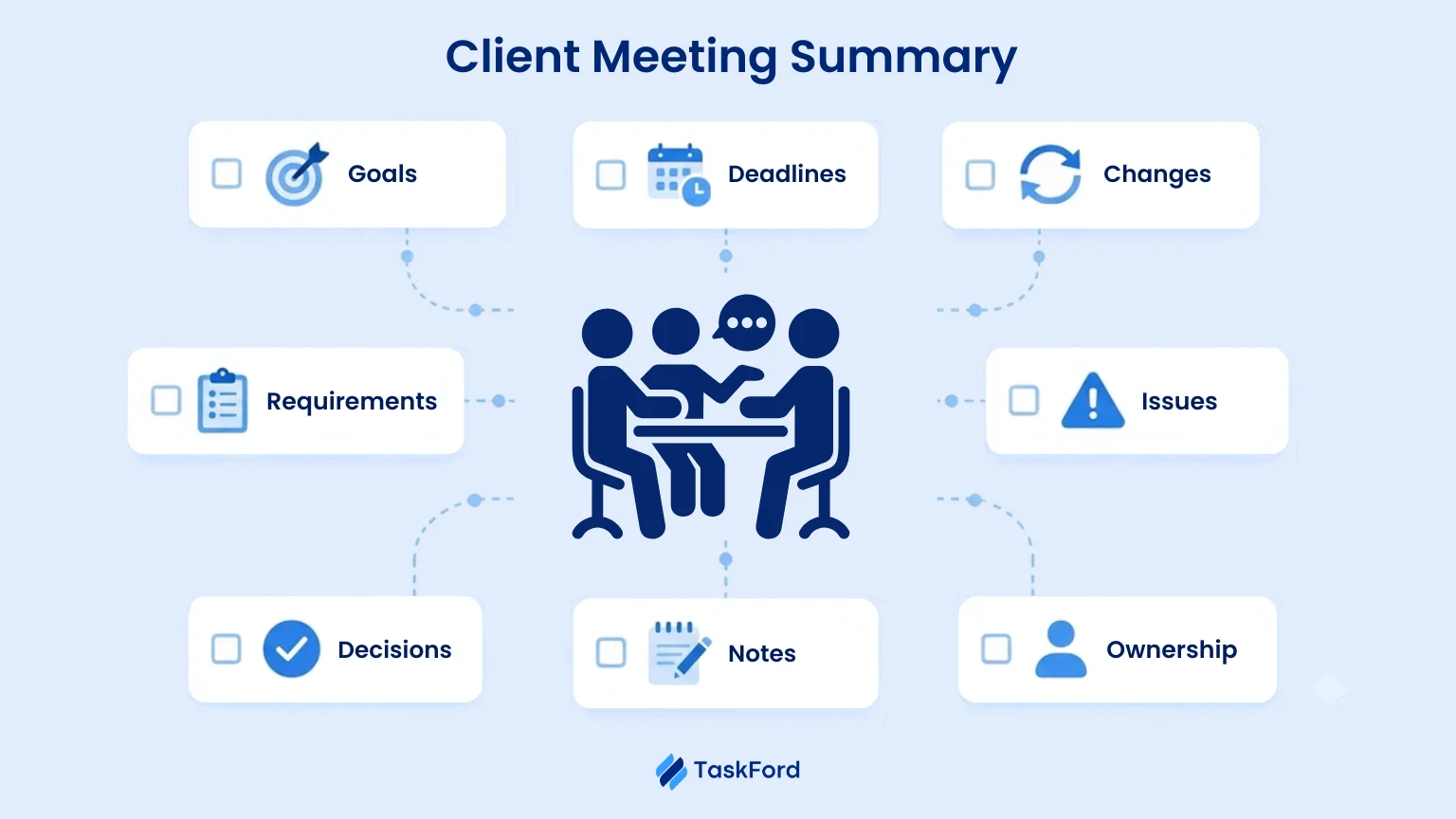
Goals
These are the core outcomes of the meeting. Note down what the client wants to achieve going forward and what needs to be done on your part to get to the finish line. Vague information after the meeting won’t help. So, clearly understand the client’s goal.
Requirements
These are the client’s needs, expectations, specifications, and requested deliverables. This step ensures that all the prerequisites of the project are clearly communicated to the consulting firm. Without a clear roadmap, it’s highly unlikely that things will go in the right direction.
Decisions
This means what both parties agreed on and what outcome they hope for as a result of their decisions. The purpose is to vividly remember the decisions that have been taken in the meeting.
Ownership
One of the important things to remember from a client meeting is the ownership, meaning who is responsible on the client’s side and the firm’s side. Make sure you have absolute clarity on this one when you leave the meeting room.
Unresolved Items
These are the unsettled or concerning areas after a client meeting that need your attention right away. Fixing unresolved issues can go a long way toward maintaining a positive client relationship.
Changes
Sometimes, changes are inevitable. Pinpoint the areas where the client wants alteration. It can be anything from scope, priorities, strategies, or human resources skills that require modification. Ensure that you don’t miss out on any of the changes the client asked for.
Deadlines
It’s one of the most important points to remember from the client meeting because deadlines affect budgeting, scheduling, and delegation. If the deadlines are not met, it causes issues across different departments.
Meeting Notes
It’ll be wise to take meeting notes; otherwise, chances are that some of the important points could be forgotten after the meeting. Going with a traditional notebook to jot down meeting details can make them harder to organize, edit, and access later. A wise approach is to use Online Notepad. It offers a distraction-free space along with several formatting options. Plus, users can access their notes anytime, anywhere.
Actions to Take After Every Client Meeting
The client meeting is done. What’s next? Well, there are a few essential steps you should take right after a client meeting to show how important client satisfaction is to you and that you’re ready to go the extra mile.
Let’s take a look:
Summarize the Key Takeaways
Note down the important points from the meeting while they are fresh so that you don’t have to jog your memory later on. Highlight the client’s priorities, concerns, requirements, and feedback on the project.
Example: If the client’s priority has changed from generating website traffic to building an email list, then you can write down this change and convey it to the team to adjust the workflow accordingly.
Record Decisions and Commitments
Document the important decisions the client made during the meeting. Also note down the commitments you have made to the client. It clarifies what both sides agreed to. Plus, the consulting firm clearly understands its deliverables, and the client knows what to expect.
Example: If a digital marketing agency provides social media marketing services to a restaurant and the restaurant decides to shift its social media content focus from Facebook and X to Instagram and TikTok, then the agency should record this change and prepare accordingly.
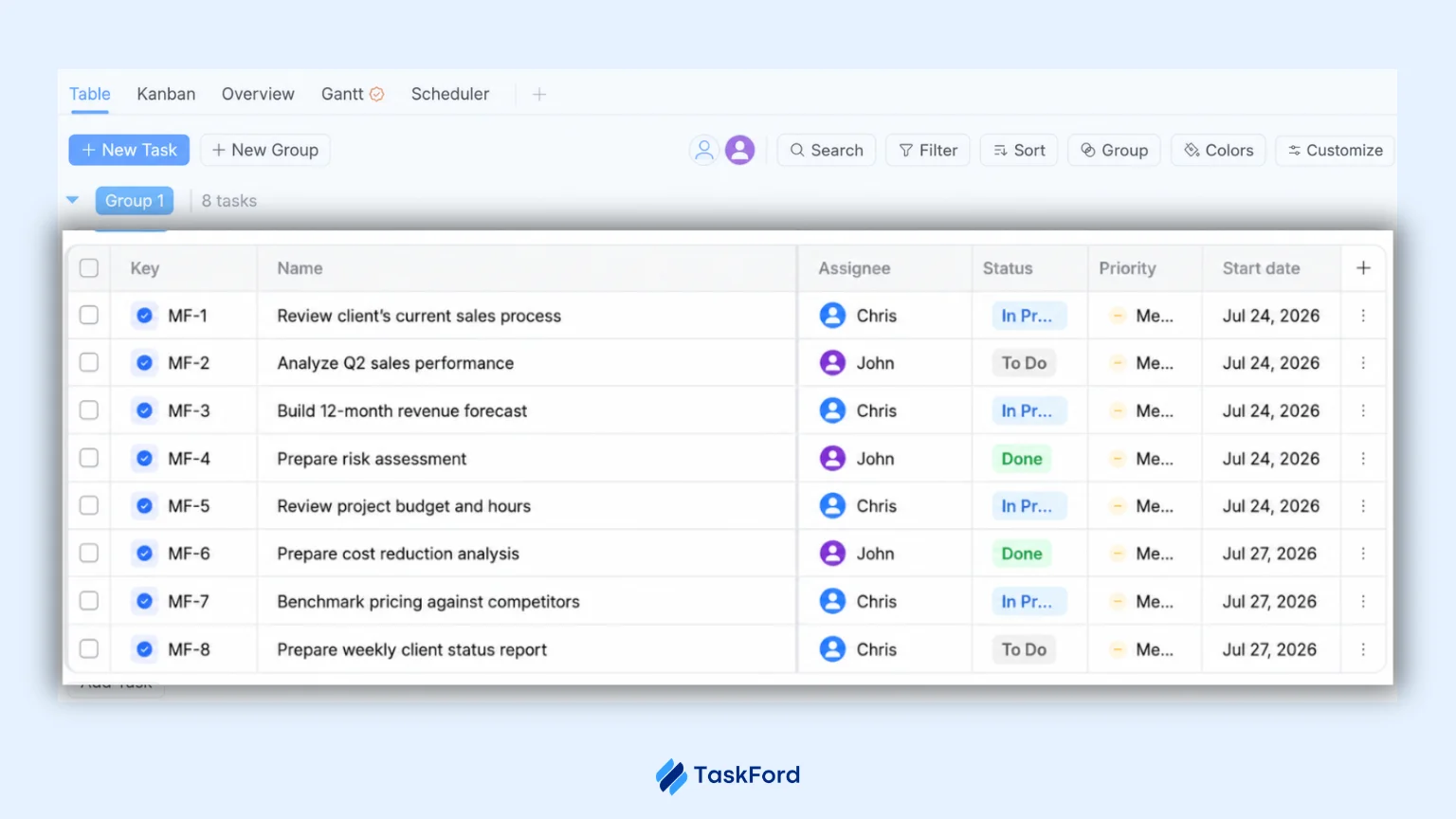
Assign Tasks and Deadlines
Turn key meeting points into clear action items by assigning tasks and deadlines. TaskFord helps consulting teams capture decisions from client meetings and turn them into actionable work in one workspace. Teams can create tasks in Table View, add detailed descriptions, attach client requirements, set priorities, assign owners, and define deadlines.
Update Internal Project Details
It’s important to keep everyone involved in the loop. Update the project details in the CRM or other internal file with relevant information about the project. Ensure that every team member working on the account can access the latest project details.
Example: If a client changes the target audience in the next Facebook ads campaign, it’s necessary to update the internal project details so that the graphics designer, ad expert, and social media manager are on the same page.
Send a Follow-Up to the Client
Clients don’t like to be in the dark. After the meeting, send a clear, concise follow-up message summarizing the decisions, action items, responsibilities, and deadlines. This keeps communication clear and makes client management more organized.
Example: After a meeting around redesigning the website, send a short email confirming the discussed color scheme, fonts, layout style, and page names.
These simple yet effective actions after every client meeting demonstrate a professional approach, keep everyone aligned, and help build client trust.
Wrapping Up
Almost every client meeting contains important details that can influence the direction, progress, and outcome of a project. Consulting firms should make a habit of capturing the client’s goals, requirements, decisions, responsibilities, changes, deadlines, and other important details rather than relying on memory alone.
Client meetings can be overwhelming, and even important details can be forgotten when they are not documented properly. Using any notepad app can make it easier to capture key points during the conversation, organize them afterward, and turn them into clear next steps.
The point is simple: don’t just attend the client meeting; capture what matters and use it to move the client’s project forward.
Related Articles













![Professional Services Project Plan Template [Free Excel Download]](/marketing/blog/professional-services-project-plan-template-free-excel-download.webp)




Subscribe for Expert Tips
Unlock expert insights and stay ahead with TaskFord. Sign up now to receive valuable tips, strategies, and updates directly in your inbox.