Project Delivery Checklist for Professional Services Teams
Follow this practical project delivery checklist to reduce risks, protect margins, manage resources, and deliver better client outcomes.
Delivering successful projects is one of the biggest challenges for Professional Services teams. You manage multiple clients, tight deadlines, and the pressure to deliver quality work that keeps customers satisfied while protecting project margins.
When projects run smoothly, everyone wins. But delays, scope changes, or communication issues can quickly damage client relationships and hurt profitability.
A simple project delivery checklist helps prevent these problems by giving your team a clear, repeatable process to follow from start to finish.
In this article, we share a practical checklist designed specifically for Professional Services teams. We break it down into straightforward phases with actionable steps you can start using right away.
Whether you use TaskFord or another platform, this guide will help you deliver projects more consistently, on time, and with better results.
Quick Reference: Project Delivery Checklist
Before exploring each phase in detail, use this quick-reference checklist to see the key actions required across the full project delivery lifecycle.
Sales Handoff
- Project scope, deliverables, and success criteria documented
- Client goals, stakeholders, expectations, and risks captured
- Budget, timeline, and resource needs confirmed
- Change management process defined
- Formal Sales-to-Delivery handoff completed
Project Kickoff
- Internal and client kickoff meetings held
- Roles and responsibilities agreed
- Communication plan created
- Project workspace set up
- Milestones and reporting cadence confirmed
- RAID log created
Planning and Execution
- Deliverables broken into tasks and subtasks
- Owners, deadlines, and dependencies assigned
- Resources allocated based on skills and capacity
- Daily time tracking enabled
- Client collaboration process established
- Project plan finalized and baselined
Monitoring and Control
- Progress tracked across tasks and milestones
- Budget, hours, and margin reviewed
- Status meetings held regularly
- Risks, issues, and blockers managed
- Resource capacity reviewed weekly
- Approved changes reflected in the project plan
Quality Assurance and Delivery
- Deliverables reviewed internally
- Testing and validation completed
- Quality issues resolved
- Client feedback and approvals collected
- Training and knowledge transfer delivered
- Milestone sign-off obtained
Project Closure and Handover
- Final client acceptance secured
- Project documentation completed
- Lessons learned captured
- Hours, costs, revenue, and invoices reconciled
- Customer Success handover completed
- Client feedback collected
Why a Structured Project Delivery Process Matters
In Professional Services, the way you deliver a project has a direct impact on business performance. Strong delivery builds client trust, protects margins, and creates more opportunities for renewals and expansion.
Most PS teams already have talented people. What often separates high-performing teams is a clear, repeatable process.
Without a structured approach, even experienced teams can run into unclear scope, shifting priorities, limited visibility, and last-minute decisions. These problems can lead to budget overruns, resource burnout, delayed client value, and strained relationships.
A project delivery checklist helps create consistency from one engagement to the next. It gives teams a simple way to identify risks early, manage scope, plan resources, and keep clients informed.
The result is more predictable delivery, stronger profitability, and a better client experience.
The checklist below provides a practical framework your team can start using right away.
What Is a Project Delivery Checklist?
A project delivery checklist is a step-by-step guide that helps teams manage a client project from start to finish. It organizes the key actions across six phases: sales handoff, project kickoff, planning and execution, monitoring and control, quality assurance and delivery, and project closure and handover.
Its purpose is to clarify what needs to happen, who is responsible, and when each step is due. For Professional Services teams, this helps prevent missed actions, keep teams aligned, and make delivery easier to manage.
The Complete Project Delivery Checklist
Use this phase-by-phase checklist to keep projects organized, reduce delivery risks, and give clients a more consistent experience. Each phase includes practical actions, plus a tip to help your team avoid common mistakes.
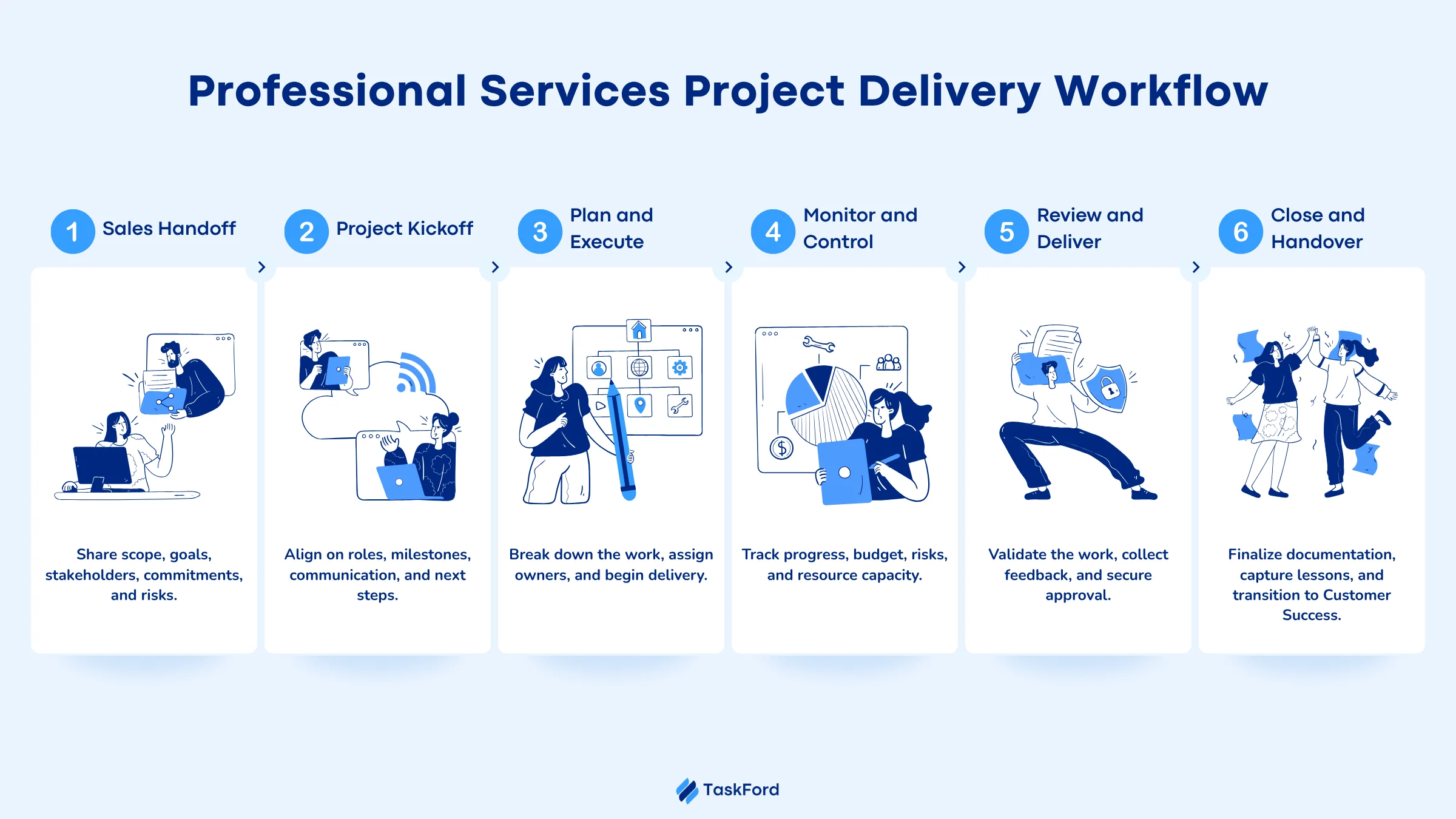
Phase 1: Prepare for Delivery and Complete the Sales Handoff
Start by giving the delivery team a complete picture of the project before work begins. The goal is to clarify what was sold, what the client expects, and what could affect delivery.
- Document the project scope, deliverables, success criteria
- Capture the client’s goals, stakeholders, expectations, and known risks
- Confirm the budget, timeline, and resource requirements
- Define how scope changes will be reviewed and approved
- Hold a formal handoff meeting between Sales and the delivery team
Pro tip: Do not rely on the statement of work alone. Ask Sales to share any verbal commitments, stakeholder concerns, or expectations that may not appear in the contract.
Watch out for: Unclear assumptions around timelines, responsibilities, or client availability. These often become delivery issues later.
Phase 2: Align the Team During Project Kickoff
Use the kickoff to create alignment between internal teams and the client. Everyone should leave with a shared understanding of the goals, responsibilities, milestones, and communication process.
- Hold separate internal and client kickoff meetings
- Define roles and responsibilities using a RACI matrix
- Create a communication plan
- Set up the project workspace in TaskFord or another platform
- Confirm milestones, deadlines, and reporting frequency
- Create a RAID log for risks, assumptions, issues, and dependencies
Pro tip: End the kickoff by reviewing immediate next steps, owners, and deadlines. This helps maintain momentum after the meeting.
Watch out for: Overloading the kickoff with too much detail. Focus on alignment and move deeper planning discussions into separate sessions.
Phase 3: Build the Plan and Begin Execution
Turn the agreed scope into a practical plan that the team can follow and update throughout the project. The plan should make responsibilities, dependencies, and priorities easy to understand.
- Break deliverables into tasks and subtasks
- Add owners, deadlines, and dependencies
- Assign resources based on skills and availability
- Set up daily time tracking
- Create shared views or tasks for client collaboration
- Finalize and baseline the project plan
Pro tip: Build enough detail to support execution, but avoid creating a plan that is too complex to maintain. A simple, current plan is more useful than a detailed, outdated one.
Watch out for: Assigning work based only on availability. Consider skills, workload, and other project commitments before allocating resources.
Phase 4: Monitor Progress and Keep the Project Under Control
Review project performance throughout delivery so your team can respond to risks, delays, and budget issues before they escalate.
- Track progress using dashboards and portfolio views
- Compare planned hours and budget against actuals
- Monitor project margin throughout the engagement
- Hold regular internal and client status meetings
- Review risks, issues, and blockers
- Check resource capacity and workload each week
- Update the project plan when approved changes occur
Pro tip: Look at trends, not only current status. A project may appear on track while margin, capacity, or milestone performance is steadily declining.
Watch out for: Status meetings that only report progress. Use them to make decisions, resolve blockers, and confirm actions.
Phase 5: Review Quality and Deliver the Work
Before presenting work to the client, confirm that it meets the agreed requirements and has passed the necessary internal reviews.
- Review deliverables internally
- Complete testing and validation
- Resolve quality issues before client review
- Collect client feedback and approvals
- Provide training and knowledge transfer where required
- Obtain sign-off for completed milestones
Pro tip: Agree on review and approval criteria early in the project. This reduces subjective feedback and makes sign-off easier.
Watch out for: Treating client review as the first quality check. Internal review should happen before the client sees the deliverable.
Phase 6: Close the Project and Complete the Handover
Finish the engagement by securing final acceptance, completing financial and administrative work, and preparing Customer Success for the next stage of the relationship.
- Obtain final client acceptance
- Complete and organize project documentation
- Conduct an internal lessons-learned review
- Reconcile project hours, costs, and revenue
- Complete final invoicing
- Hand over relevant information to Customer Success
- Collect client feedback
- Recognize the team’s achievements
Pro tip: Schedule the Customer Success handover before the project ends. This gives both teams time to review outcomes, risks, open items, and future opportunities.
Watch out for: Closing the project as soon as the main deliverable is complete. Financial reconciliation, documentation, feedback, and handover are all part of successful delivery.
Key Metrics Every Professional Services Team Should Track
A project may appear to be progressing well while still falling behind on budget, profitability, or client expectations. Tracking the right metrics gives Professional Services teams a clearer view of project health and helps them respond early.
On-Time Delivery Rate
On-time delivery rate measures the percentage of projects or milestones completed by the agreed deadline.
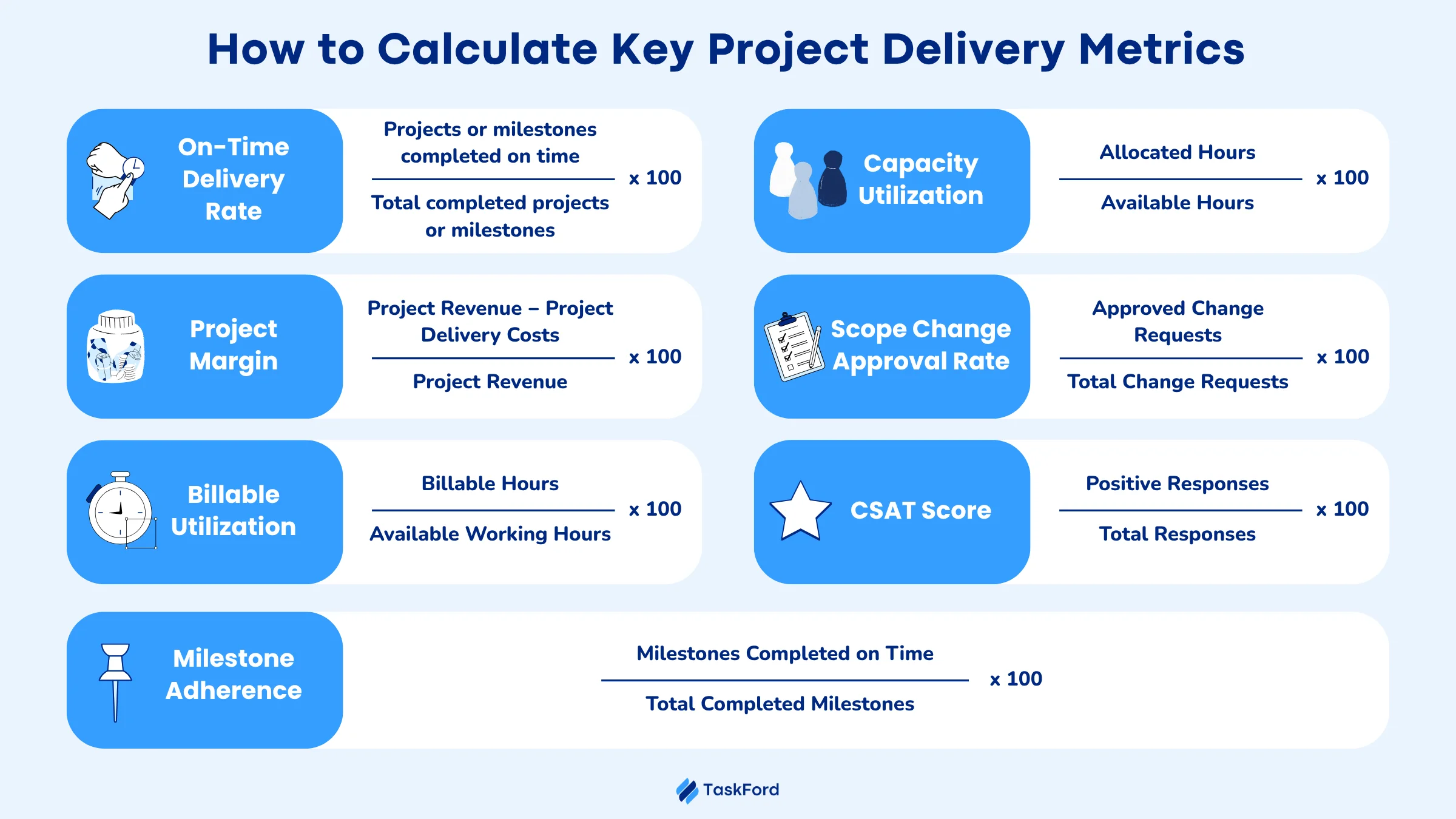
On-Time Delivery Rate = (Projects or milestones completed on time ÷ Total completed projects or milestones) × 100
This metric helps teams identify recurring delays and assess whether project plans, estimates, and timelines are realistic.
Project Margin
Project margin shows how profitable an engagement is after delivery costs are considered.
Project Margin = ((Project Revenue − Project Delivery Costs) ÷ Project Revenue) × 100
Comparing planned and actual margin throughout the project helps teams detect rising costs, unplanned effort, and scope changes before they significantly affect profitability.
Billable Utilization
Billable utilization measures the percentage of available working time spent on billable client work.
Billable Utilization = (Billable Hours ÷ Available Working Hours) × 100
It helps leaders understand how effectively resources are being used while balancing client work, internal responsibilities, and team capacity.
Resource Allocation and Capacity
Resource allocation and capacity metrics show how much of a team member’s available time has already been assigned.
Capacity Utilization = (Allocated Hours ÷ Available Hours) × 100
This helps teams identify who is available, fully assigned, or overloaded, especially when specialists are shared across multiple projects.
Scope Change Volume
Scope change volume tracks how often the original project scope is modified.
Teams can measure the total number of change requests, their impact on delivery, and the percentage that are approved.
Scope Change Approval Rate = (Approved Change Requests ÷ Total Change Requests) × 100
Tracking scope changes helps teams understand their effect on timelines, budgets, resources, and client expectations.
Client Satisfaction
Client satisfaction measures how clients feel about the delivery experience and the value they receive.
For CSAT surveys, teams can use the following formula:
CSAT Score = (Positive Responses ÷ Total Responses) × 100
Client satisfaction may also be measured through NPS, milestone feedback, or post-project reviews.
Milestone Adherence
Milestone adherence measures the percentage of milestones completed by their planned dates.
Milestone Adherence = (Milestones Completed on Time ÷ Total Completed Milestones) × 100
It provides an early indication of schedule health and helps teams identify delays before they affect final delivery.
Project Delivery Metrics at a Glance
| Metric | What It Shows | Review Frequency |
|---|---|---|
| On-time delivery rate | Whether projects or milestones meet deadlines | Weekly or monthly |
| Project margin | Whether the engagement remains profitable | Weekly |
| Billable utilization | How much available time is spent on billable work | Weekly or monthly |
| Resource capacity | Where availability or workload issues exist | Weekly |
| Scope change volume | How often the agreed scope changes | Throughout the project |
| Client satisfaction | How clients view the delivery experience | At milestones and closure |
| Milestone adherence | Whether the project schedule remains on track | Weekly |
Common Project Delivery Challenges and How to Overcome Them
Even with a clear process in place, Professional Services teams can still face challenges that affect timelines, margins, and the client experience. The key is to identify these issues early and respond before they become larger delivery problems.
- Scope creep: Introduce a formal change request process. Before approving additional work, review its impact on the budget, timeline, resources, and deliverables.
- Resource overload: Review workload and capacity regularly. Consider each team member’s availability, skills, project priorities, and planned leave before assigning new work.
- Limited project visibility: Use a shared project management system to keep progress, deadlines, budgets, risks, and resource demand in one place.
- Inaccurate time tracking: Encourage team members to log time daily. Clear task structures also make it easier to record hours against the correct project and activity.
- Multiple client projects: Use portfolio-level views to compare project health, identify resource conflicts, and prioritize work across active engagements.
- Delayed client input: Assign clear owners and due dates for client actions. Make sure clients understand how late feedback or approvals may affect the schedule.
- Gaps between Professional Services and Customer Success: Create a structured handover that covers project outcomes, open issues, stakeholder context, adoption risks, and next steps.
Addressing these challenges proactively helps teams reduce delivery risk, protect profitability, and create a more consistent experience for clients.
Best Practices for High-Performance Project Delivery
A strong checklist provides structure, but consistent delivery also depends on good habits.
- Involve delivery leaders before the contract is signed to validate scope, timelines, and resource needs.
- Track time daily to maintain accurate cost, utilization, and margin data.
- Review planned versus actual hours, costs, and revenue throughout the project.
- Share progress, risks, decisions, and next steps with clients proactively.
- Keep delivery milestones tied to the client’s business goals and desired outcomes.
- Review team capacity regularly to prevent conflicts, delays, and burnout.
- Use templates and standardized workflows for repeatable project activities.
- Keep tasks, timelines, risks, documents, and updates in one shared system.
These practices help teams reduce risk, protect margins, and deliver more predictable results.
How TaskFord Makes Project Delivery Easier
TaskFord helps Professional Services teams manage projects, resources, time, and reporting in one place.
- Use portfolio and multi-project views to compare project health across active engagements.
- Plan timelines and dependencies with Gantt charts, and manage day-to-day work with Kanban boards.
- Balance workloads using resource and capacity views.
- Monitor progress, deadlines, and delivery risks through real-time dashboards.
- Give teams and leaders a shared view of priorities, responsibilities, and project status.
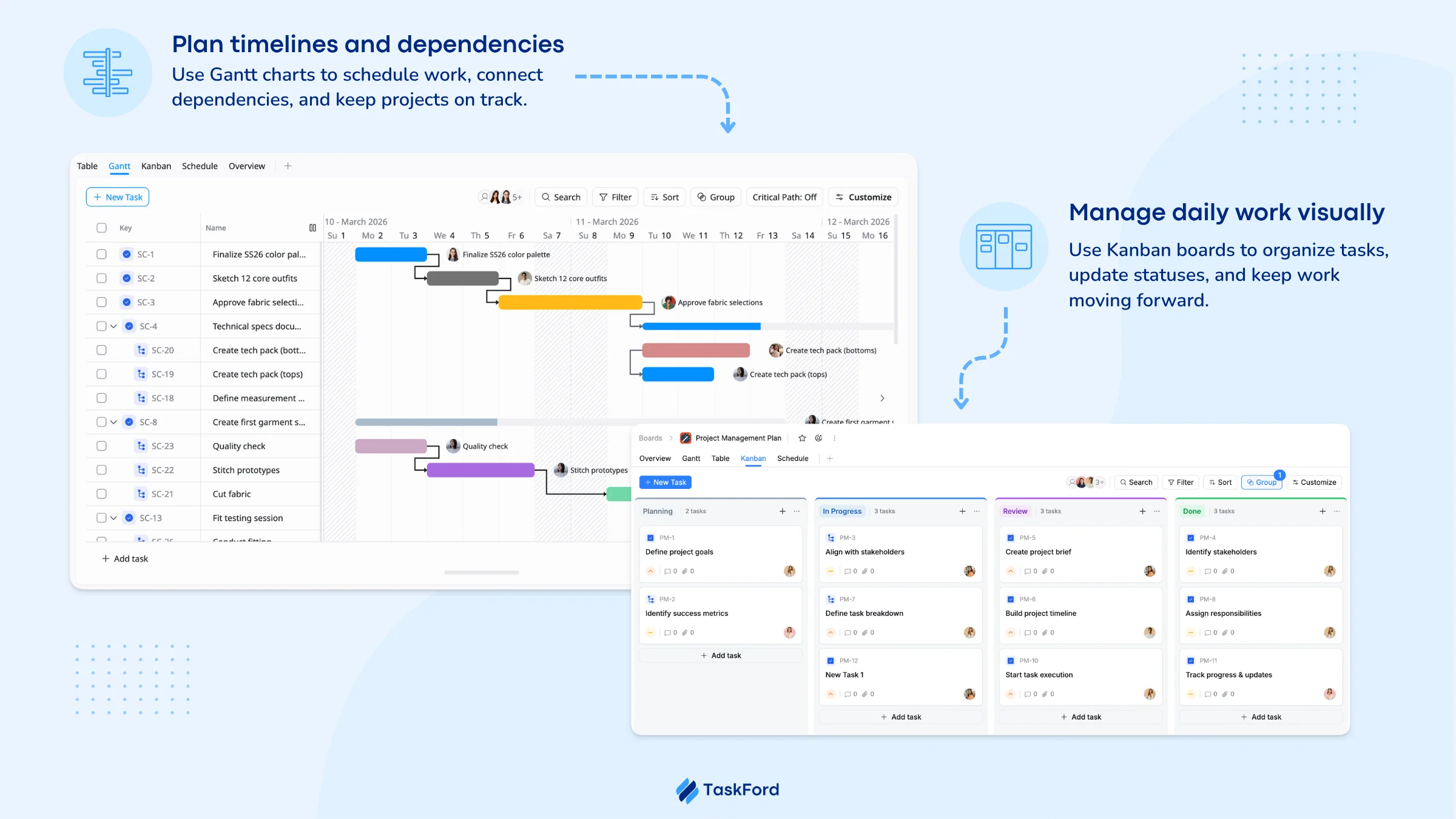
By centralizing delivery information, TaskFord reduces manual reporting and gives teams the visibility they need to make faster, better-informed decisions.
Deliver Projects with Greater Confidence
Great project delivery starts with a clear, repeatable process. With better handoffs, realistic planning, regular check-ins, and open communication, your team can stay on track and avoid unnecessary surprises.
Use this checklist to reduce risk, protect margins, and create a smoother experience for both your team and your clients.
TaskFord keeps project planning, resources, time tracking, and reporting in one place, so it is easier to manage every stage of delivery.
Related Articles















![Professional Services Project Plan Template [Free Excel Download]](/marketing/blog/professional-services-project-plan-template-free-excel-download.webp)



Subscribe for Expert Tips
Unlock expert insights and stay ahead with TaskFord. Sign up now to receive valuable tips, strategies, and updates directly in your inbox.