Project Capacity Planning for Service Firms: Match Demand to Team Capacity
Learn how to match project demand with team capacity, identify staffing gaps, and make realistic delivery commitments before taking on new work.
A new client project is close to signing. The start date looks doable, but the senior consultant is already supporting two accounts, existing projects are taking more capacity than expected, and the specialist needed for discovery is nearly booked.
This is the real capacity-planning problem in professional services.
You may still have room on paper, but that does not mean the right people are free when the work actually needs to start.
In this guide, we’ll look at how professional services teams can compare upcoming project demand with real team capacity, spot staffing gaps early, and decide what work they can realistically commit to.
What Is Project Capacity Planning?
When a new project is coming in, professional services teams need to answer a practical question: can we deliver this work with the capacity we actually have?
Project capacity planning applies the principles of capacity planning to project delivery by helping teams compare upcoming work with the people, skills, and time available to complete it.
This means looking at:
- Which projects are starting and when
- What roles and skills each project requires
- Who is already committed to existing client work
- Where capacity gaps may appear before delivery is affected
The goal is to give teams enough visibility to make better staffing decisions before committing to new projects.
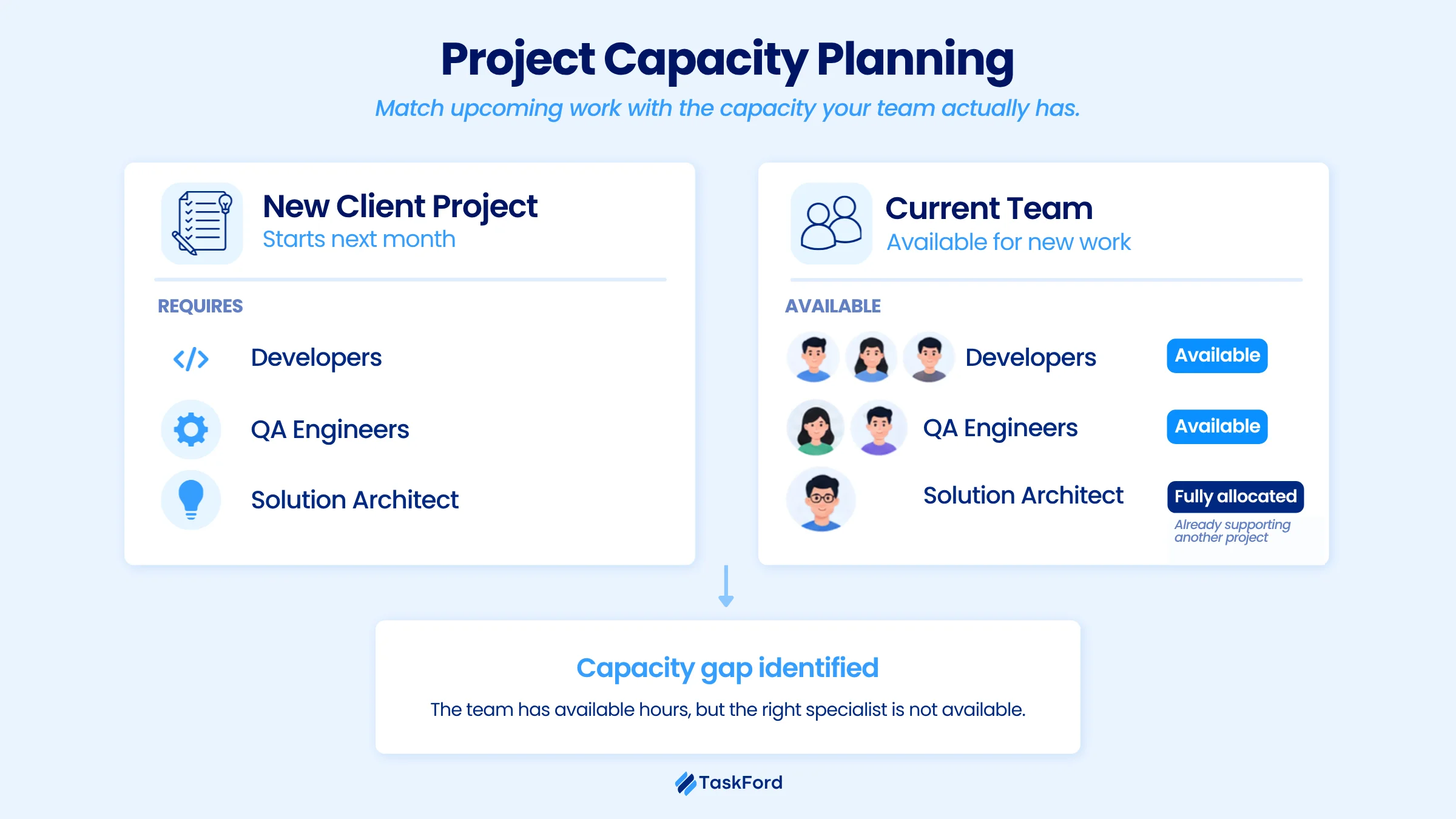
For professional services firms, this visibility matters because having available hours does not always mean having the right expertise available. A team may have available capacity overall but still struggle to start a project when a key specialist is already supporting another engagement.
Why Capacity Gets Complicated in Professional Services
A professional services firm can have spare capacity overall and still struggle to staff the next project. The real issue is whether the right people are free at the right time.
You might have developers with room next month while the solution architects needed for a new engagement are already booked across other clients. And even that picture can change quickly as deals move, start dates shift, or clients ask for more work.
That makes future capacity difficult to pin down. In the Resource Management Institute’s 2024 research, 76% of respondents said inaccurate demand data made resource forecasting harder, while 63% pointed to a lack of timely demand data. For service firms, this matters because today’s staffing plan is based partly on work that has not started yet. If an opportunity moves forward sooner than expected, requires more senior expertise, or gets delayed, the capacity you thought you had can change with it.
Current projects create the same knock-on effect. A longer discovery phase, extra client revisions, or a delayed handoff can keep key people busy when they were supposed to move to the next engagement.
So looking at open hours alone is not enough. You need to know who will actually be available, what skills they bring, and when they can take on the next piece of client work. A clear resource availability checklist can help teams review these factors consistently before making staffing decisions, especially when multiple client projects compete for the same people.
How Service Firms Make Capacity Decisions Before Committing to Work
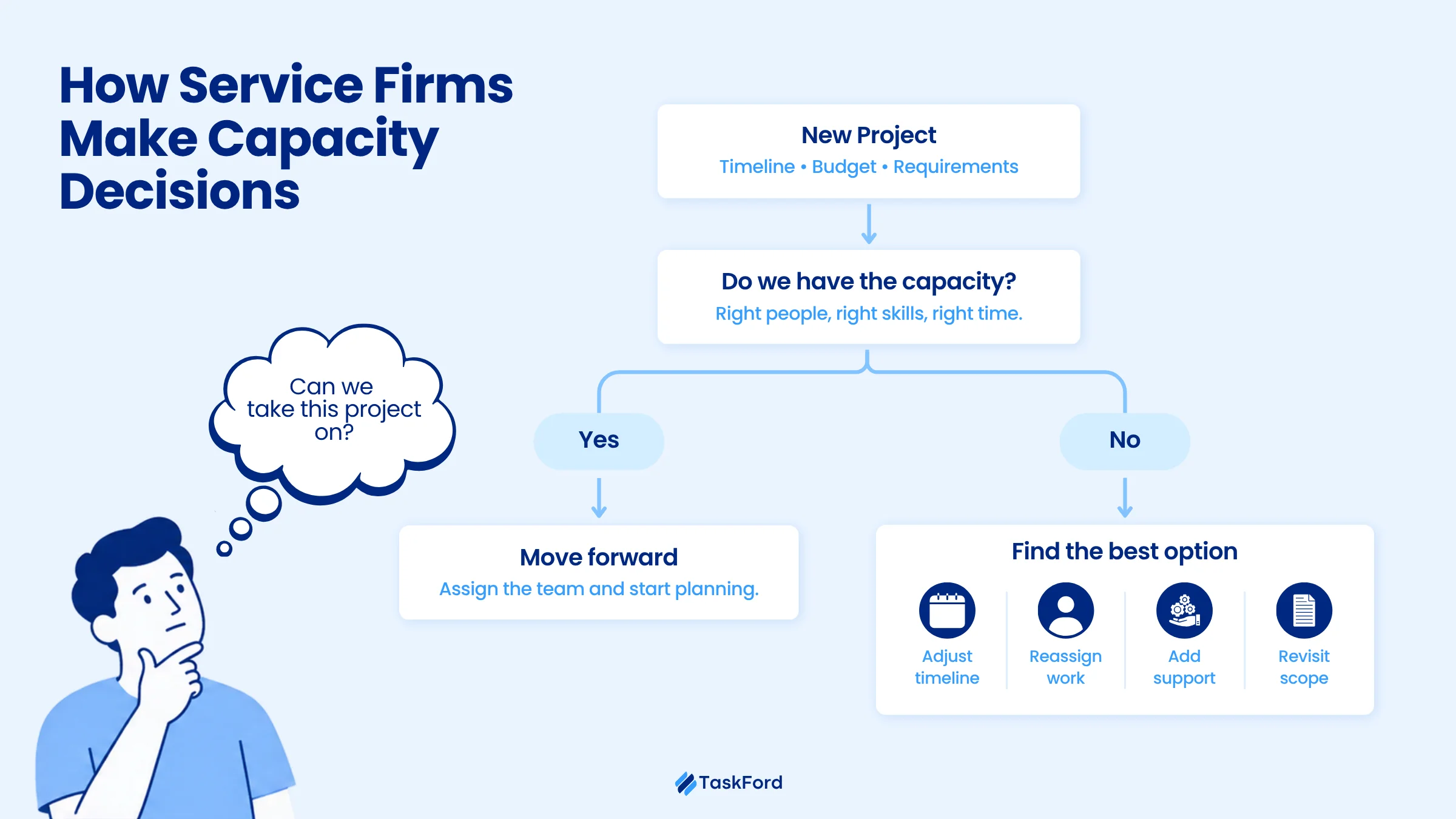
Before saying yes to a new engagement, most teams check the obvious things first: the timeline, the budget, and whether someone can start the work. The tricky part is that “someone” is often the same person who is already needed on three other projects.
That is why capacity decisions require more than checking who appears available. Delivery leaders need to understand what capacity is already committed, where the new project could create pressure, and what adjustments are needed before making a client commitment.
1. Can our current commitments support another project?
The easiest way to create a staffing problem is to look only at the project plan and ignore everything happening around it.
A consultant might look available in the system, but their calendar may already be full of client calls, review sessions, internal discussions, support requests, and those “quick questions” that somehow take half a day.
This becomes even more challenging for specialists who support multiple engagements. A solution architect, technical lead, or subject matter expert may appear to have some availability, but their time is often the hardest capacity to move around.
Before committing to new work, teams need to understand which capacity is truly flexible and which capacity is already protecting existing client commitments.
2. Where could the next project create pressure?
Most capacity problems do not arrive with a dramatic warning. They usually appear when someone says, “Can we just borrow the architect for two weeks?” for the fourth project in a row.
Most firms do not run into a problem where everyone is fully booked. The harder problem is finding the right expertise at the right moment. One specialist role can become the bottleneck that determines whether a project can move forward.
For example, an IT consulting firm may have enough developers and testers available for a new implementation project. However, if the consultants who can lead discovery are already supporting other clients, the project timeline is affected before development even starts.
Looking at capacity by role, skill, and timing helps teams spot these pressure points early and understand where a new commitment may compete with existing work.
3. What trade-offs should we make?
When a new project does not fit neatly into the current workload, teams need to decide what can move, change, or receive additional support.
Depending on the situation, that may mean adjusting the project start date, moving assignments between projects, bringing in contractors, changing the delivery approach, or revisiting the scope.
The earlier the team sees the trade-off, the more choices they have. Wait too long, and the solution often becomes the classic professional-services strategy: asking the same people to “stretch a little more.”
Good capacity planning helps firms make these decisions before the pressure reaches the delivery team, balancing new business opportunities with what the team can realistically deliver.
Use Case: Can This Firm Take On Another Client Project?
A consulting firm has just received a six-month implementation project from an existing client. The opportunity looks attractive: the client wants to start within four weeks, the scope matches the team’s expertise, and winning the work would help fill the upcoming pipeline.
The first staffing review looks positive. Across the business, the firm appears to have enough available hours to support the engagement.
However, the delivery manager does not stop at the total numbers. The team looks deeper into the project plan and realizes the timeline depends heavily on one role: the solution architect who will lead discovery, define the technical approach, and guide the implementation team.
That person is already committed to two other client projects during the same period.
The problem becomes clearer: the firm has enough capacity overall, but not enough capacity in the role that determines whether the project can start successfully.
Finding the real capacity constraint
Instead of asking, “Do we have enough people for this project?”, the team breaks the demand down by role and delivery phase.
| Role | Discovery phase demand | Available capacity | Gap |
|---|---|---|---|
| Solution Architect | 140 hours | 80 hours | -60 hours |
| Developers | 450 hours | 600 hours | +150 hours |
| QA Engineers | 120 hours | 180 hours | +60 hours |
The team now has a clearer picture. Development and QA capacity are available, but the discovery phase cannot move forward without solving the architecture gap.
This changes the decision. The question is no longer whether the firm has enough people. It is whether the firm can create a realistic delivery plan around this constraint.
Making the right staffing decision
With the bottleneck identified, the delivery manager reviews the available options.
Moving the project start date would protect delivery quality but may affect the client’s timeline. Assigning another architect could keep the schedule, but only if that person can build enough context quickly. Bringing in external support may solve the immediate gap, but the cost and knowledge transfer need to be considered.
After reviewing the options, the team decides to start the project as planned but adjust the staffing approach. A senior consultant from another account supports the discovery phase, while the original solution architect remains involved during key technical decisions.
The final staffing approach allows the firm to move forward while protecting existing client commitments and making better use of the expertise already available.
This is the type of decision project capacity planning supports. Instead of discovering a staffing conflict after the project starts, service firms can identify constraints early and make adjustments before they affect client delivery.
Why Capacity Planning Needs to Continue After Projects Start
Getting the staffing plan right at the start of a project does not guarantee smooth delivery later. Client decisions change, scope grows, and some tasks take longer than expected. These changes can easily affect who is available for other projects.
The problem with many teams is that they continue working from the original plan, even when the actual workload has already changed.
A stronger approach is to regularly compare the plan with what is happening in delivery:
Planned capacity
→ Who was expected to work on the project?
Actual workload
→ Who is spending more time than expected? Which projects are taking more effort?
Upcoming demand
→ What new projects, milestones, or client commitments are coming next?
For example, a consultant may be assigned 40 hours per month to a client project, but additional requirements and review cycles increase their workload to 70 hours. If the team does not update the plan, those extra 30 hours may reduce the time available for another project.
Regular capacity reviews help teams spot these changes early and take action:
- Rebalance assignments before workloads become unmanageable
- Adjust timelines based on actual progress
- Bring in additional support when needed
- Protect important milestones across client projects
Ongoing capacity planning helps teams make decisions based on the work happening now, not a plan created weeks or months ago.
How TaskFord Helps Service Firms With Project Capacity Planning
Effective project capacity planning requires a clear connection between upcoming work, project timelines, and team availability. Teams often use resource capacity planning software to bring these views together and make better allocation decisions.
TaskFord helps professional services teams connect project planning with workload visibility, resource allocation, and actual delivery data to make more realistic staffing decisions.
With TaskFord, teams can:
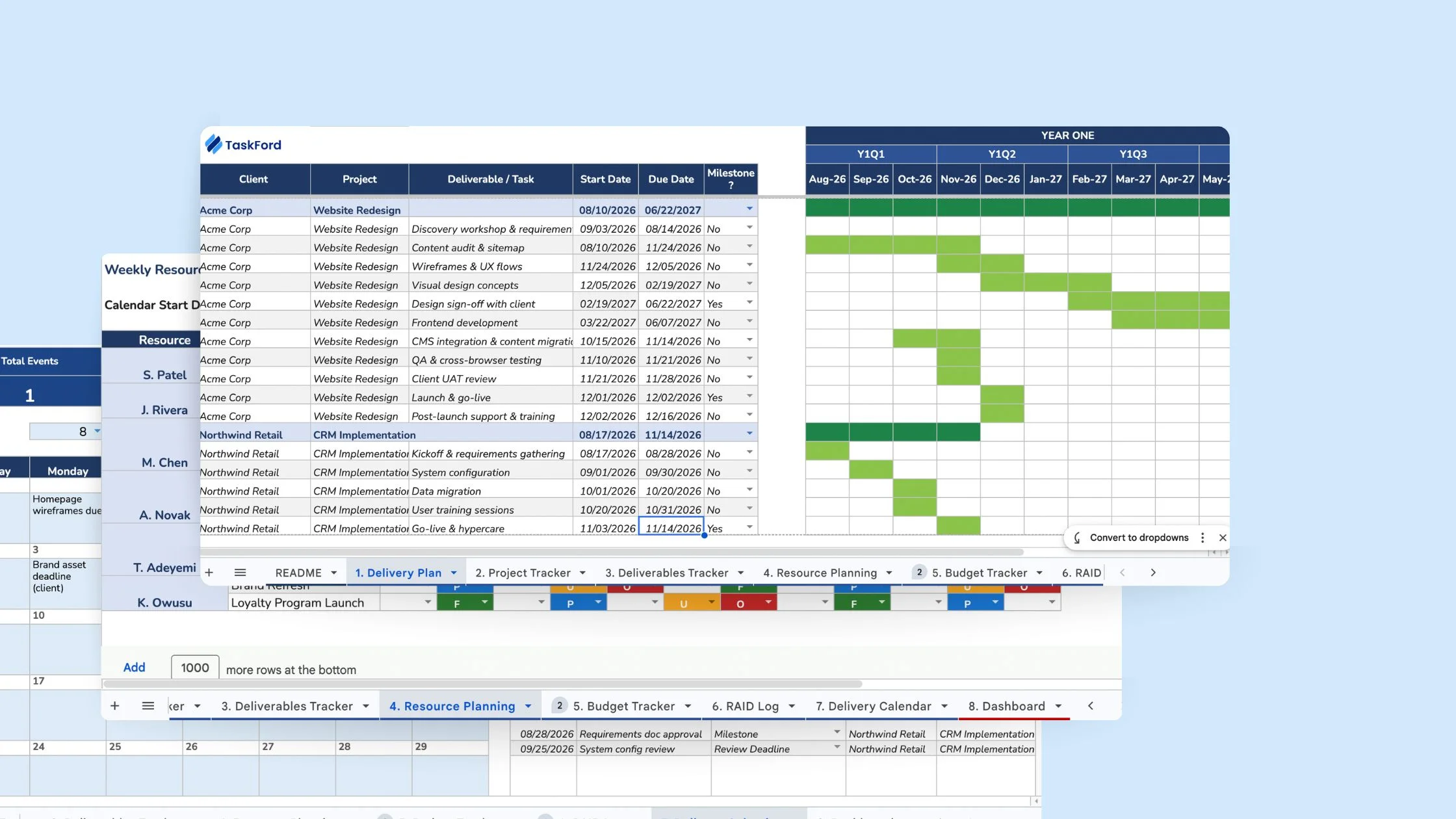
- Plan projects with timelines and workload visibility: Use Gantt and Schedule views to understand project phases, dependencies, and when specific team members are needed. Combined with workload visibility, teams can identify potential capacity conflicts before they affect delivery.
- Balance workload across multiple projects: See how work is distributed across the team and identify overloaded members or uneven assignments. Managers can adjust allocations to prevent critical resources from becoming bottlenecks.
- Manage resources based on availability: Understand who is assigned to which projects and match project requirements with available team capacity instead of relying on manual tracking.
- Compare planned effort with actual delivery: Use time tracking and timesheets to understand how much effort projects actually require. These insights help teams improve future estimates and make better capacity decisions.
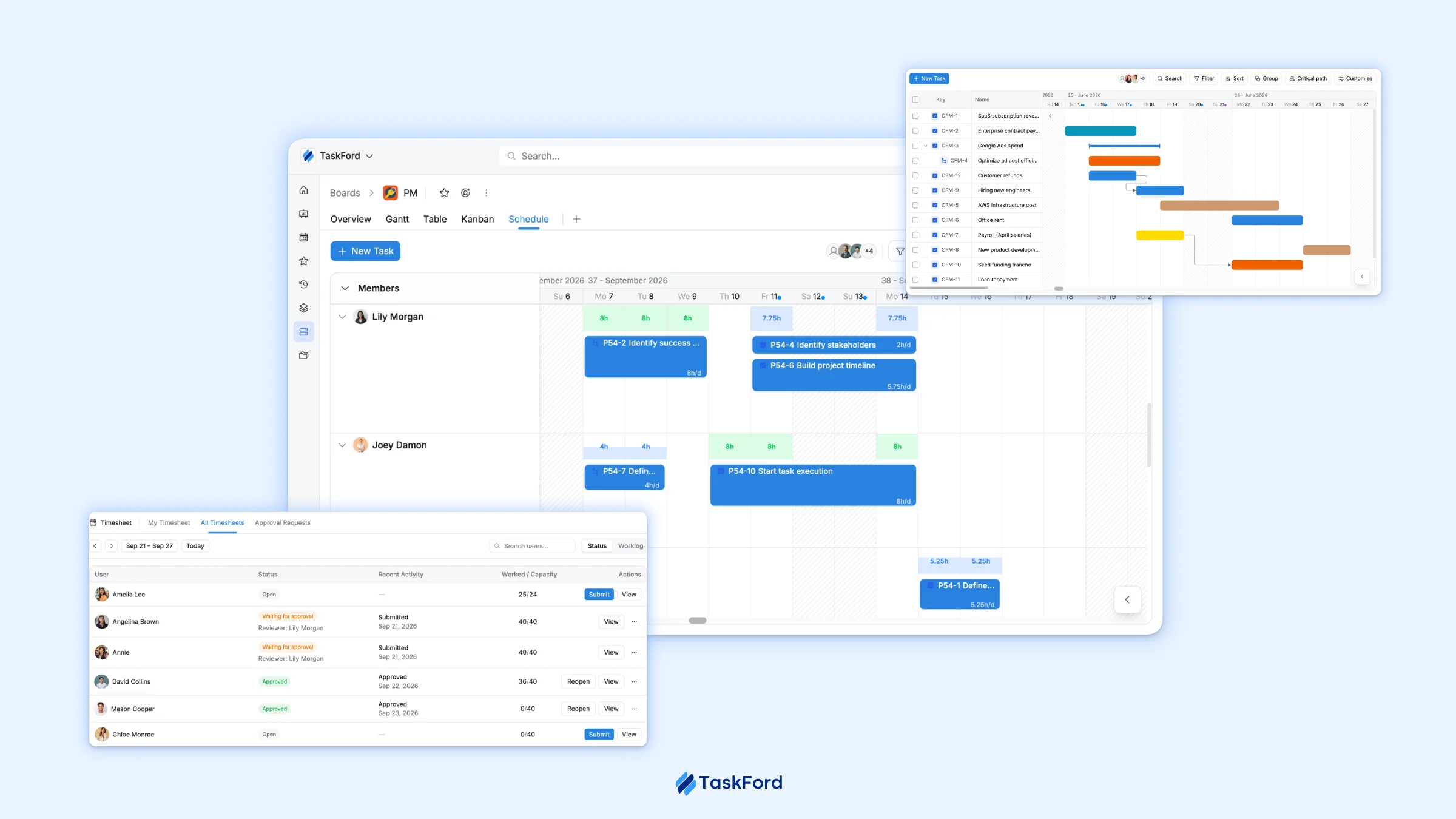
By connecting project schedules, team capacity, and delivery data in one place, TaskFord helps professional services teams commit to new work with greater confidence while keeping existing projects on track.
Conclusion
Project capacity planning gives professional services teams a clearer view of what they can realistically deliver before commitments are made.
By looking at project demand, team workload, specialist availability, and actual delivery effort together, firms can identify staffing risks earlier and make better decisions around timelines, priorities, and resource allocation.
For service firms, the value of capacity planning comes from aligning people, skills, and timing so client commitments remain realistic.
With connected project planning, workload visibility, and delivery insights, TaskFord helps service teams turn capacity planning from a reactive staffing exercise into a more predictable way to deliver client projects.
Related Articles












![Professional Services Project Plan Template [Free Excel Download]](/marketing/blog/professional-services-project-plan-template-free-excel-download.webp)




Subscribe for Expert Tips
Unlock expert insights and stay ahead with TaskFord. Sign up now to receive valuable tips, strategies, and updates directly in your inbox.