5 Resource Questions Managers Should Answer With Data, Not Guesswork
Most companies already have workforce data. Here are the five questions that reveal whether they're actually making decisions with it, or still guessing.
Managers have more workforce data than ever. Staffing schedules, timesheets, utilization reports, skills lists, project pipelines all exist somewhere in the system. Yet many still cannot answer a basic question: Do we have the right people, skills, and capacity to deliver the work ahead?
Data existing somewhere is not the same as data shaping a decision. Information is often scattered, outdated, or disconnected from the moment managers actually need it.
These five questions help reveal whether resource management is truly data-driven, or still running on guesswork.
Why More Resource Data Still Leads to Guesswork
Organizations already collect information about project assignments, working hours, utilization, skills, leave, and upcoming work as part of resource planning. On paper, this should give managers everything they need to plan their teams.
In practice, having more data does not always create better visibility.
Data Is Available but Disconnected
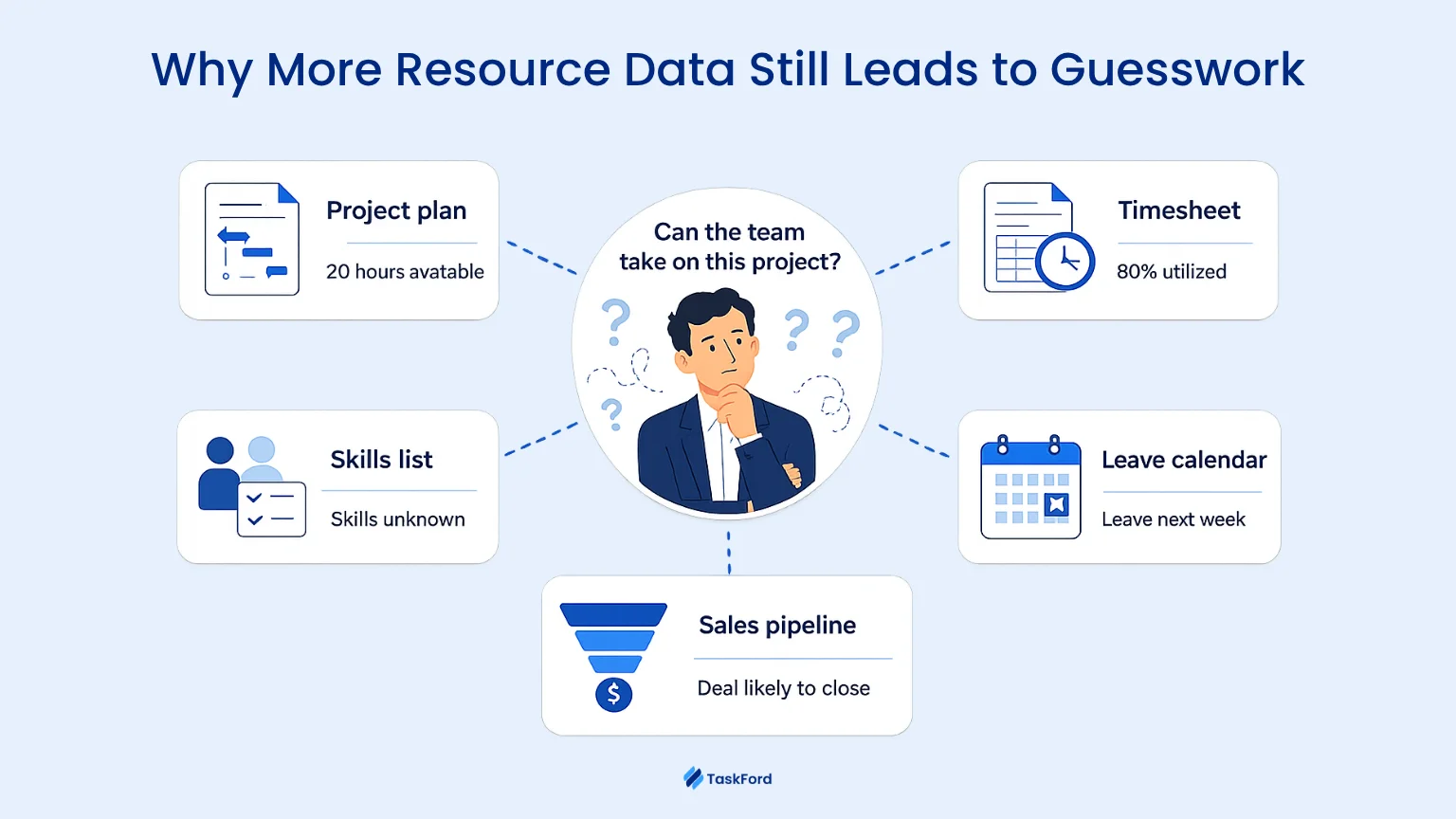
Each system usually holds only part of the picture. Project tools show assigned work. Timesheets record past hours. HR systems hold availability. Sales pipelines hint at demand that hasn’t arrived yet.
When these sources are disconnected, managers must piece the information together themselves. They may see that someone has free hours without knowing about competing deadlines, internal work, or whether that person has the skills required.
Most Reports Look Backward
Traditional reports explain what already happened: last month’s utilization, missed deadlines, completed hours.
Managers need forward-looking answers too. Who is approaching overload? Which skills may soon be unavailable? Can the team take on new work without putting current commitments at risk?
According to the Microsoft 2025 Work Trend Index, 53% of leaders said productivity needed to increase, while 80% of workers said they lacked the time or energy to complete their work.
Forecasting Still Relies on Manual Processes
Forecasting should give managers time to prepare. In practice, it often depends on spreadsheets, manual updates, and assumptions nobody’s checked in a while.
Research from the Resource Management Institute found that 95% of surveyed organizations considered forecasting important, yet only 47% had a formal, documented process. Seventy-one percent still used spreadsheets, and only 31% could forecast demand at the skills level.
The problem is not uncertainty itself. It is discovering capacity and skill gaps too late to act. The real test is whether managers can use their data to answer the decisions that shape future delivery.
5 Questions That Reveal Whether Management Is Truly Data-Driven
Having dashboards and reports does not automatically make resource management data-driven. The real test is whether managers can use connected information to answer five practical questions.
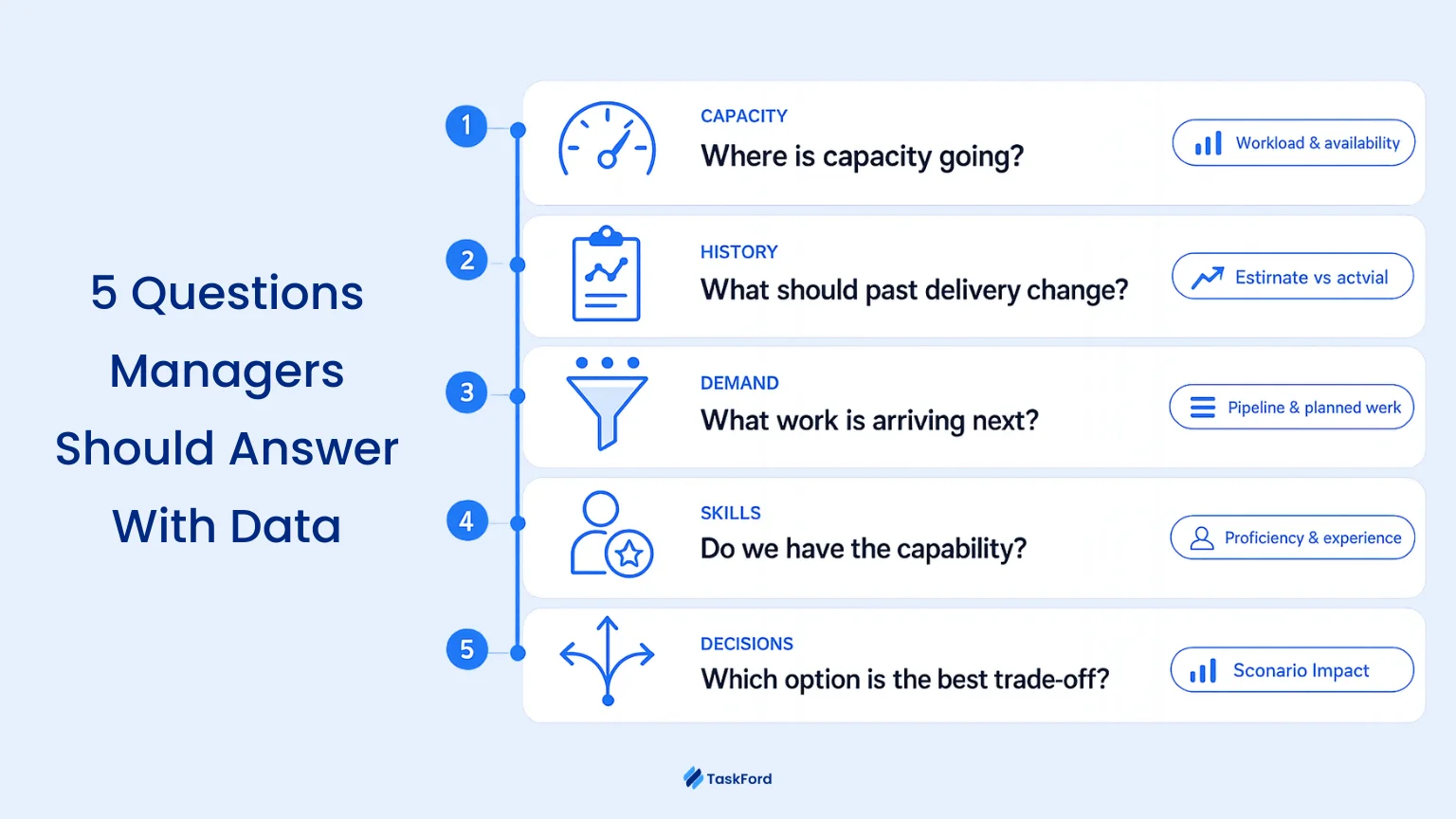
Question 1: Do We Know Where Our Team’s Capacity Is Going?
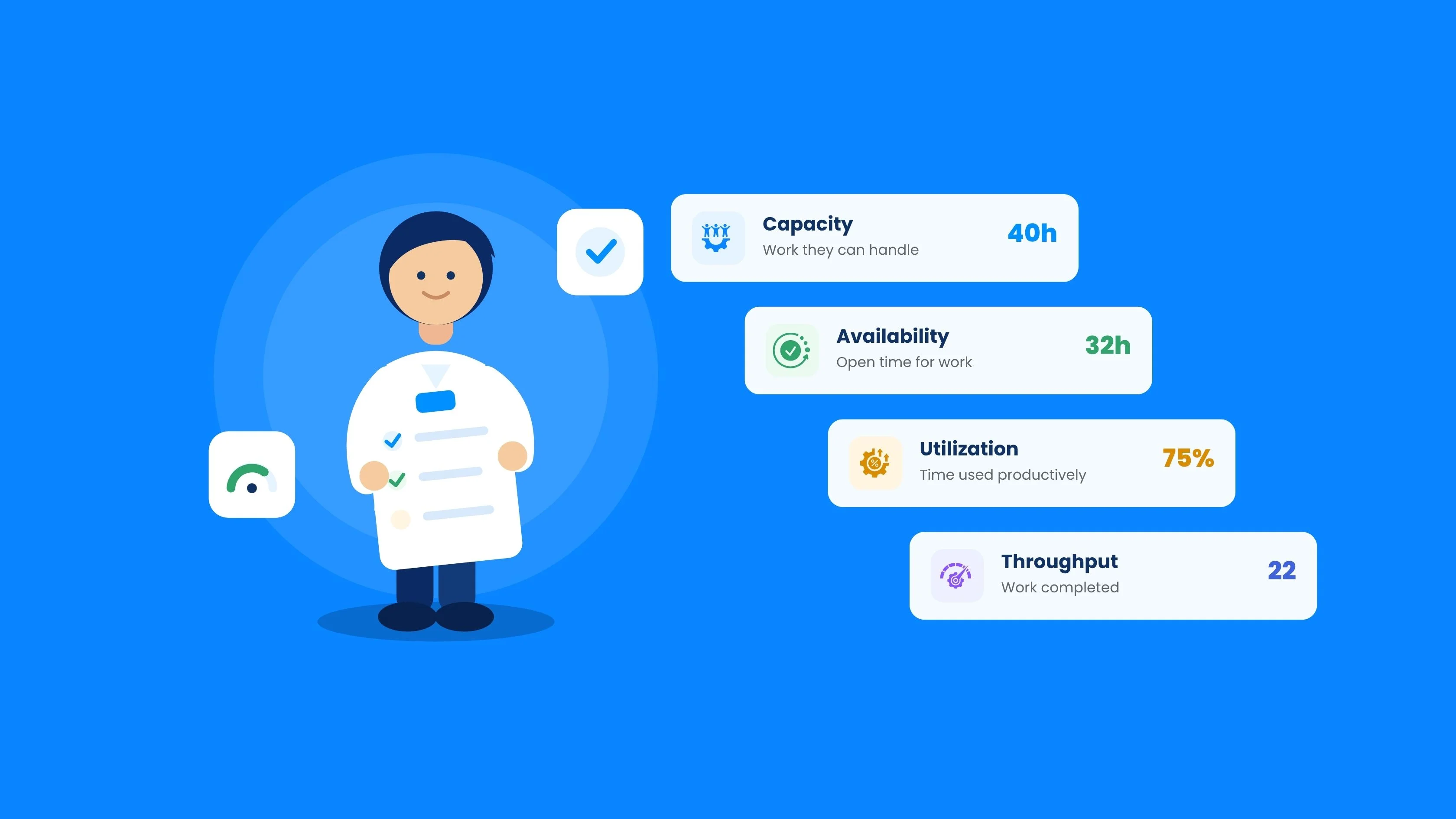
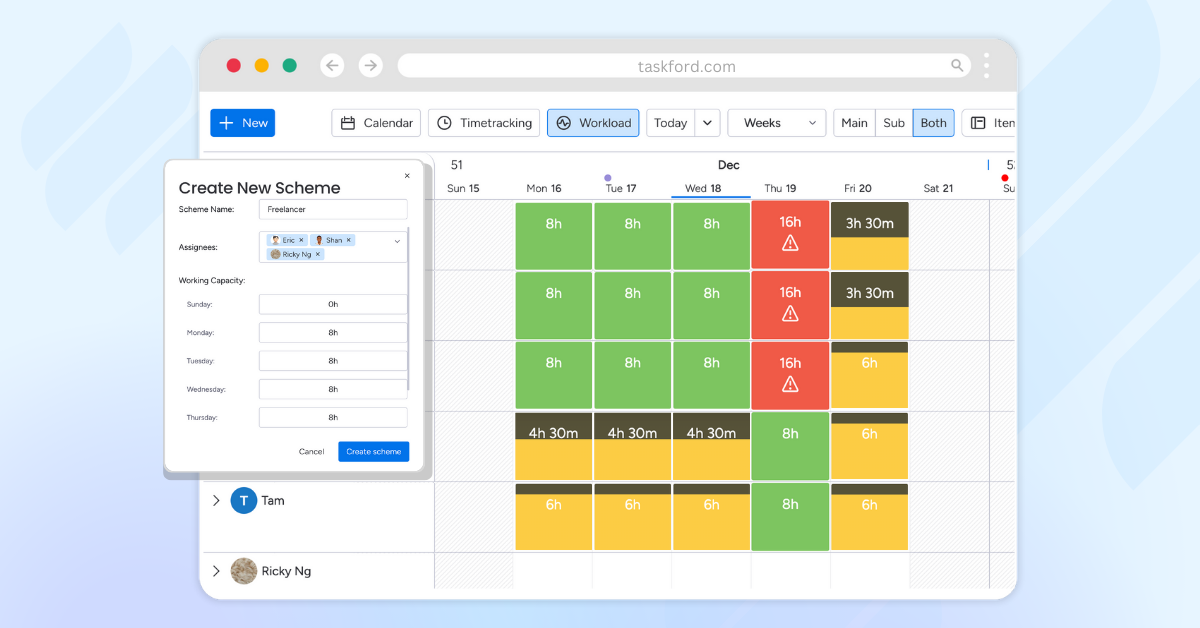
Assigned hours rarely show the full workload. Meetings, reviews, support requests, leave, internal responsibilities, and unplanned work may all consume capacity outside the original plan.
Managers need to know what people are already committed to, when their capacity becomes available, and whether assigning more work will create risk elsewhere.
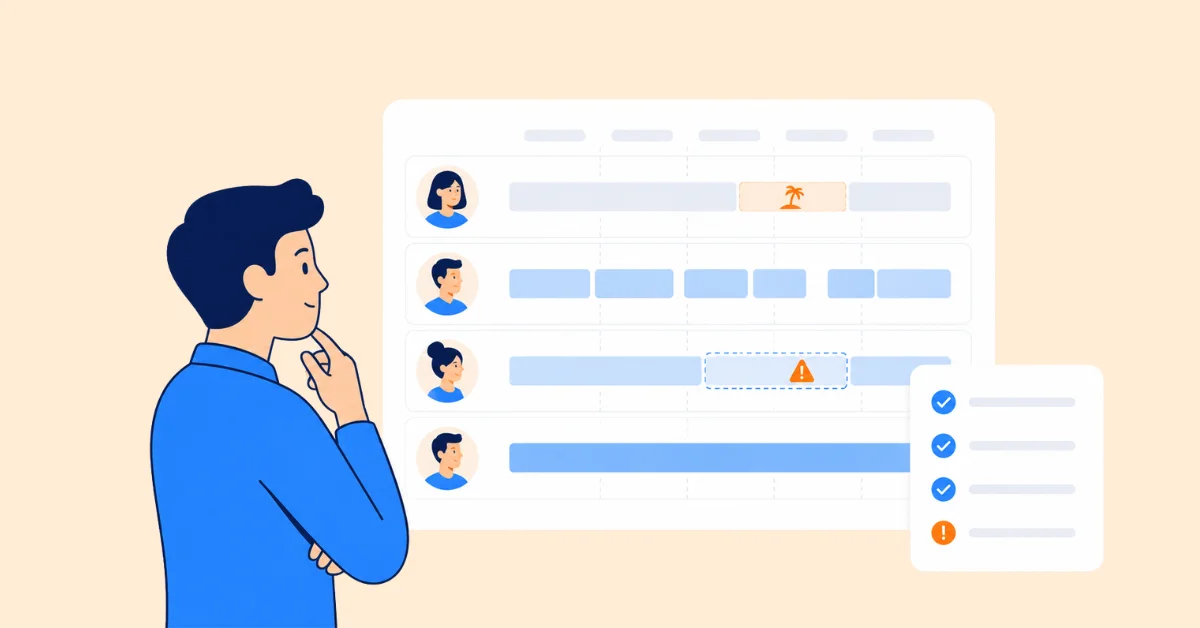
Someone may appear free on a schedule while still managing competing deadlines or critical dependencies. Left unaddressed, this is exactly how teams end up with resource constraints that only become visible after a deadline is already at risk.
Key insight: Free space on a schedule is not always usable capacity.
Question 2: Are We Using Past Delivery to Improve the Next Plan?
Most teams already have data on estimates, actual effort, delays, bottlenecks, and rework. Yet the next project often begins with the same assumptions.
If similar work repeatedly takes longer than expected, future estimates should change. If the same specialist regularly becomes a bottleneck, managers should reduce that dependency.
Historical data should improve schedules, staffing decisions, and delivery expectations, not simply explain what went wrong.
Key insight: Past data matters only when it changes the next decision.
Question 3: Can We See Demand Before It Becomes Urgent?
Sales closes a deal. Delivery finds out later whether the team can actually staff it. That gap between commitment and confirmation is where a lot of the guessing happens, and it is not free.
Most teams still close this gap the same way they always have, a quick conversation between a sales lead and a delivery lead before a deal closes. It works at a small scale. It breaks down once too many deals are moving at once to check on all of them in time.
Rocketlane’s research on professional services teams puts the cost of this mismatch between sales commitments and delivery capacity at 10 to 15% of annual revenue.
Question 4: Do We Have the Skills the Work Requires?
Capacity and capability are not the same.
Someone may have available hours but lack the experience, technical knowledge, or industry expertise needed for the work. The right skill may also exist in the organization but not be available at the required time.
Managers need to connect future demand with current information about skills, proficiency, experience, and availability. This helps reveal where to train employees, hire new talent, or use external specialists.
According to the World Economic Forum’s Future of Jobs Report 2025, nearly 40% of job skills are expected to change by 2030.
Question 5: Can We Compare Options Before Making a Resource Decision?
Most resource decisions get made with one option on the table, not several. There’s rarely time to model what shifting one person changes, or what happens if a project starts two weeks late.
Breeze’s 2026 productivity research found that 50% of teams already spend a full day or more each month just manually collating project status, before they even get to comparing alternatives.
Together, these five questions show whether managers are using data to shape decisions or simply using reports to explain what has already happened.
From Reactive Management to Data-Driven Decisions
Reactive management waits for problems to become visible. Managers look for people after a project begins, adjust workloads after teams become overloaded, and investigate causes only after deadlines slip.
Data-driven management moves those decisions earlier. By connecting workload, delivery history, future demand, and skills, managers can identify risks while there is still time to respond.
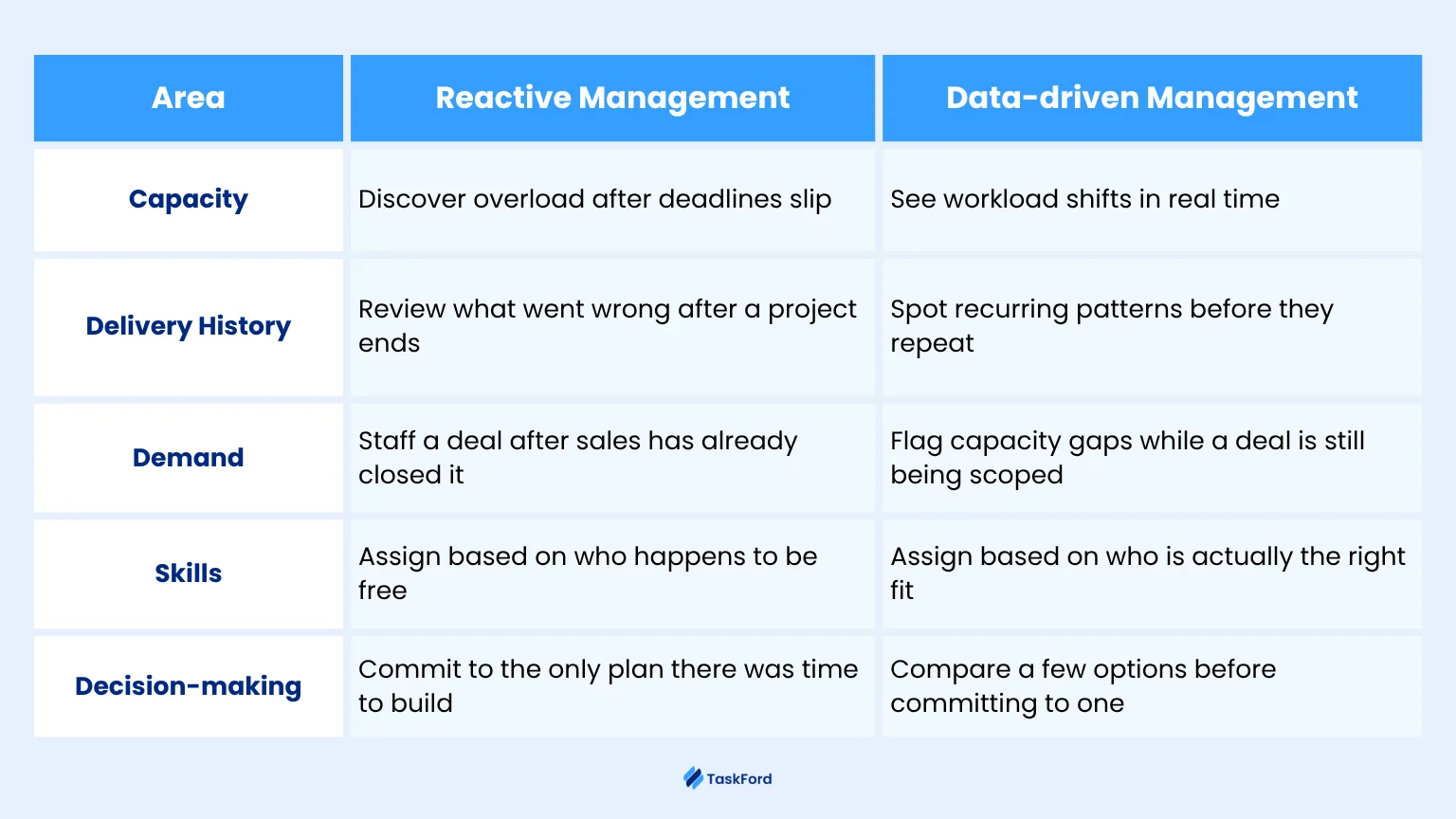
This does not mean every forecast will be perfect. It means managers can see uncertainty earlier, understand the trade-offs, and make decisions based on evidence rather than assumptions.
How TaskFord Supports Data-Driven Resource Management
Answering these five questions requires more than separate reports. Managers need a connected view of projects, priorities, schedules, and team commitments.
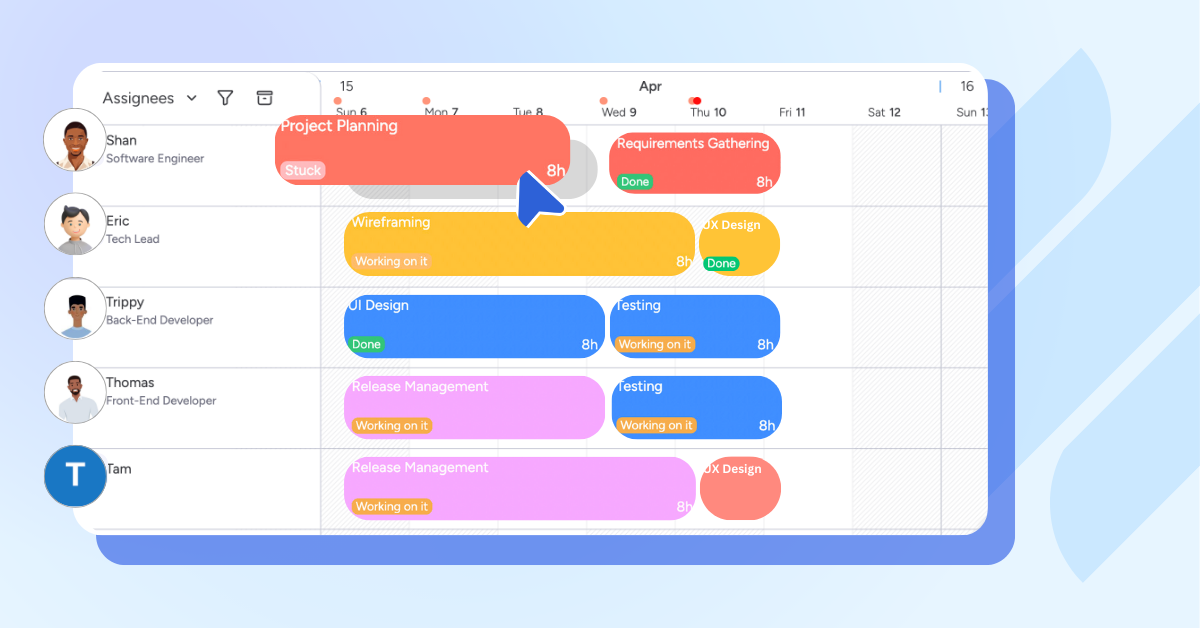
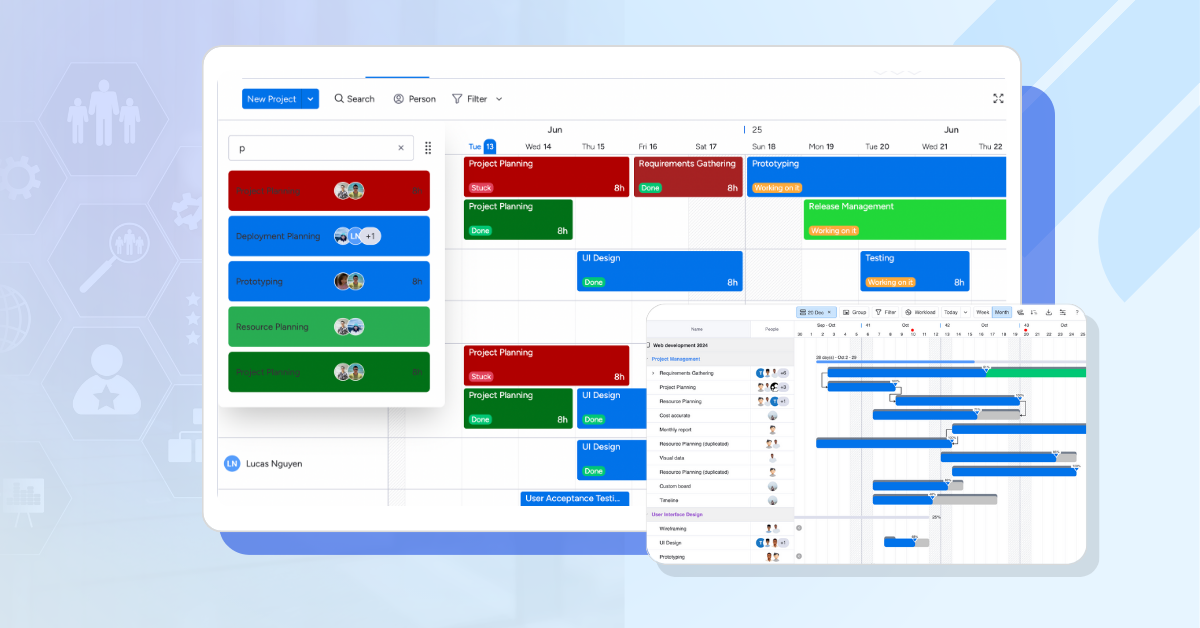
TaskFord brings this information together in one integrated work delivery platform. Managers can organize work across boards and portfolios, build realistic timelines with dependencies, and use the Schedule view to see who is assigned to what and when.
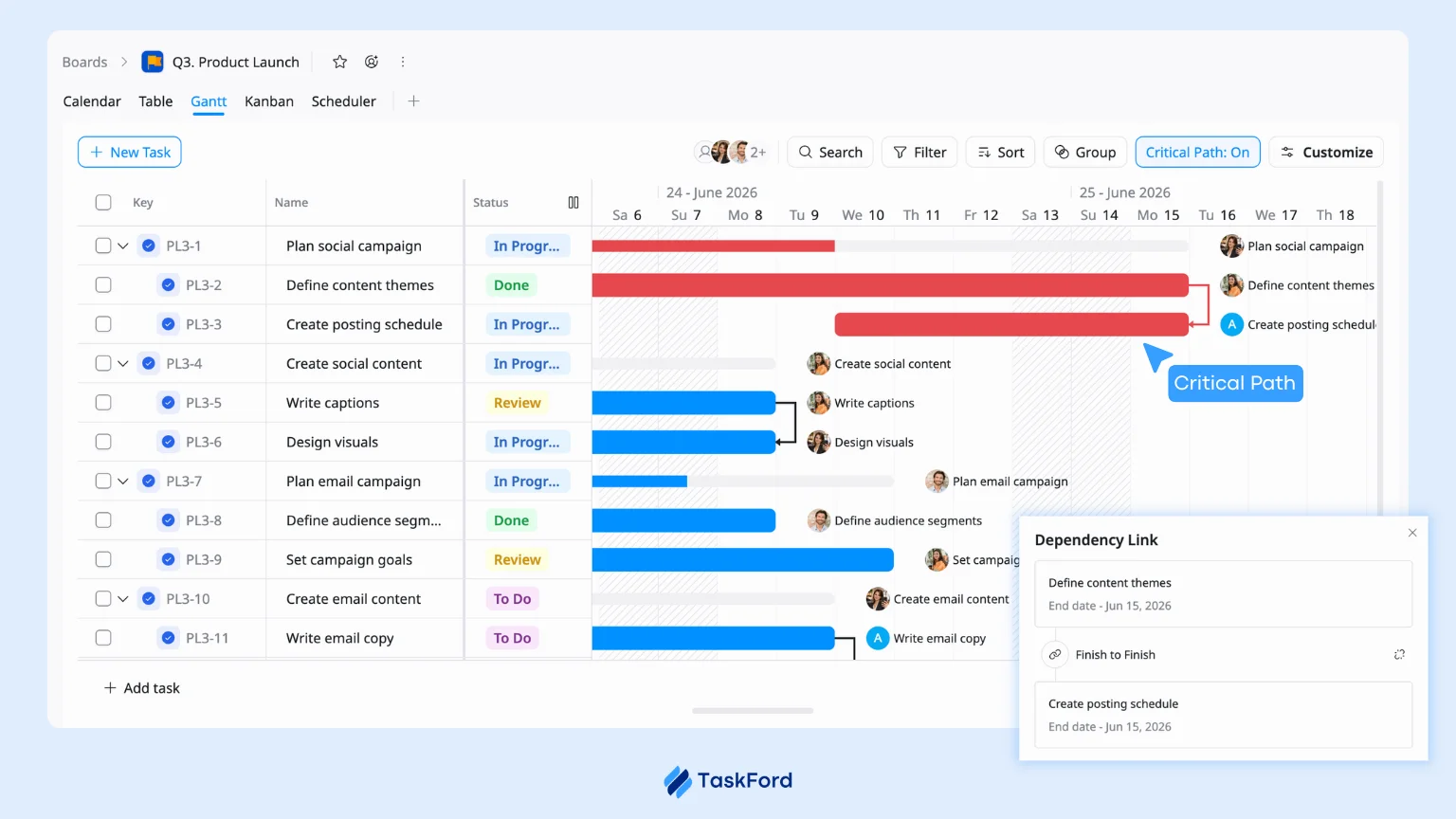
Because project plans and resource assignments are connected, managers can spot overlapping commitments and current workload pressure in one place, rather than piecing it together from separate tools. Reporting also provides a higher-level view of progress, overdue work, and projects that may need attention.
Instead of reviewing tasks, schedules, and team capacity in isolation, managers can see how each resource decision affects wider delivery plans.
TaskFord does not remove uncertainty from planning. It gives managers a clearer and more current view of the information behind each decision, helping them move from reactive staffing toward more deliberate, data-driven resource management.
Final Thoughts
Data-driven management is not about removing uncertainty or replacing judgment with dashboards. It is about giving managers a clearer view of capacity, delivery patterns, future demand, skills, and trade-offs before problems become urgent.
The five questions in this article offer a simple test. Can managers explain where capacity is going, learn from past delivery, anticipate demand, identify the right skills, and compare options before committing?
When the answer is yes, management becomes less reactive and more deliberate. Decisions may still involve uncertainty, but they are no longer based on guesswork alone.
The end of guesswork does not begin with more reports. It begins with connected data that helps managers ask better questions and act earlier.
Related Articles









































































![What is an Effective Resource Management Plan Template [Free Download]](/marketing/blog/resource-management-plan-template.webp)




Subscribe for Expert Tips
Unlock expert insights and stay ahead with TaskFord. Sign up now to receive valuable tips, strategies, and updates directly in your inbox.