How to Do Resource Forecasting and Combine It with Capacity Planning
Learn how to do resource forecasting and combine it with capacity planning to balance workloads, improve accuracy, and deliver successful projects.
Accurate resource planning is one of the biggest challenges for any project team. When workloads are unpredictable or staffing levels don’t match demand, projects slow down, budgets stretch, and teams burn out. This is where resource forecasting becomes essential.
Resource forecasting helps project managers predict the people, skills, and time required to deliver upcoming work. It turns guesswork into data-driven planning, allowing teams to see what’s needed before projects even begin.
But forecasting alone isn’t enough. To ensure your plans are realistic, you also need capacity planning, the process of understanding how much work your team can actually handle. When combined, these two approaches create a clear picture of both demand and capability.
In this guide, you’ll learn how to do resource forecasting step by step and how to connect it with capacity planning to balance workloads, improve utilization, and deliver projects more efficiently.
What Is Resource Forecasting?
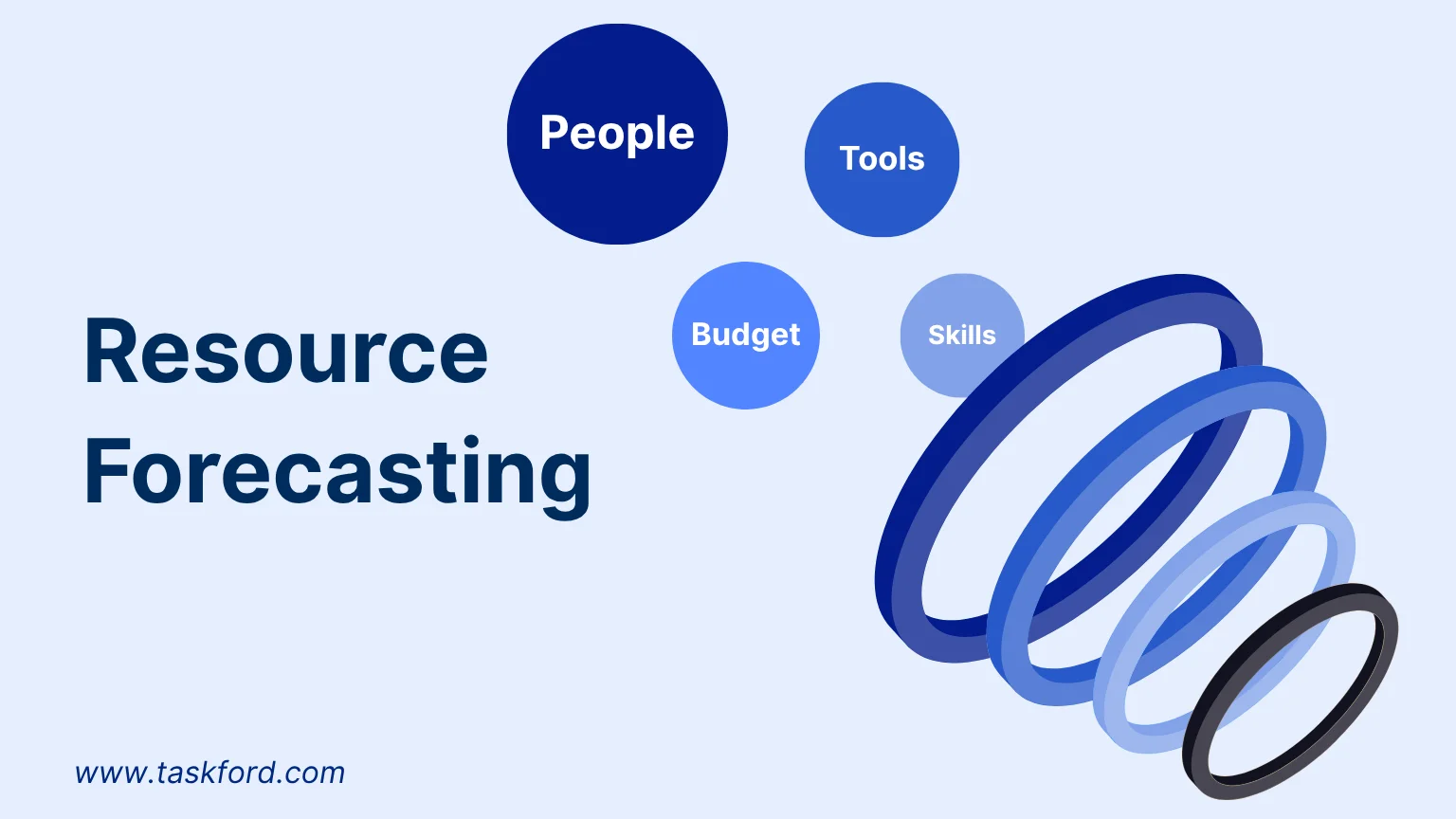
Resource forecasting is the process of predicting the people, skills, and tools needed for upcoming projects. It helps project managers estimate future demand so they can make informed decisions about staffing, scheduling, and budgeting instead of reacting to resource shortages at the last minute.
For example, if a company plans to launch a new product next quarter, resource forecasting can reveal that the marketing team will need additional designers and content writers during the campaign. By identifying this need early, managers can adjust workloads, hire temporary support, or shift resources to ensure the launch stays on schedule and within budget.
Why Resource Forecasting Matters in Project Management
Resource forecasting helps project managers stay ahead of resource demands, making it easier to deliver projects on time and within budget. Its key benefits include:
- Improves project planning: Provides visibility into future workloads so managers can allocate resources before bottlenecks occur.
- Prevents overbooking and burnout: Distributes work more evenly, helping teams maintain productivity and avoid excessive workloads.
- Increases budgeting accuracy: Estimates the people, time, and effort required for each project phase, leading to more reliable cost forecasts.
- Creates realistic schedules: Enables managers to set achievable timelines based on actual resource availability.
- Supports better decision-making: Identifies potential resource constraints early, allowing teams to adjust plans proactively instead of reacting to issues.
- Strengthens long-term workforce planning: Reveals skill gaps and future hiring needs, helping organizations align resources with business goals.
- Backed by research: A 2022 study by Dinis (ScienceDirect) found that combining time-series forecasting with capacity planning significantly improves planning accuracy in complex systems.
Step-by-Step Guide: How to Do Resource Forecasting
Doing resource forecasting effectively requires structure and consistency. It’s not just about predicting workloads, it’s about understanding your team’s capacity, project timelines, and skill availability so you can plan ahead with confidence.
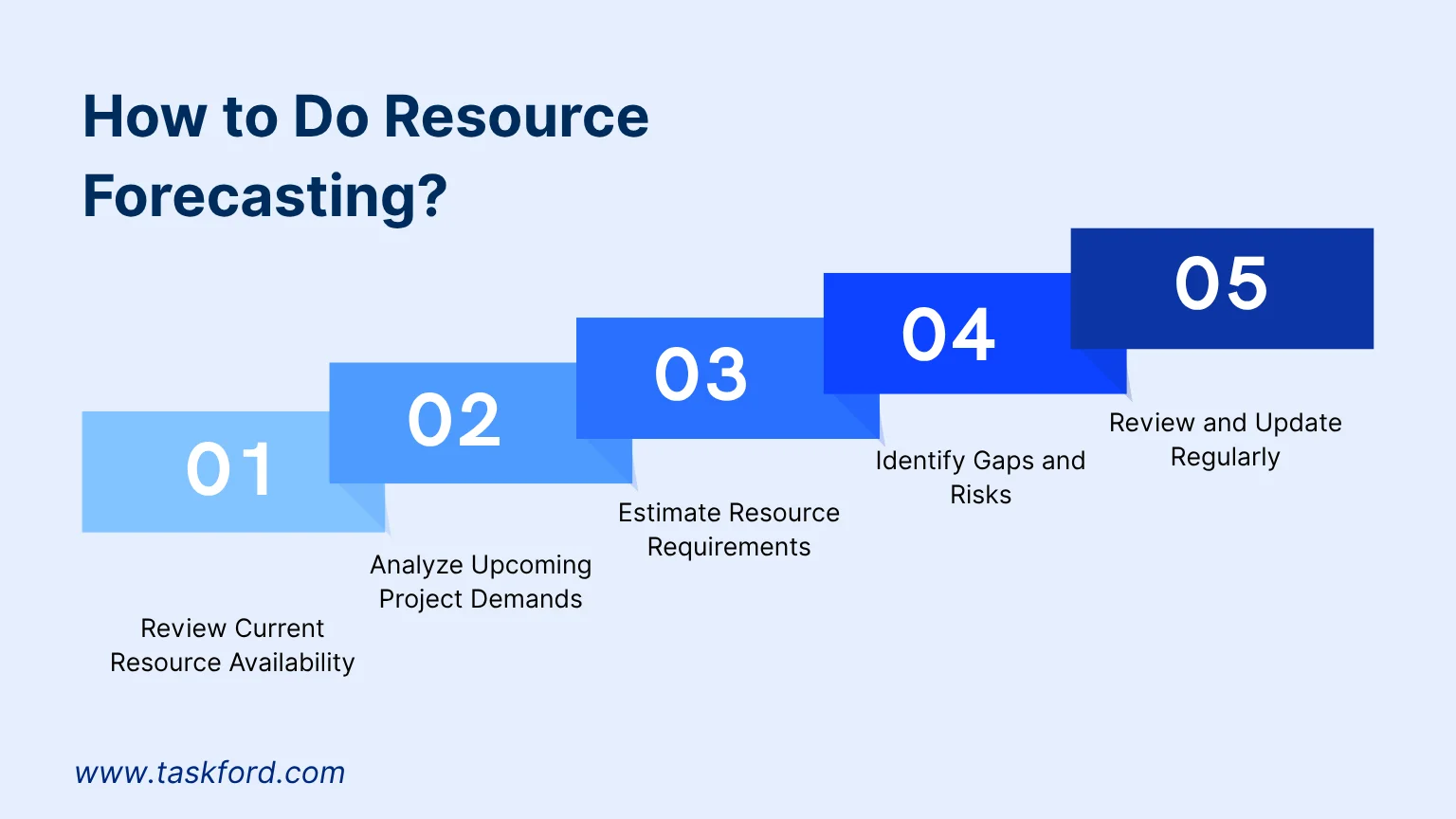
Here’s a simple step-by-step process to help you forecast resources accurately.
Step 1: Review Current Resource Availability
Start by identifying who is available and what their current workload looks like. List each team member, their skill set, and how many hours per week they can dedicate to new projects. Using a resource management tool makes this process easier by providing real-time visibility into everyone’s availability and assignments.
Step 2: Analyze Upcoming Project Demands
Next, look at the projects in your pipeline. Estimate how much time, effort, and expertise each one will require. Consider upcoming deadlines, client expectations, and overlapping initiatives. This step ensures that your resource forecasts align with real project needs rather than assumptions.
Step 3: Estimate Resource Requirements
Once you understand demand, calculate how many hours and which roles are required to meet it. For example, a website redesign might need 100 design hours, 60 development hours, and 20 QA hours. The more detailed your estimates, the more accurate your forecast will be. Historical data from previous projects can also help refine your projections.
Step 4: Identify Gaps and Risks
Compare your forecasted demand with your current capacity. Do you have enough people with the right skills? Are certain teams overbooked? This step highlights potential resource gaps so you can plan ahead, whether that means hiring, training, or redistributing workloads.
Step 5: Review and Update Regularly
Resource forecasting isn’t a one-time task. Project scopes change, deadlines shift, and team members come and go. To stay accurate, review and adjust your forecasts regularly, weekly or monthly, depending on project volume. Consistent updates ensure your plans reflect real-time conditions and prevent last-minute surprises.
The Relationship Between Resource Forecasting and Capacity Planning
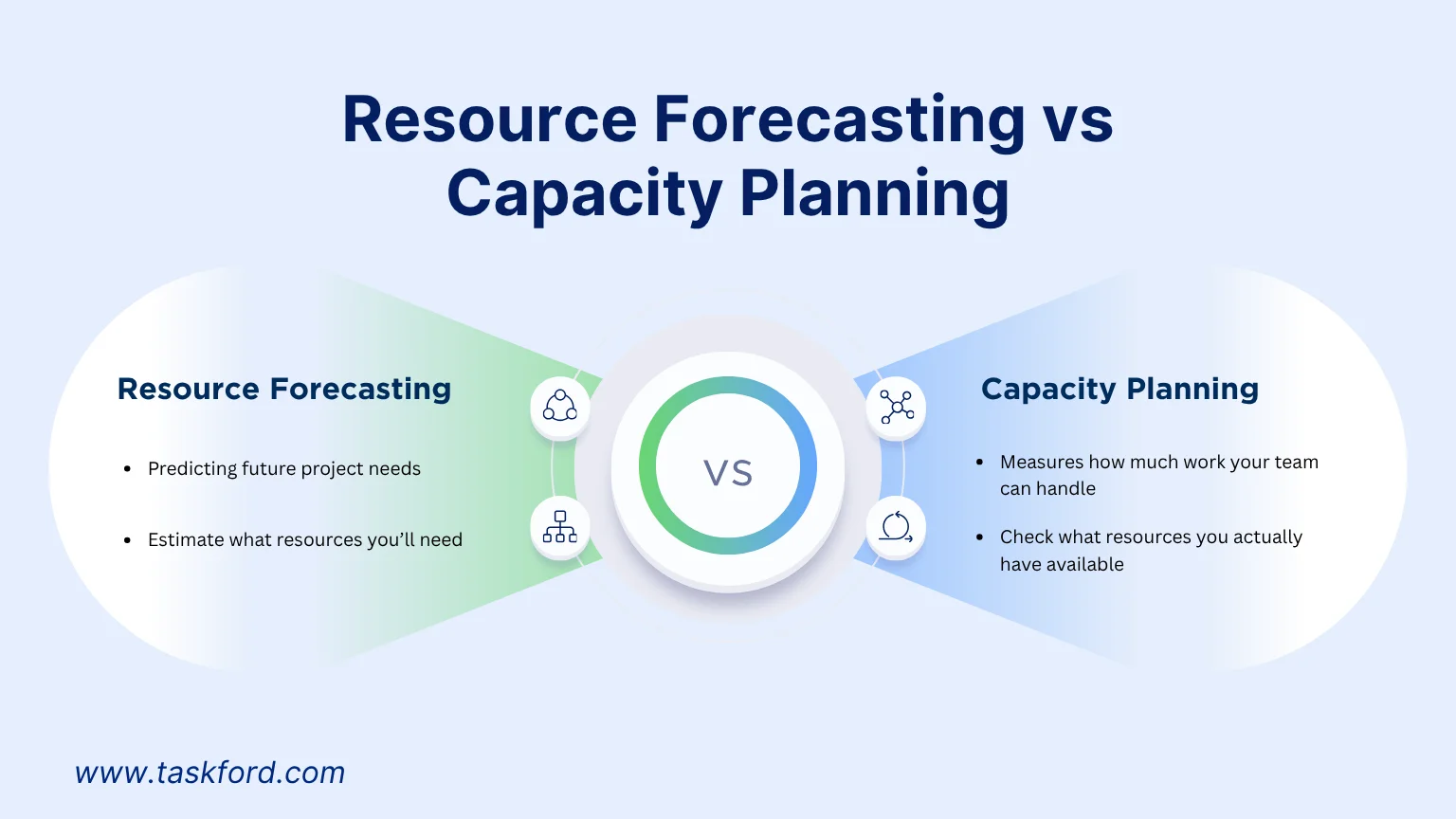
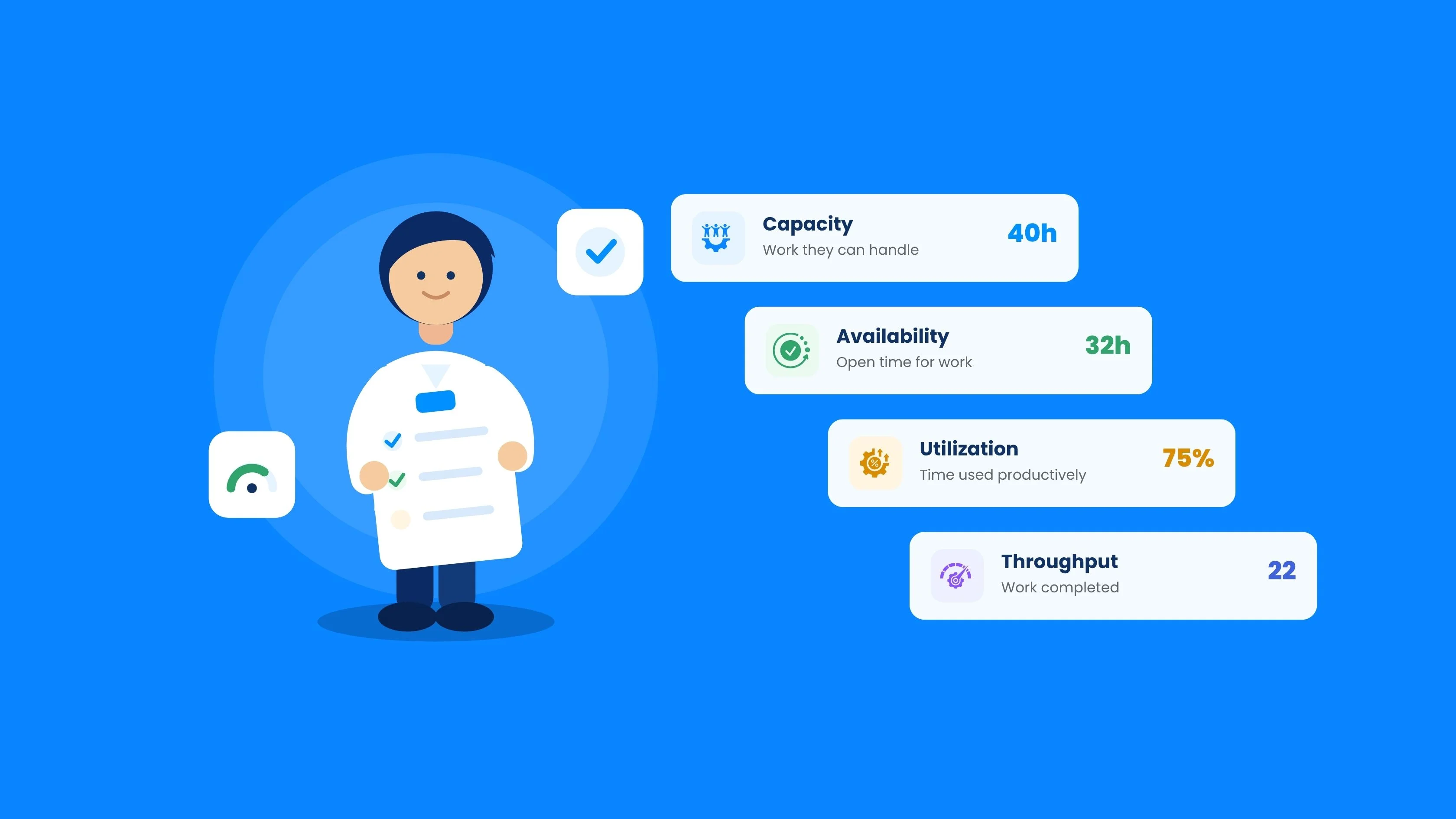
While resource forecasting focuses on predicting future project needs, capacity planning is about understanding your team’s actual ability to meet those needs. It measures how much work your people can handle based on their time, skills, and availability.
While they serve different purposes, they are closely connected parts of the same resource management process. Forecasting looks ahead to estimate what resources you’ll need, while capacity planning checks what resources you actually have available to meet those needs.
Think of forecasting as demand and capacity planning as supply. When these two perspectives are aligned, you can see whether your team’s workload matches their available capacity. If there’s a gap, you can act early by adjusting timelines, reassigning work, or scaling your team.
This relationship is essential for maintaining balanced workloads, preventing burnout, and ensuring projects stay on schedule. Together, they give project managers the insight to plan proactively instead of reacting to last-minute changes.
How to Combine Resource Forecasting with Capacity Planning
Combining resource forecasting with capacity planning allows you to compare what your projects will need with what your team can actually deliver, helping you make informed, data-backed decisions instead of relying on guesswork, improving resource management.
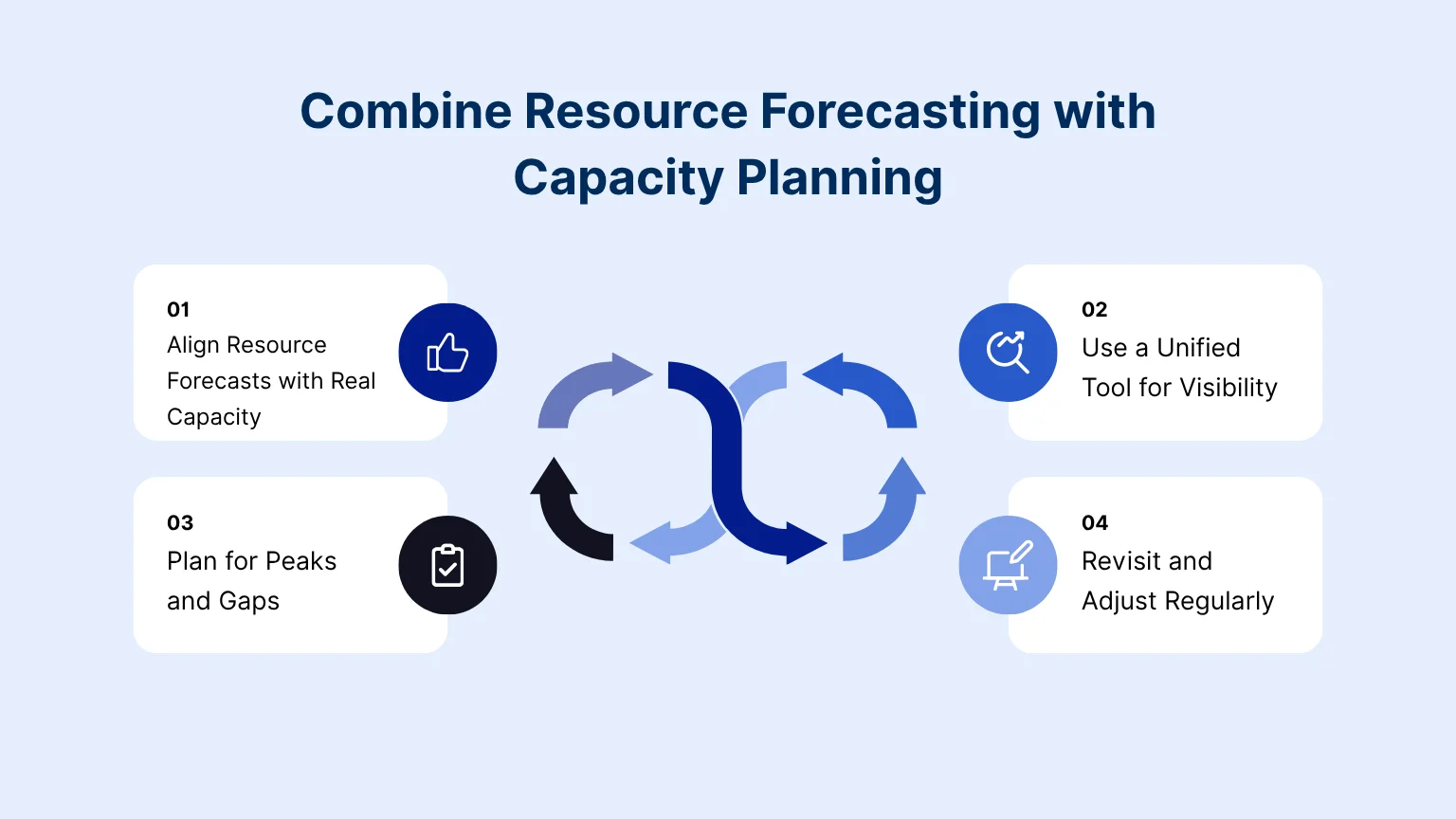
Here’s how to bring the two together effectively:
1. Align Resource Forecasts with Real Capacity
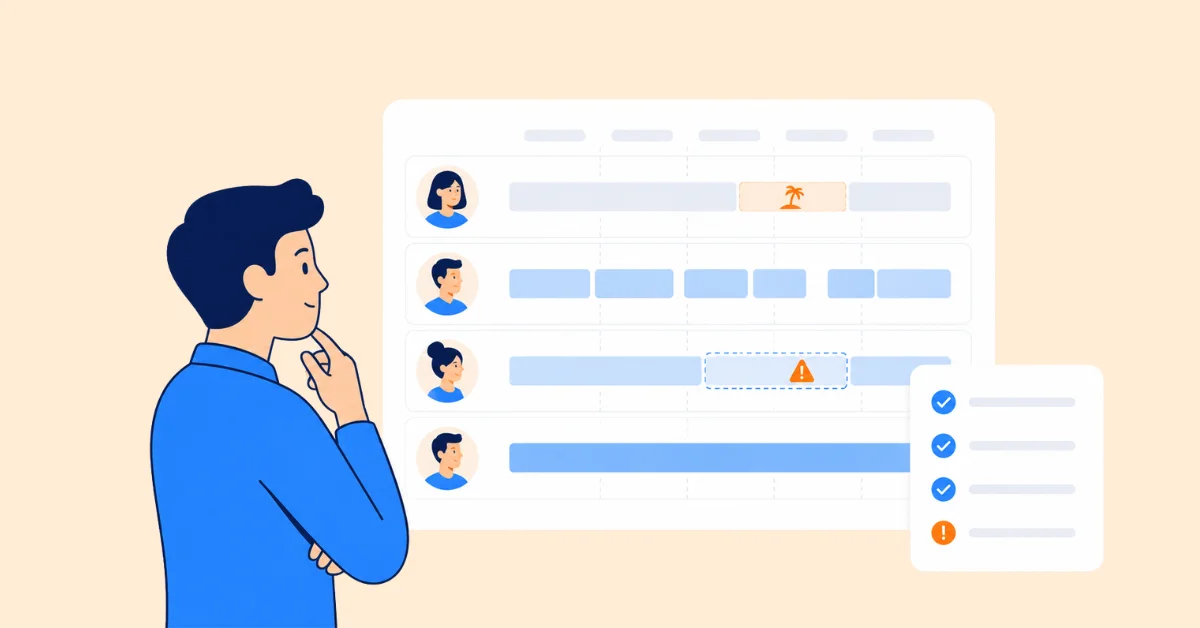
Start by comparing your resource forecasts (demand) with your team’s available capacity (supply). If your forecast shows a spike in workload for next quarter, capacity data will reveal whether your current team can handle it or if you need to adjust deadlines or staffing.
This alignment ensures that your projects are both ambitious and achievable.
2. Use a Unified Tool for Visibility
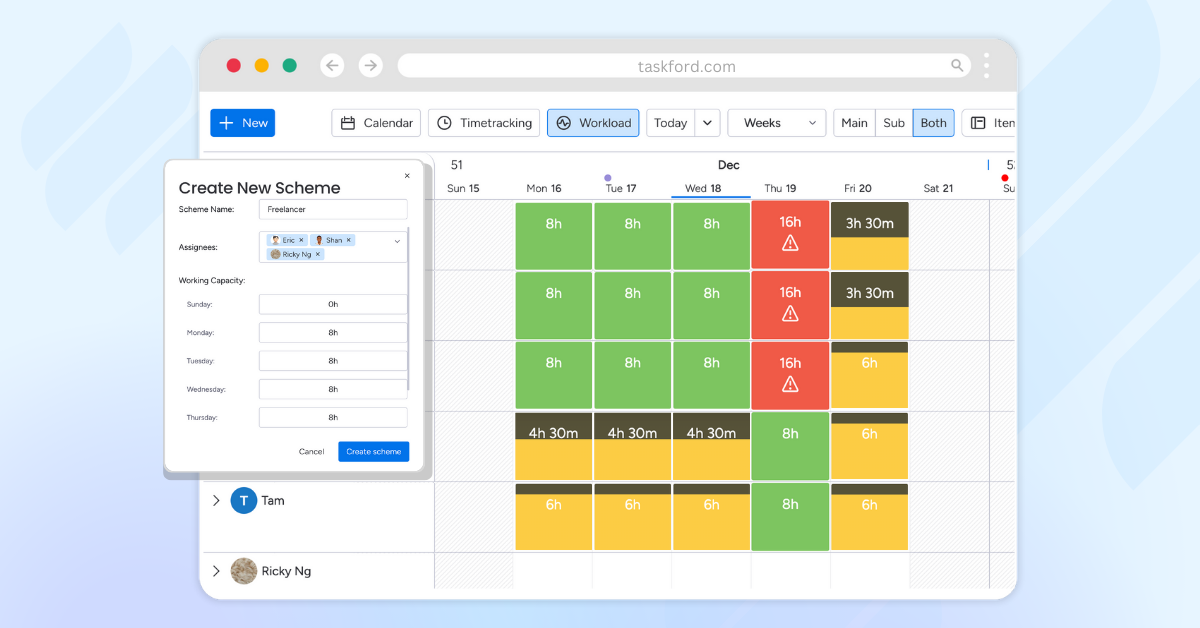
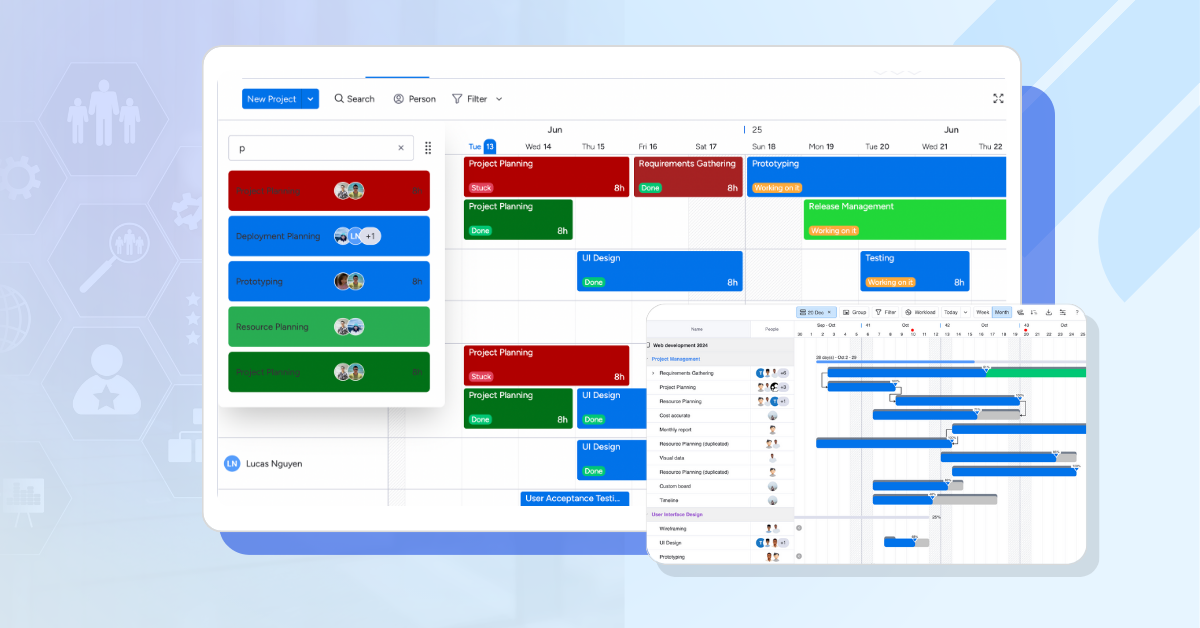
Trying to manage forecasts and capacity in separate spreadsheets can lead to mistakes and outdated data. A centralized resource planning software lets you view real-time workloads, capacity, and forecasts side by side. When data updates automatically, you can make faster, more accurate resourcing decisions across all projects.
3. Plan for Peaks and Gaps
When combining forecasting and capacity planning, you’ll start to spot trends, busy periods, underutilized teams, and recurring bottlenecks. Use these insights to plan ahead: hire contractors for high-demand seasons, cross-train team members, or redistribute work to balance utilization. Proactive planning keeps productivity high without overloading your team.
4. Revisit and Adjust Regularly
Both forecasts and capacity data are dynamic. Revisit them frequently, monthly or even weekly, to stay aligned with changing project scopes or team availability. This regular review helps keep your plans realistic, even when priorities shift.
When these two processes work together, project planning becomes far more predictable. You gain visibility into both what’s needed and what’s possible, helping your organization meet deadlines, manage costs, and maintain healthy workloads. It’s a practical, data-driven approach that keeps projects on track and teams performing at their best.
Conclusion
Resource forecasting and capacity planning work best when they support each other. Forecasting gives you a clear view of upcoming demand, while capacity planning shows what your team can realistically deliver. When you connect these insights, you create a balanced workflow that keeps projects on time, budgets under control, and teams focused on meaningful work.
The key is consistency, reviewing your forecasts regularly, updating capacity data, and using reliable tools that bring visibility to every stage of planning. With the right process in place, project managers can make confident decisions, reduce last-minute changes, and build a more predictable path to delivery.
If you want to simplify the way you plan resources, TaskFord helps you align forecasting and capacity planning in one platform. Gain a real-time view of workloads, plan ahead with accuracy, and keep your projects moving smoothly from start to finish.
Frequently Asked Questions
What is resource forecasting in project management?
Resource forecasting is the process of predicting the people, skills, equipment, and other resources needed for future projects. It helps project managers plan workloads, budgets, and schedules before work begins.
What is the difference between resource forecasting and capacity planning?
Resource forecasting estimates future resource demand, while capacity planning evaluates whether your team has enough available capacity to meet that demand. Together, they help organizations balance workloads and avoid resource shortages.
Why is resource forecasting important?
Resource forecasting helps organizations allocate resources more effectively, prevent employee burnout, improve project scheduling, control costs, and deliver projects on time.
How often should resource forecasts be updated?
Resource forecasts should be reviewed regularly, such as weekly or monthly, and updated whenever project priorities, timelines, budgets, or team availability change to keep plans accurate.
How can TaskFord help with resource forecasting?
TaskFord helps teams forecast resources by providing workload visibility, resource allocation, time tracking, project planning, and real-time reporting. These features enable managers to anticipate capacity needs, balance workloads, and make better planning decisions.
Related Articles









































































![What is an Effective Resource Management Plan Template [Free Download]](/marketing/blog/resource-management-plan-template.webp)




Subscribe for Expert Tips
Unlock expert insights and stay ahead with TaskFord. Sign up now to receive valuable tips, strategies, and updates directly in your inbox.