IT Project Life Cycle Phases: Detailed Breakdown (With Examples)
Explore the IT Project Life Cycle phases in detail, from initiation to closure. Learn how each stage impacts project success with real-world examples and actionable insights.
Ever wonder how a conceptual “what if” transforms into a seamless app on your phone or a massive data migration? That transformation is governed by the IT project life cycle.
Think of it as the ultimate technical roadmap. Without a structured process, building complex tech is like trying to assemble a high-performance engine without a manual—you’ll likely end up with expensive parts and zero results. The life cycle provides the “recipe” for success, breaking high-stakes work into predictable stages.
In this guide, we’ll break down each phase with real-world examples and introduce the key players who turn digital chaos into functional reality. Here is how the industry brings big ideas to life.
What is IT Project Management?
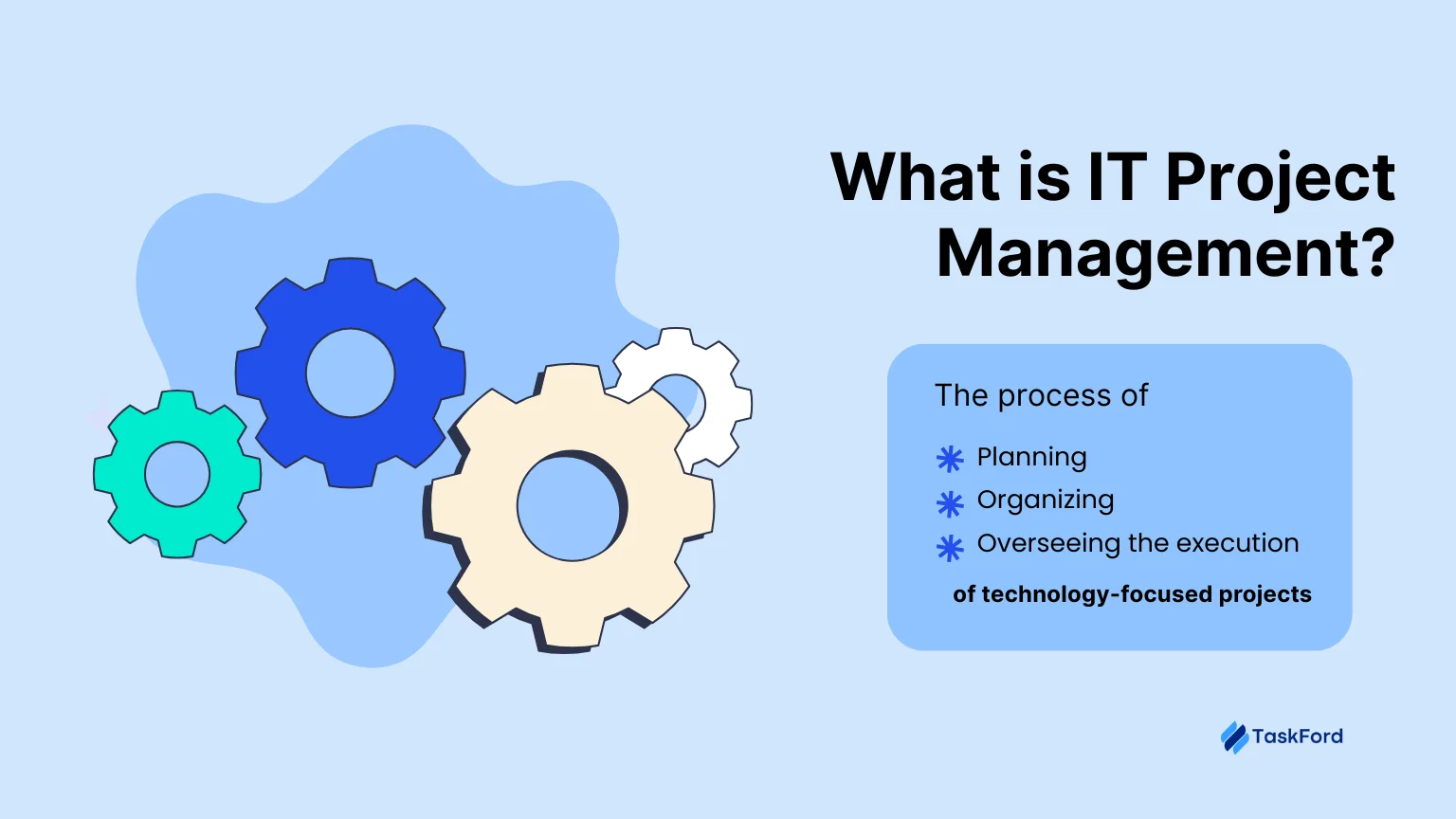
IT Project Management involves planning, organizing, and overseeing technology-focused projects, such as software development, IT infrastructure implementation, or system upgrades. Its goal is to ensure that each project phase aligns with business objectives and is completed on time and within budget.
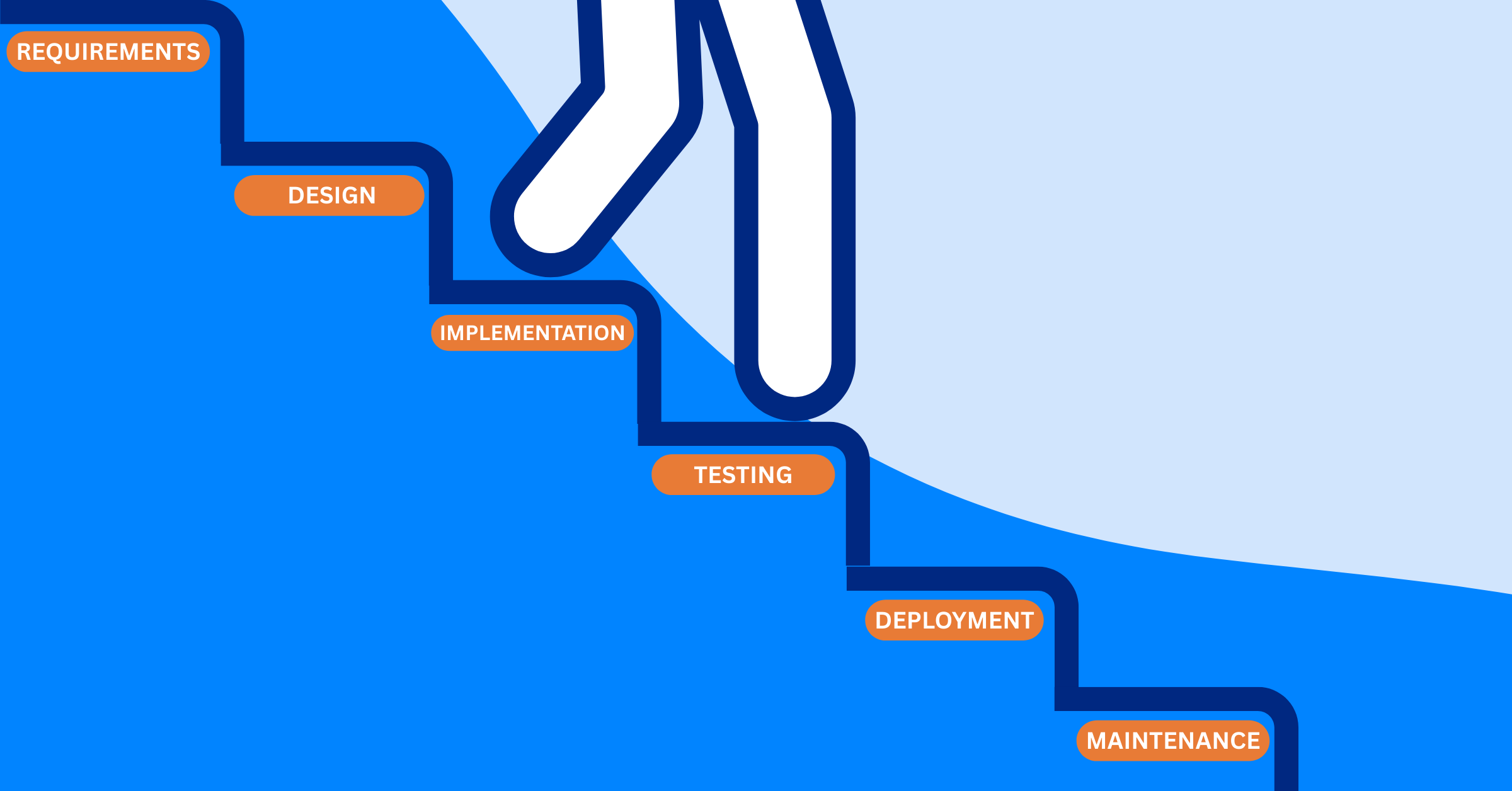
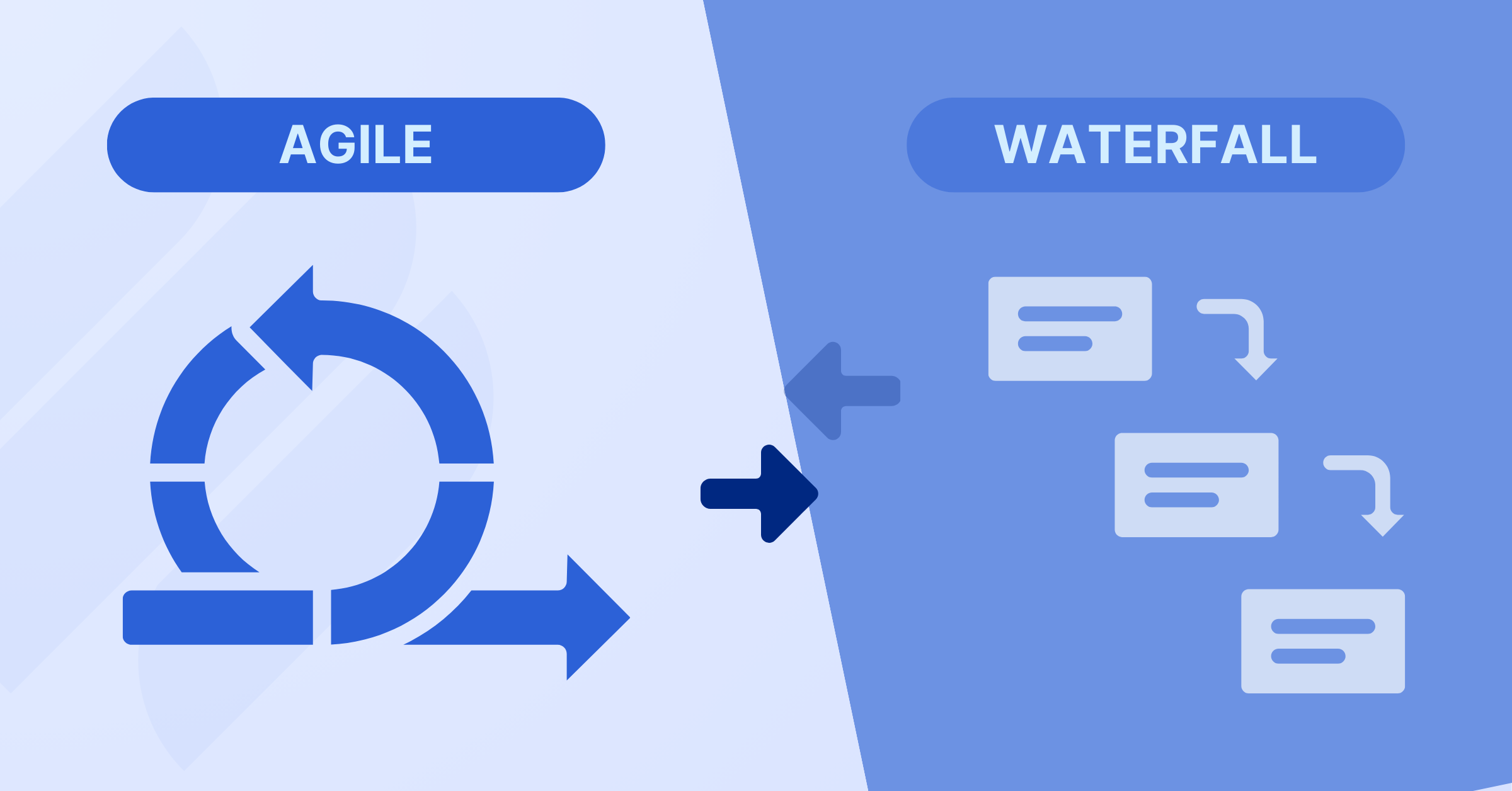
Unlike general project management, IT Project Management addresses technology-specific challenges, including coding, software testing, and managing cybersecurity risks. It often uses methodologies like Agile for flexibility or Waterfall for a more structured, step-by-step approach, depending on the project requirements.
Want to learn more about IT Project Management? Check out our detailed guide to get all the insights you need!
What is an IT Project Lifecycle?
An IT Project Lifecycle is the step-by-step framework that guides a technical project from its initial concept to its final deployment and eventual retirement.
While general project management focuses on the “how” of hitting a deadline, the IT lifecycle focuses on the technical integrity of the product. It ensures that the software, hardware, or network being built is actually functional, secure, and compatible with existing systems.
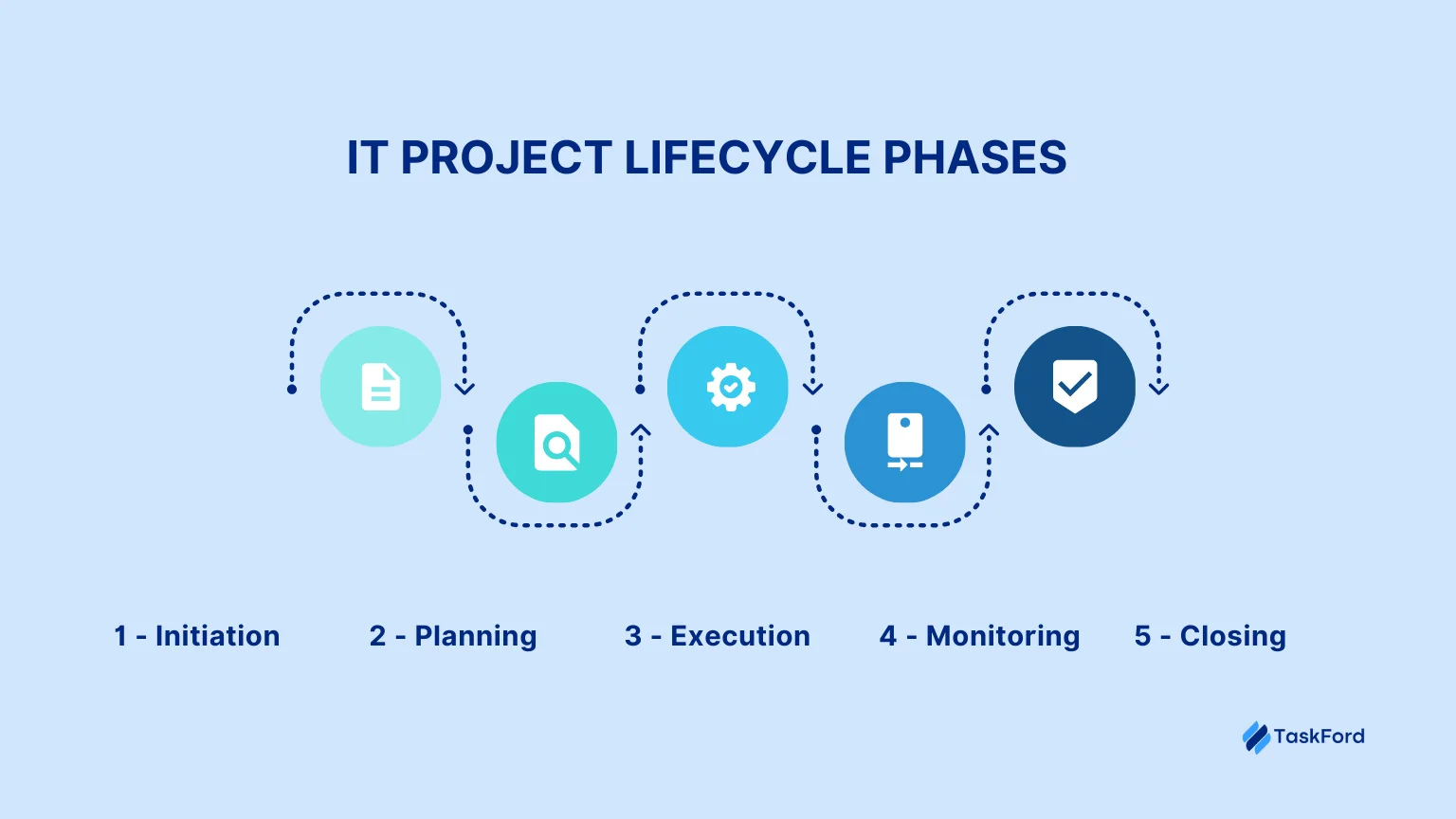
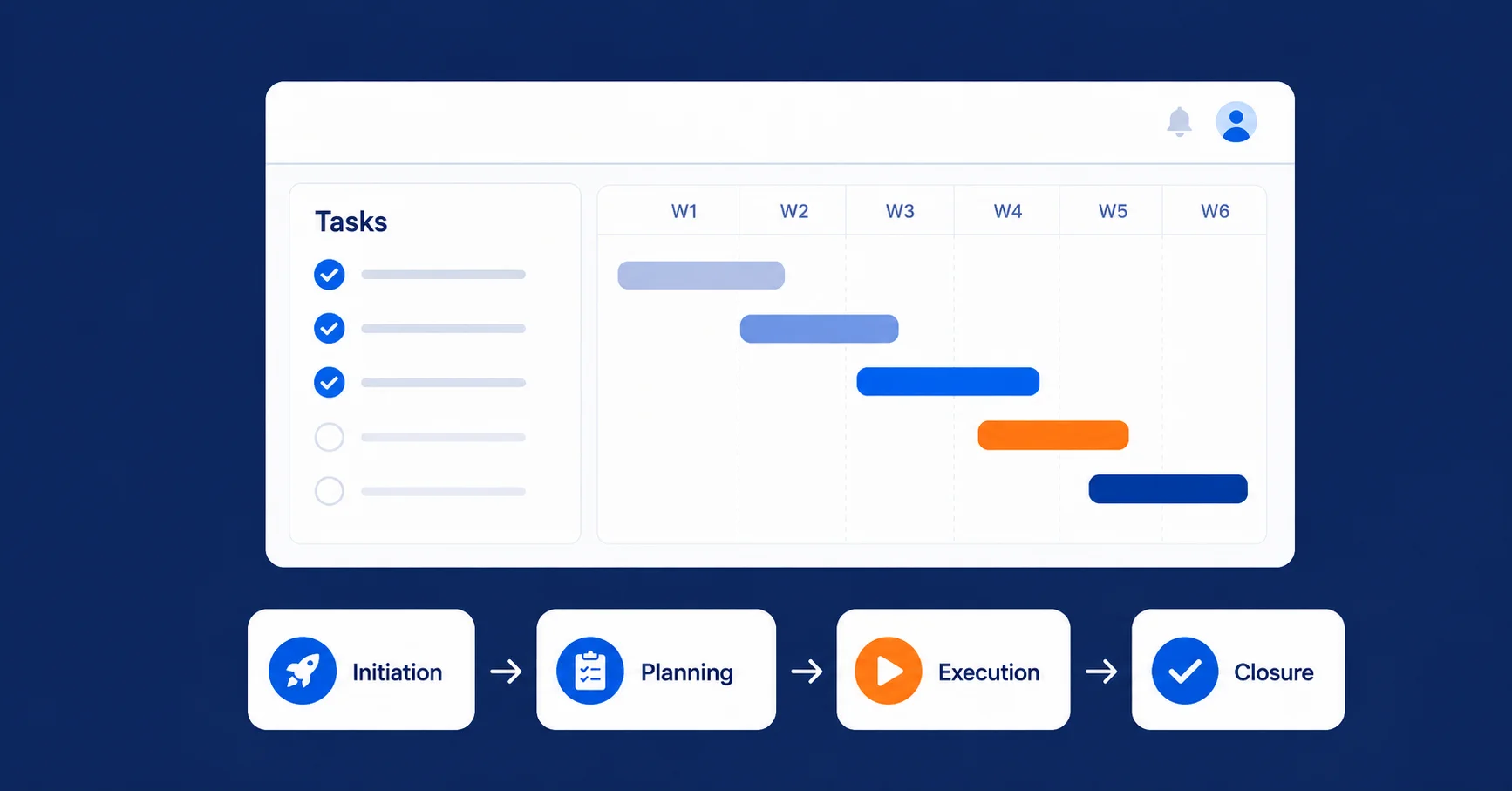
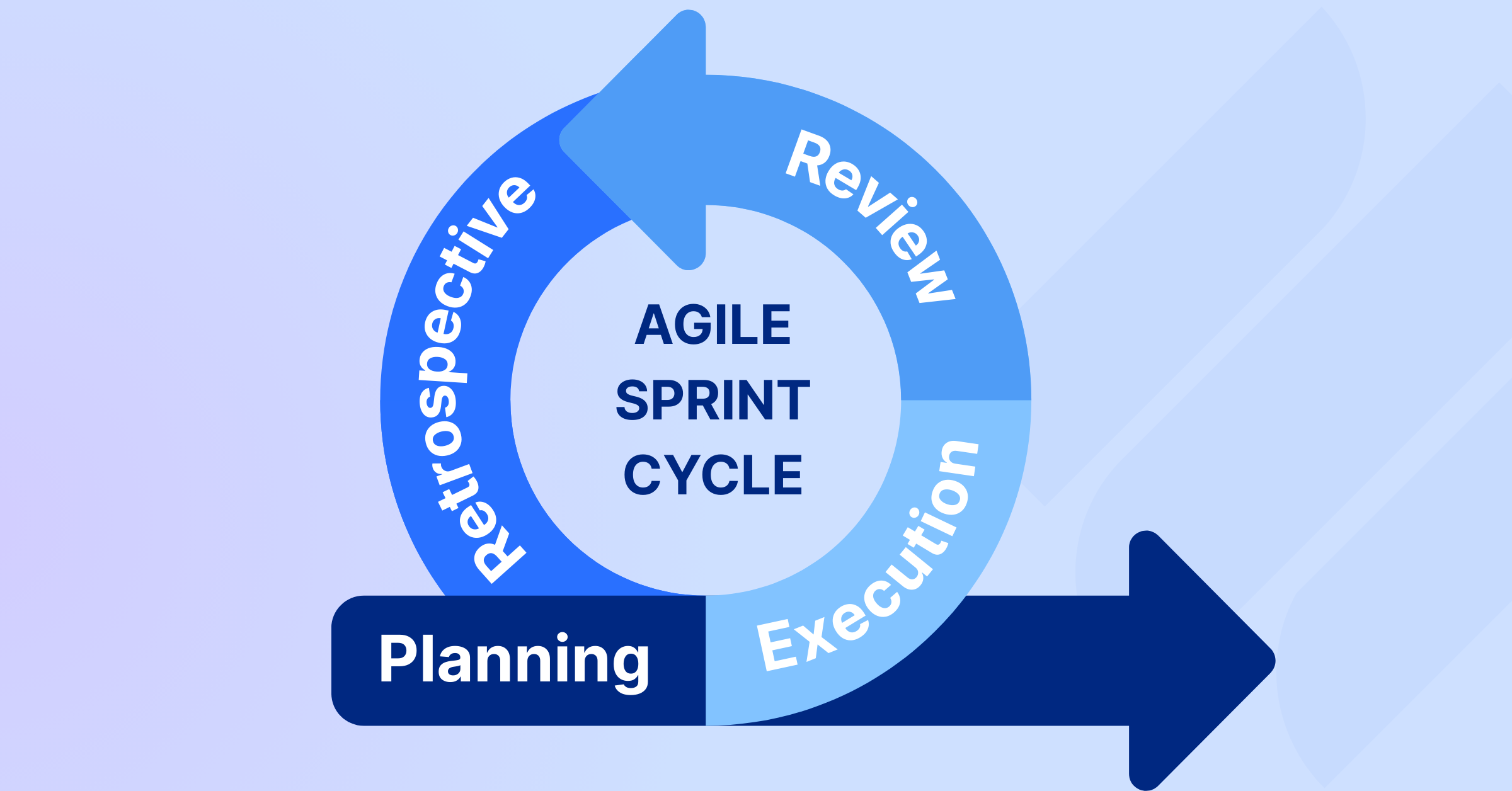
Typically, the IT project life cycle consists of five main phases: initiation, planning, execution, monitoring and controlling, and closing. These stages provide a clear roadmap for the entire project, from defining project goals and allocating resources to delivering the final product. By following this life cycle, teams can minimize risks, manage resources effectively, and ensure the project meets its objectives.
Want to see how different teams handle each stage? Check out our guide on 5 Phases of the Project Lifecycle: How Agile & Waterfall Teams Approach Each Stage for practical insights.
What are the IT Project Life Cycle Stages?
The IT project life cycle typically consists of five key stages, each focusing on specific tasks and deliverables to ensure a project is managed effectively from start to finish. These stages are:
- Initiation: This is the phase where the project is formally defined, and its objectives, scope, and stakeholders are identified. A project charter is often created to outline the purpose and goals of the project.
- Planning: In this phase, a detailed project plan is developed. It includes defining tasks, timelines, resource allocation, and risk management strategies. The planning phase sets clear objectives and ensures that everyone involved is aligned on how to achieve them.
- Execution: This phase involves carrying out the tasks defined in the planning phase. The project team works on delivering the project’s outputs, coordinating resources, and ensuring that the project is on track according to the timeline and budget.
- Monitoring and Controlling: Throughout the project, it’s crucial to track progress, manage any issues, and adjust the plan as necessary. This phase ensures that the project stays on course and addresses any deviations in scope, schedule, or cost.
- Closing: Once the project’s objectives have been met, the project is formally closed. This includes delivering the final product, obtaining stakeholder approval, and conducting a post-project review to evaluate the project’s success and document lessons learned.
(Source: PMBOK Guide - Project Management Institute)
These stages offer a structured approach to managing IT projects, helping teams stay organized, mitigate risks, and achieve project goals efficiently.
Detailed Breakdown of the IT Project Life Cycle Phases
Breaking an IT project into structured phases helps teams stay organized, manage risks, and deliver projects successfully. Here’s a closer look at each phase.
1. Initiation Phase
What happens: The initiation phase sets the foundation for the project. It defines the purpose, scope, and objectives, ensuring the project aligns with business goals and is feasible to execute.
Key activities:
- Defining project objectives, including desired outcomes and business impact.
- Creating a project charter that formally authorizes the project.
- Identifying stakeholders and understanding their expectations.
- Performing an initial risk assessment to highlight potential challenges.
- Conducting a feasibility study to evaluate practicality, resources, and budget requirements.
Deliverables: Project charter, initial risk assessment, and feasibility study.
2. Planning Phase
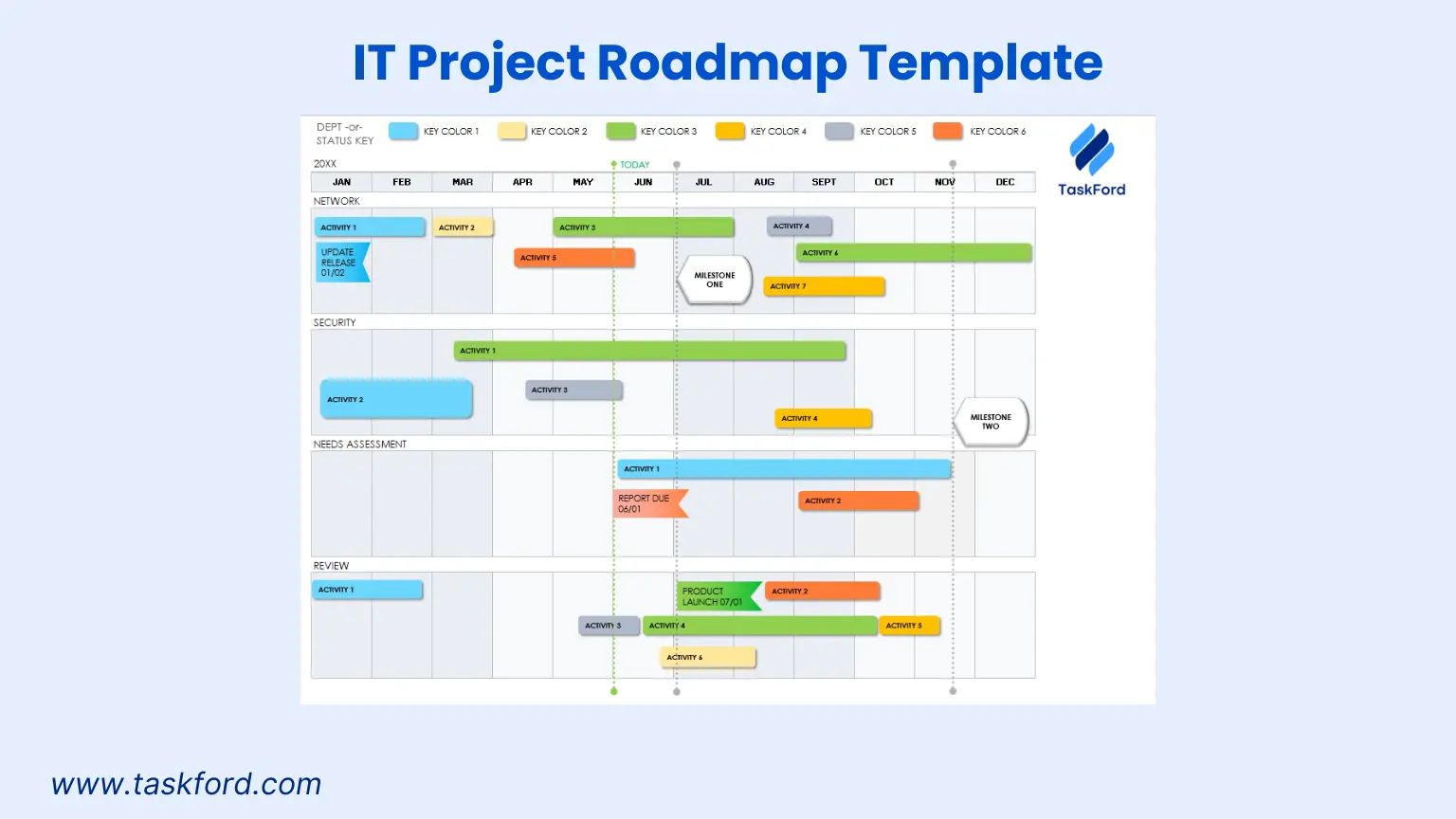
What happens: Planning turns project goals into a clear project roadmap. This phase organizes work, defines timelines, allocates resources, and prepares the team for execution.
Key activities:
- Developing detailed project plans, including tasks, timelines, and milestones.
- Defining project scope and deliverables. (Learn more about what is scope in project management)
- Allocating resources and assigning responsibilities.
- Identifying risks and creating mitigation strategies.
- Setting quality standards and project communication plans to ensure smooth collaboration.
Deliverables: Agile project management plan, risk management plan, resource allocation charts, and timeline schedules.
3. Execution Phase
What happens: This is where the actual work happens. Teams carry out the project plan, collaborate, and start producing the deliverables.
Key activities:
- Assigning tasks and coordinating team efforts.
- Developing software, systems, or IT infrastructure as planned.
- Implementing designs, conducting coding, or performing technical configurations.
- Ensuring team collaboration and continuous communication.
- Tracking progress against the plan to ensure milestones are met.
Deliverables: Completed tasks, project deliverables, and functional components of the project.
4. Monitoring & Controlling Phase
What happens: Monitoring and controlling run alongside execution. Its purpose is to ensure the project stays on track, within scope, on budget, and aligned with objectives.
Key activities:
- Tracking project progress and performance metrics.
- Managing changes to scope, timeline, or resources.
- Identifying and resolving issues that arise during execution.
- Ensuring quality control and compliance with project standards.
- Updating stakeholders with status reports and progress updates.
Deliverables: Status reports, performance reports, updated project schedules, and change logs.
5. Closing Phase
What happens: The closing phase formally wraps up the project. It ensures all objectives are met, deliverables are handed over, and lessons are documented for future projects.
Key activities:
- Delivering the final product or solution to stakeholders.
- Obtaining stakeholder approval and formal sign-off.
- Releasing project resources, including personnel and equipment.
- Conducting post-project evaluations to capture lessons learned.
- Archiving project documents and finalizing reports.
Deliverables: Final deliverables, project closure report, and lessons learned documentation.
This detailed breakdown gives IT teams a clear roadmap from start to finish, helping them manage complexity, reduce risks, and ensure successful project delivery.
Real-World Examples of IT Project Life Cycle in Each Phase
Below are real-world examples of how each phase of the IT project life cycle plays out in different tech projects. These examples show how the phases work in practical settings, making the process easier to understand.
Example #1: E-commerce Website Development
Goal: Launch an online store with product catalogs, a shopping cart, and payment integration.
| Phase | Key Focus |
|---|---|
| Initiation | Define objectives: attract online customers and increase sales; identify stakeholders: marketing, IT, product team; perform a feasibility study for hosting, security, and payment processing. |
| Planning | Outline scope: product pages, search, checkout system; allocate resources: web developers, designers, QA; set timelines and risk plans (e.g., payment gateway failures). |
| Execution | Build website front-end and back-end, integrate payment systems, implement product database, perform coding and UI/UX design. |
| Monitoring & Controlling | Track progress, test payment flows, fix bugs, ensure website security and performance, and update stakeholders with progress reports. |
| Closing | Launch website, get stakeholder approval, collect user feedback, document lessons learned, and archive project resources. |
Example #2: Cloud Migration Project
Goal: Move an organization’s on-premises systems to a cloud platform for scalability and cost efficiency.
| Phase | Key Focus |
|---|---|
| Initiation | Assess need for cloud migration; identify stakeholders: IT, finance, security; perform feasibility and risk assessment for downtime or data loss. |
| Planning | Plan migration steps, choose cloud provider, define timeline, allocate teams for servers, networking, and security; prepare backup and rollback plans. |
| Execution | Migrate applications and databases, configure cloud environments, test connectivity, and ensure data integrity. |
| Monitoring & Controlling | Track migration progress, troubleshoot errors, monitor system performance, and adjust plans for unexpected downtime. |
| Closing | Complete migration, validate system functionality, train staff, document process, release resources, and review lessons learned. |
These examples show how each phase keeps IT projects focused and effective, from the first idea to the final product.
Typical IT Project Roles
Successful IT projects rely on a well-structured team where each member knows their responsibilities. While exact titles can vary depending on project size and complexity, most IT projects include these key roles:
- Project Manager: Responsible for overall project planning, execution, and delivery. They manage timelines, resources, budgets and ensure the team stays aligned with business goals.
- Business Analyst: Acts as the bridge between business stakeholders and the technical team. They gather and document requirements, analyze processes, and ensure the solution meets business needs.
- Developers / Engineers: Handle the technical work of building software, applications, or IT infrastructure. This includes coding, system configurations, and integration of different components.
- Quality Assurance (QA) / Testers: Test the project deliverables to ensure they meet quality standards, function correctly, and are free from defects. They help prevent costly errors before deployment.
- UX/UI Designer: Focuses on user experience and interface design. They create designs that are intuitive, user-friendly, and visually appealing.
- System / Network Administrators: Maintain the IT infrastructure, including servers, networks, databases, and cloud environments, ensuring smooth and secure operations.
- Stakeholders: Individuals or groups impacted by the project or invested in its success, such as business leaders, clients, or department heads. They provide input, approve deliverables, and evaluate the project’s outcomes.
Having clearly defined roles ensures smooth collaboration, reduces confusion, and helps the team deliver the project efficiently while meeting business objectives.
Conclusion
The IT project life cycle provides a clear roadmap for turning ideas into fully functioning solutions. From initiation and planning to execution, monitoring, and closing, each phase plays a vital role in keeping projects on track, managing risks, and delivering results that meet business goals.
Understanding the life cycle and the roles involved helps teams work more efficiently, stay organized, and adapt to challenges along the way. Whether you’re launching a new website, migrating to the cloud, or developing custom software, following a structured life cycle ensures your IT projects have a higher chance of success.
Continue Reading
Related Articles








How to Build and Manage a Product Roadmap with TaskFord











How to Build a Connected Project Timeline in TaskFord







What Are the Best Jira Alternatives for Scrum Teams?

















How WBS Reveals Delivery Breakdown Before It’s Too Late







![How To Conduct a Profound Stakeholder Analysis [+ Free Template]](/marketing/blog/stakeholder-analysis.webp)












What to Look for in Scrum Tools (Beyond Kanban Boards)

![Project Management Calendar for Teams and Managers [Free Templates]](/marketing/blog/project-management-calendar.webp)




How to Define Project Deliverables: A Step-by-Step Guide




![RACI Chart in Project Management: Rules & Examples [Free Download]](/marketing/blog/raci-chart.webp)










![7 Must-Have Project Management Documents Every PO Should Know [Free Templates]](/marketing/blog/project-management-documents.webp)







![How to Create a Winning Project Plan for IT Projects [10 Steps Included]](/marketing/blog/how-to-create-a-project-plan.webp)



![Daily Standup Best Practices: Apply AI to Organize Meetings Successfully [2026 Trends]](/marketing/blog/daily-standup.webp)





![How to Create a Project Communication Plan: Step-by-Step Guide [+Free Template]](/marketing/blog/project-communication-plan.png)


![Master Project Procurement Management in 5 Steps [Download a free plan template]](/marketing/blog/project-procurement-management.webp)





















Subscribe for Expert Tips
Unlock expert insights and stay ahead with TaskFord. Sign up now to receive valuable tips, strategies, and updates directly in your inbox.