The Hidden Cost of Invisible Work: Why Projects Are Always "80% Done"
Why do projects always feel stuck at 80% done? Uncover the hidden work costing your team time, budget, and delivery predictability.
Look at any project plan, and you’ll see what the team promised to deliver. What you won’t see is everything else it actually took to get there.
In between the plan and the finish line, a lot happens that nobody scheduled: chasing someone for an update, figuring out who’s actually responsible for a task, checking whether a dependency is ready, patching a handoff that fell through the cracks, redoing a spreadsheet, rebuilding a report because the numbers changed, scrambling to handle a last-minute request.
None of that is in the timeline. But it still eats up hours, budget, and energy, just like the “real” work does.
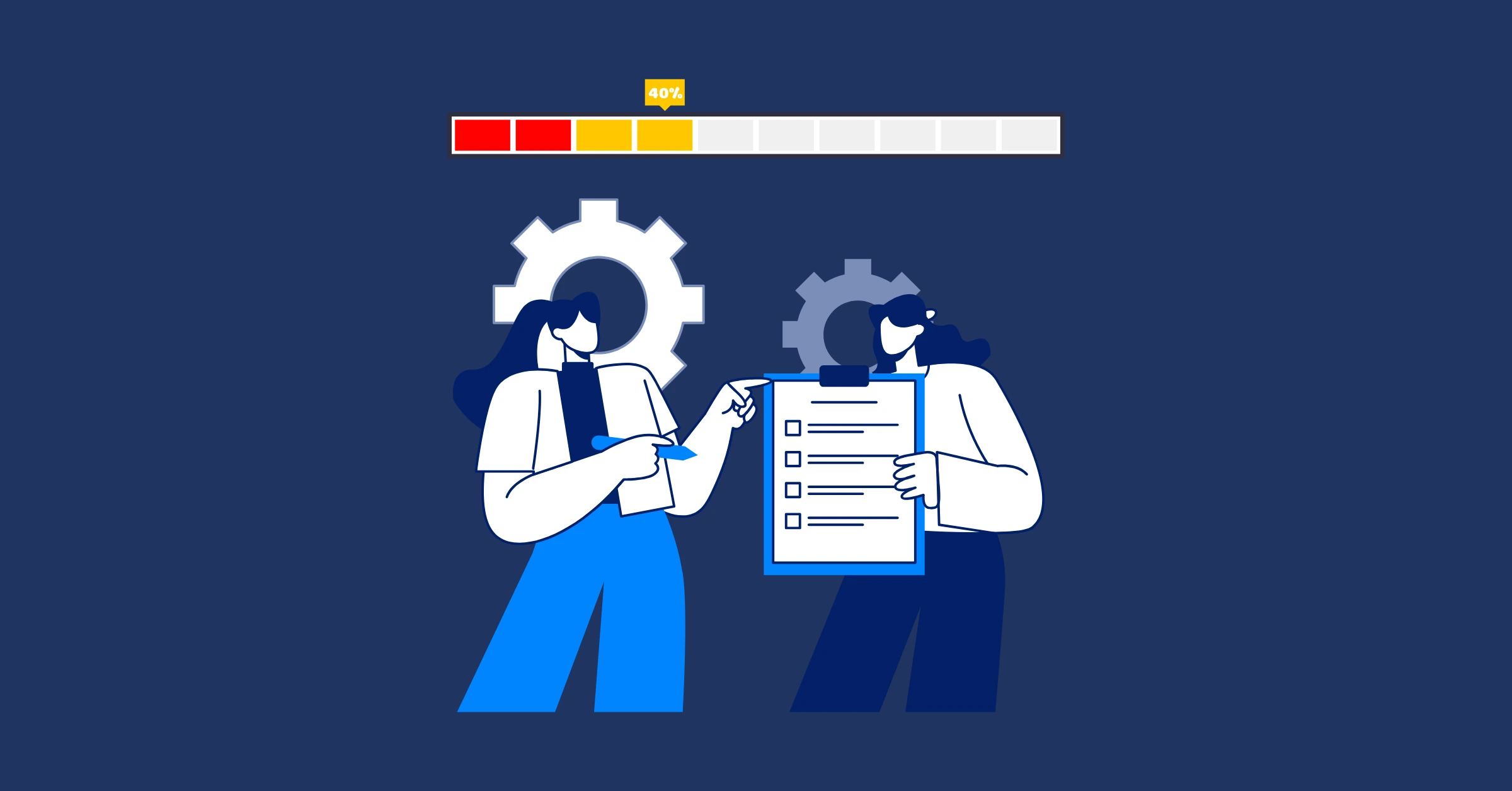
That’s invisible work. And it’s a big reason projects can feel like they’re 80% done for weeks, without ever quite crossing the finish line.
What Is Invisible Work?
Invisible work is easy to explain, but hard to spot. It’s everything a project actually needs in order to succeed, even though none of it ever makes it onto the plan.
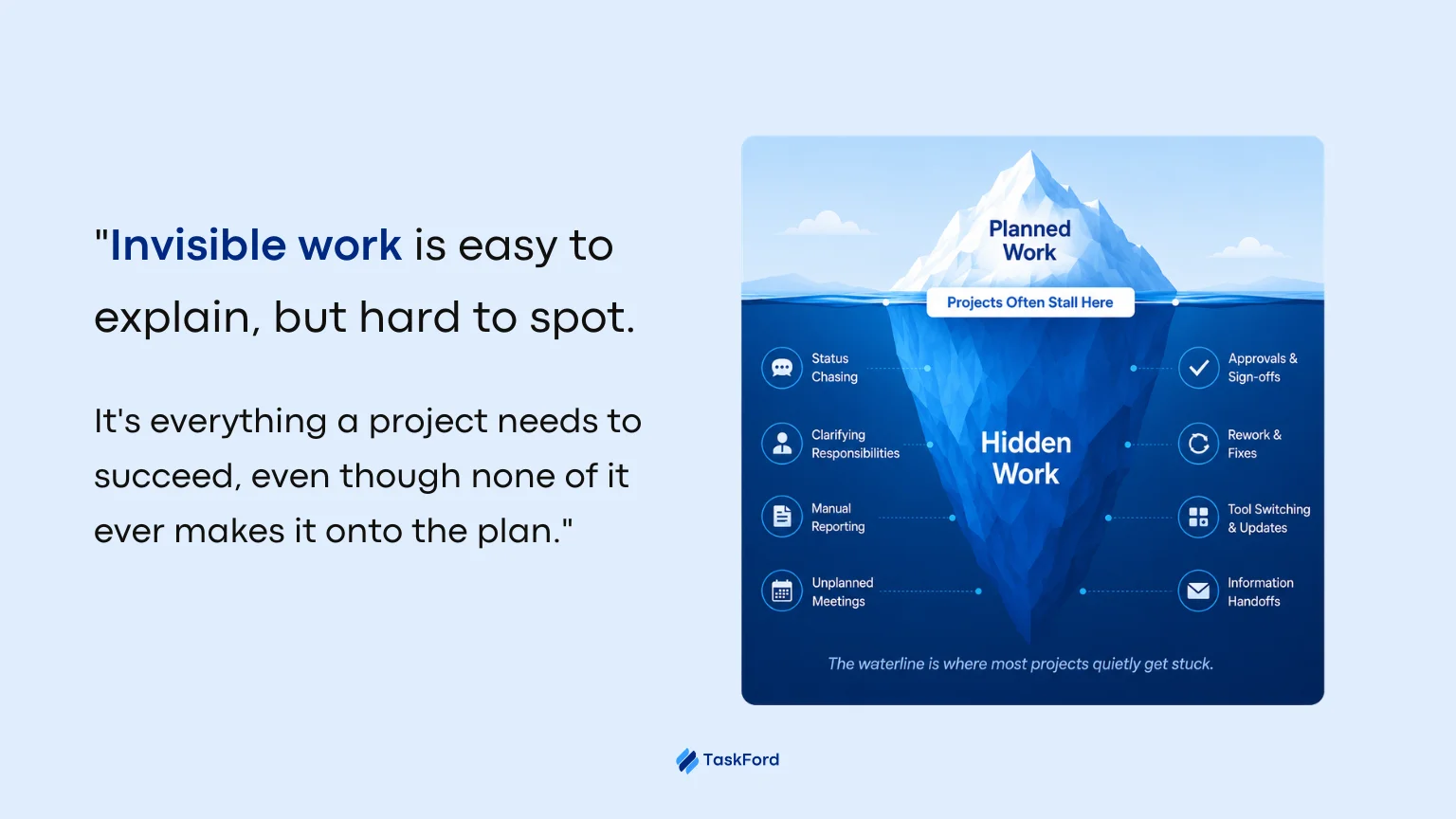
Here’s the simplest way to see the difference between planned work and hidden work:
Planned work is what’s written down: the tasks, the deadlines, the deliverables on the roadmap. It’s the answer you’d give if someone asked, “What is the team working on?”
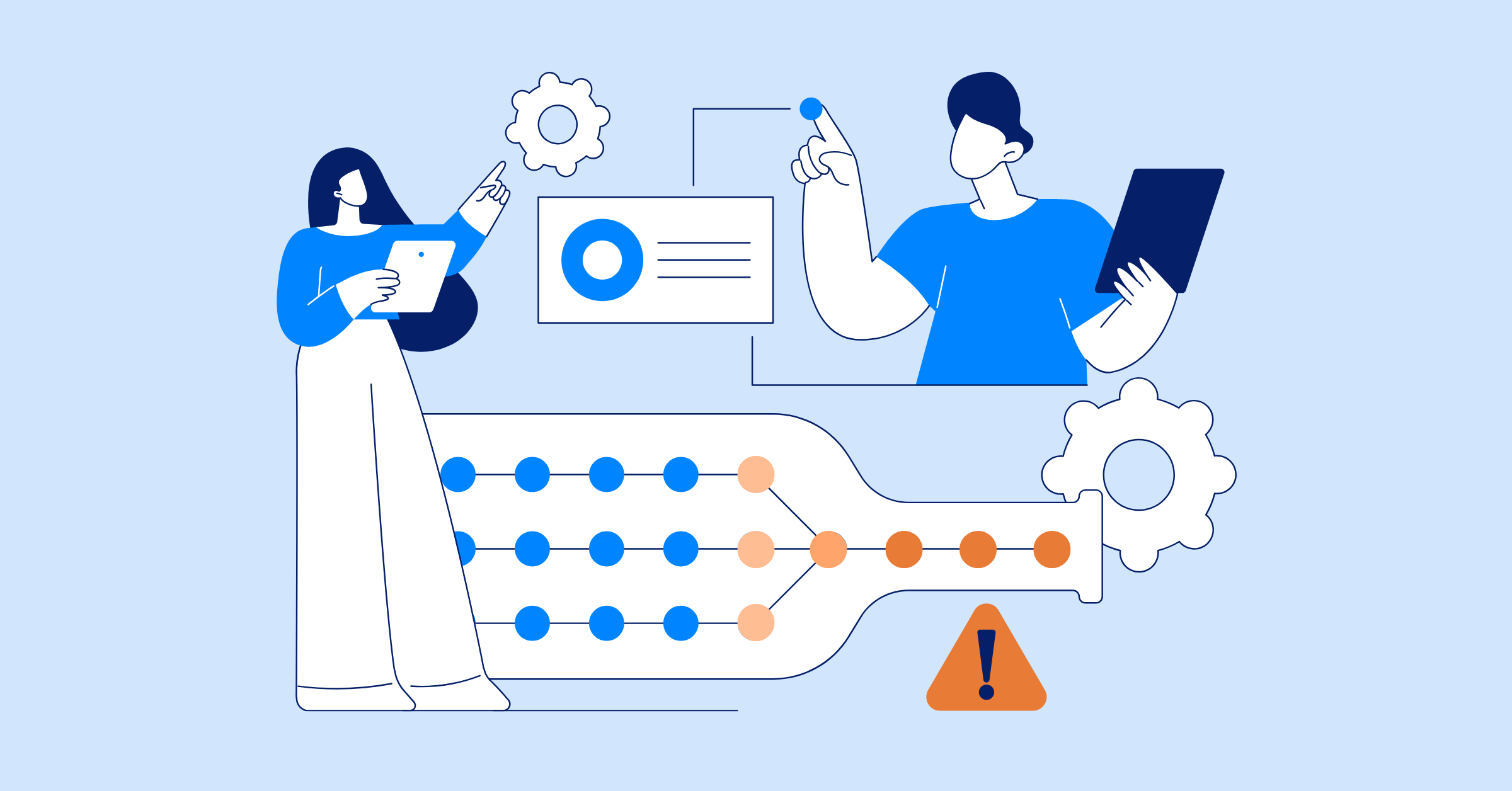
Hidden work is everything underneath that answer. It’s the fifteen minute Slack thread just to figure out who owns a task. It’s explaining the same context again to someone who joined the project late. It’s waiting on an approval that’s been sitting in someone’s inbox for two days. None of it feels like “real work” while it’s happening. It feels like the small stuff you have to clear out of the way before you can get to the real work.
But it adds up faster than most people think. Knowledge workers spend roughly 60% of their time on this kind of “work about work” instead of the skilled work they were actually hired to do. Zoomed out over a year, that’s 103 hours in unnecessary meetings, 209 hours redoing work that was already done once, and 352 hours just talking about work instead of doing it. (Source: Asana’s Anatomy of Work Index)
Here’s the part that matters most for anyone planning capacity or budget: hidden work doesn’t show up because it’s small. It shows up because nobody wrote it down. The plan says a task takes three days. Nobody accounted for the half day spent tracking down who has the file, or the hour spent redoing something because two versions of “the truth” didn’t match.
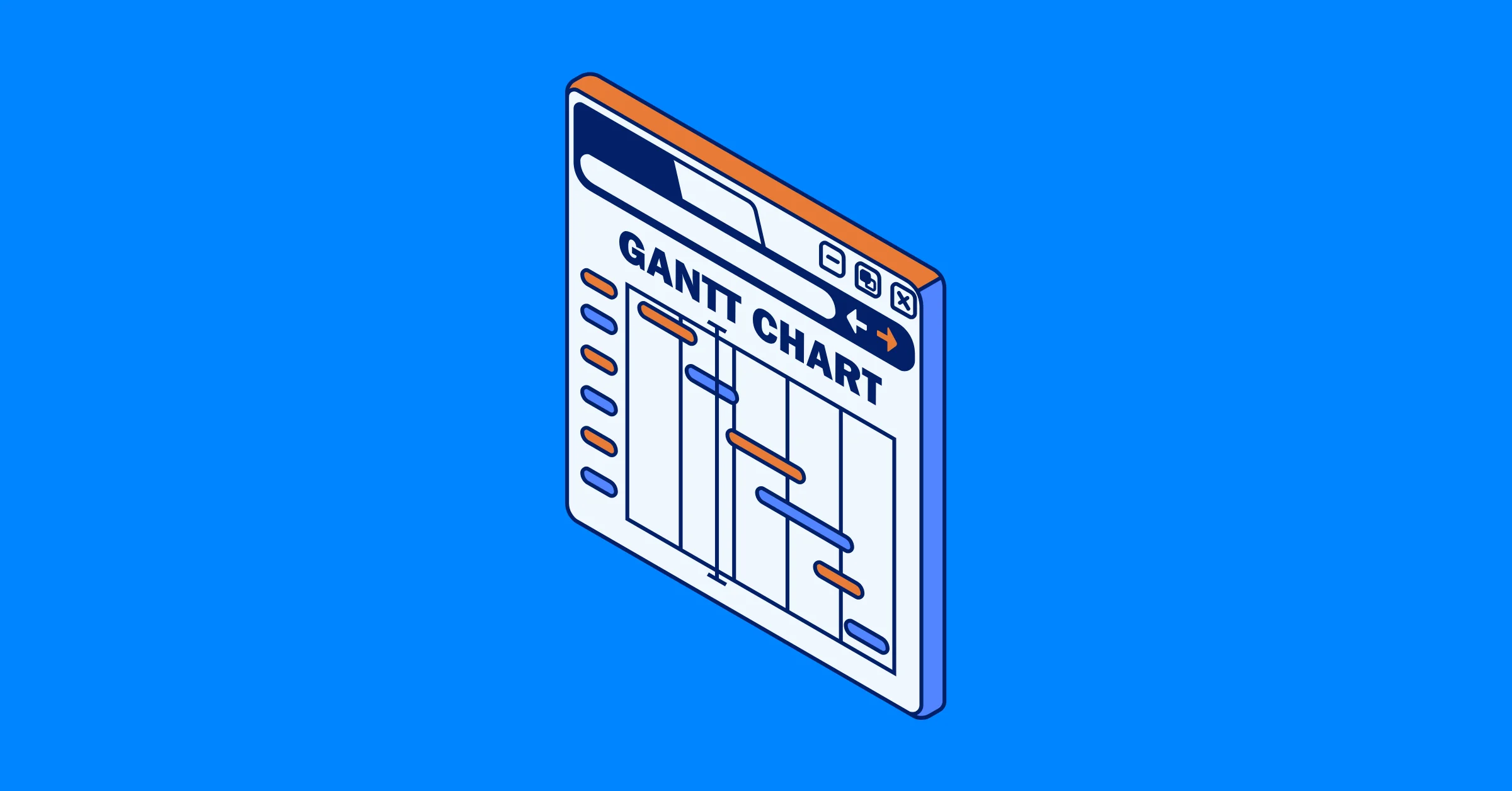
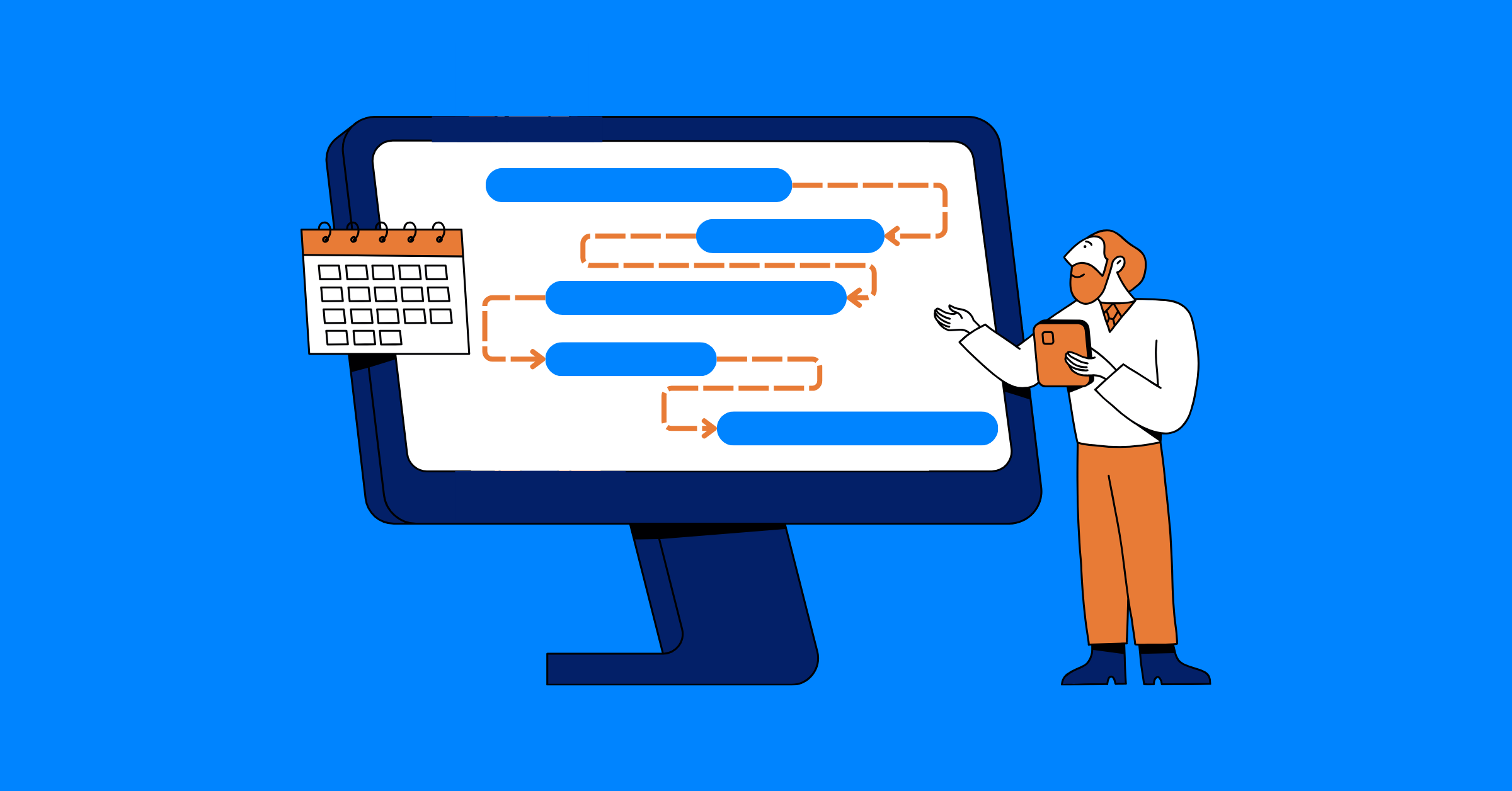
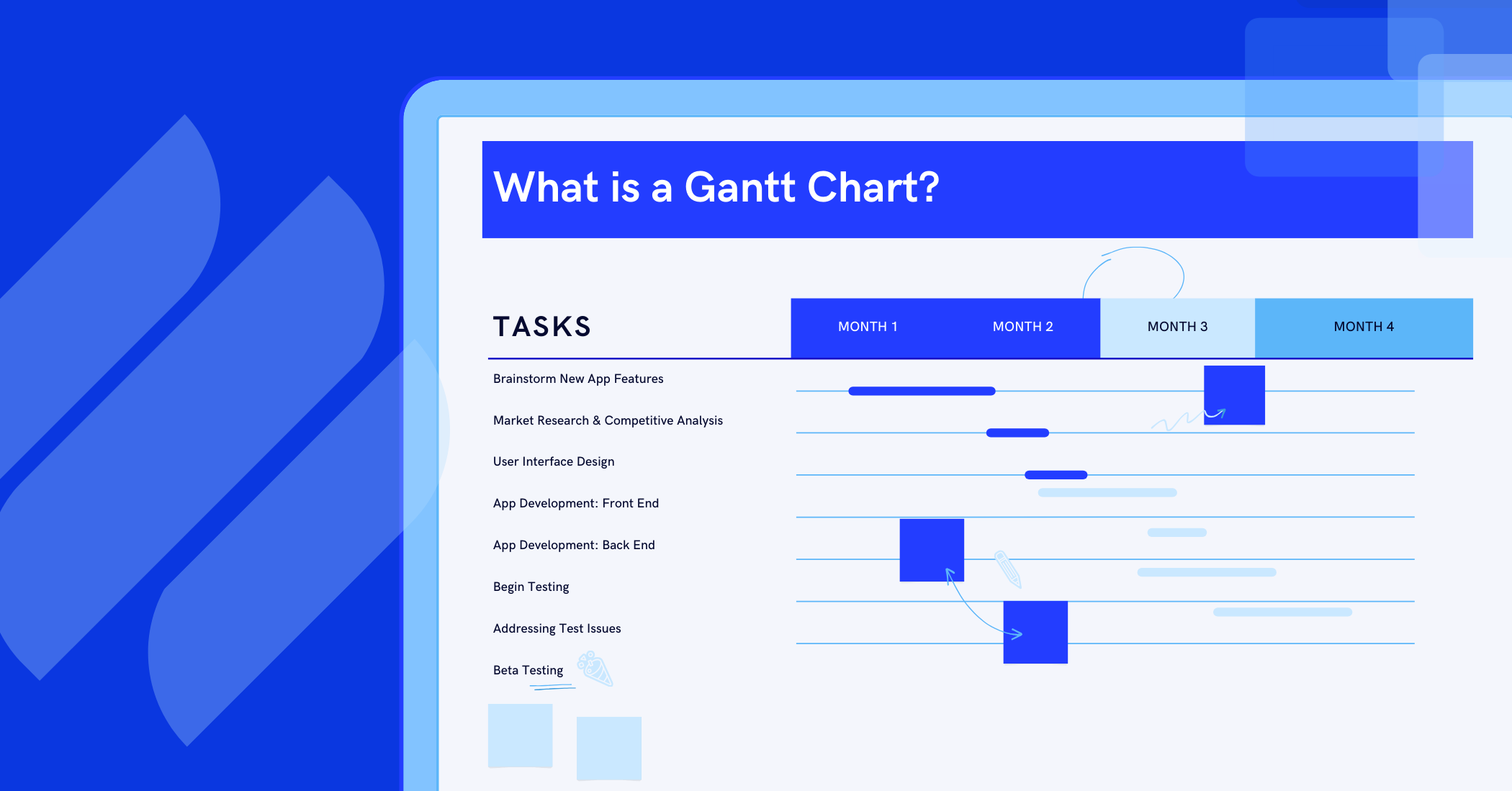
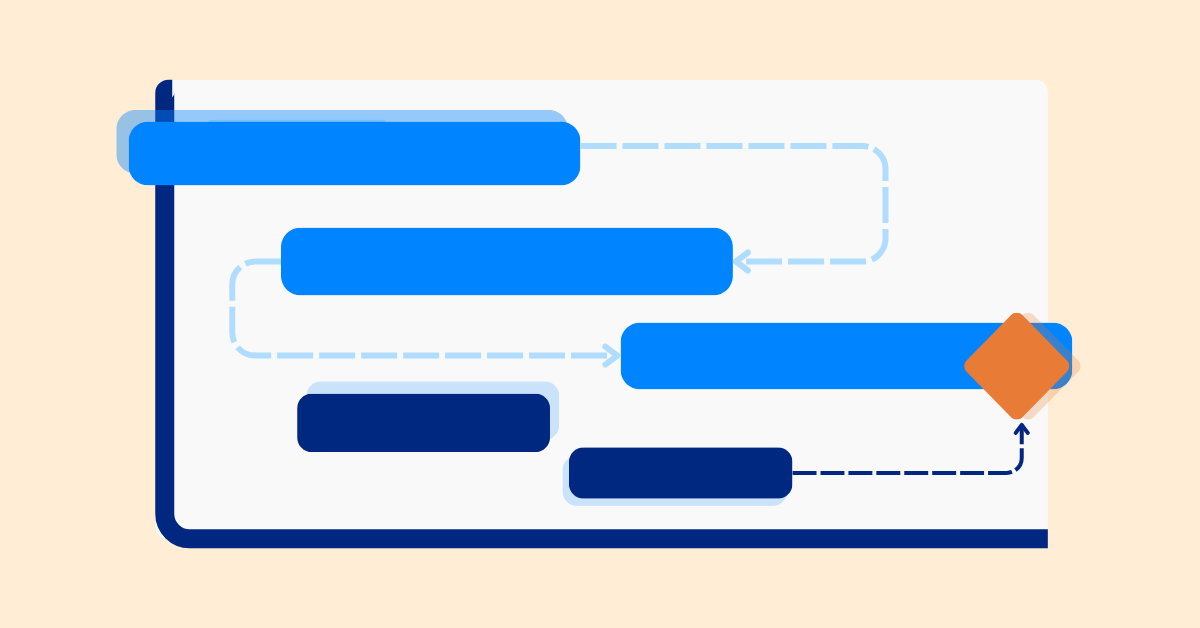
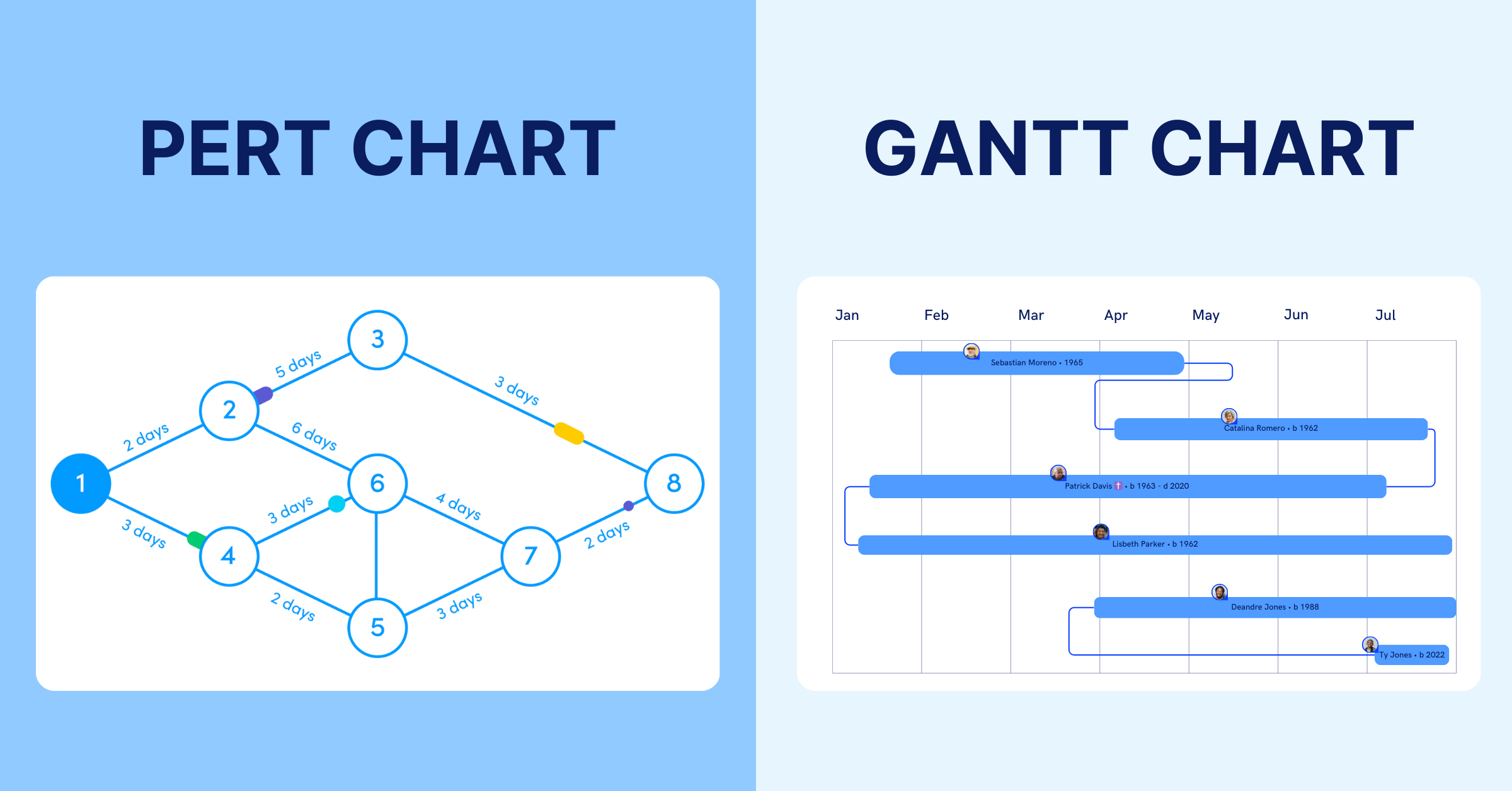
Planned work is what you’d see on a Gantt chart. Invisible work is what you’d see if you followed someone around for a week.
Why Invisible Work Grows
Invisible work rarely stays the same size. It tends to grow quietly, year after year, until it’s a bigger part of the job than the job itself. Here’s why that happens.
More tools, less clarity
Every new app or chat channel is supposed to make work easier. But when a task lives in five different places, someone has to check all five just to know where things stand. The tools multiply. The clarity doesn’t.
Coordination becomes its own job, but nobody owns it
When work crosses teams, someone has to make sure the handoff actually happens: that the file gets to the right person, that the update reaches everyone who needs it, that nothing falls through the cracks in between. That coordination takes real time. But it’s rarely written down as anyone’s responsibility, so it just gets absorbed by whoever notices the gap first.
Reliable people absorb most of it
The most dependable person on a team becomes the default answer for anything without a clear owner. Over time, they end up carrying more and more hidden work, simply because they can be trusted with it. It’s not in their job description. It’s just expected, and it’s one of the quiet reasons good people burn out.
Fast work doesn’t get rewarded, so it stops happening
Finish something early, and the usual result isn’t praise, it’s a shorter deadline next time. So people learn to spend extra time “polishing” instead of reporting early. The time doesn’t get saved. It just gets spent where no one can see it.
Growth outpaces process
What works for a team of twenty starts to break at eighty. Instead of fixing how work actually flows, most teams just add another meeting or approval step to patch the gap. Each patch is small. Together, they become a second workload running underneath the real one.
None of this happens because people are careless. It happens because invisible work is, by nature, the work nobody’s watching. And what nobody’s watching tends to grow.
Why Projects Are Always “80% Done”
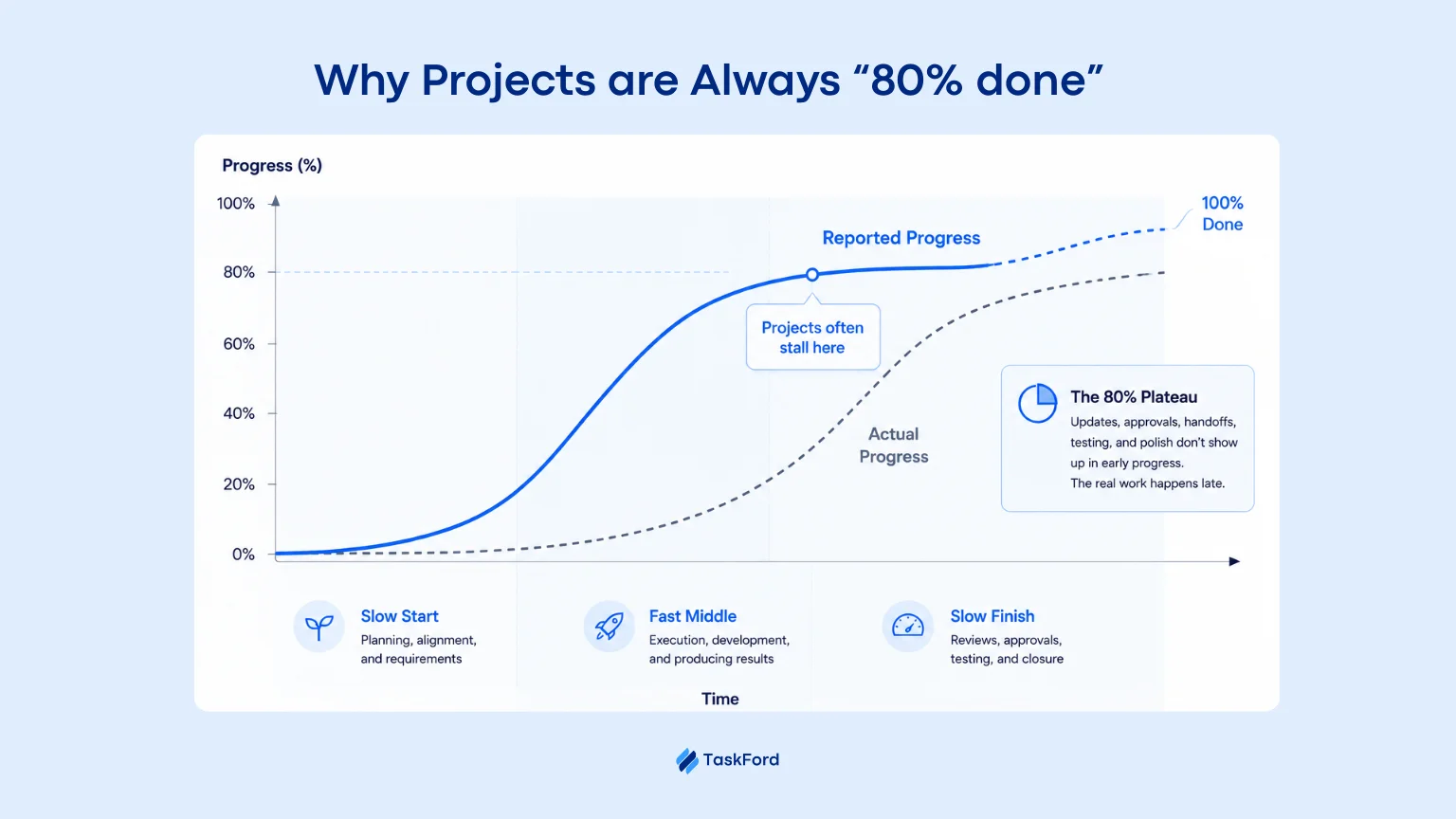
Ask any project manager for a status update, and you’ll almost always hear a number. “We’re about 80% done.” It sounds precise. It’s often wrong.
This is common enough to have a name: the 90% syndrome. Progress climbs steadily, hits 80 or 90%, then stalls. The project doesn’t finish on time. Sometimes it takes twice as long as planned.
Here’s why.
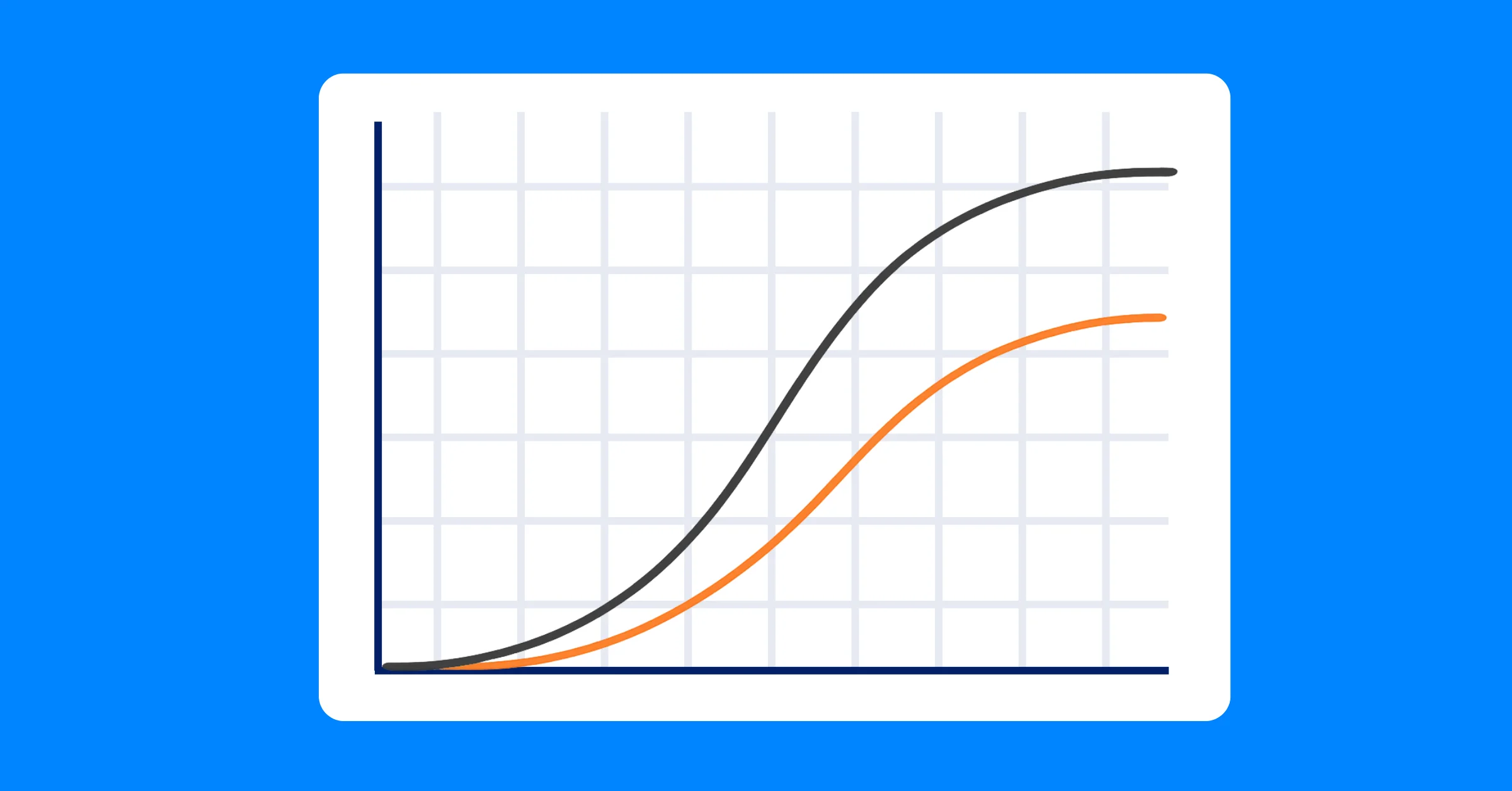
Progress doesn’t move in a straight line, but status reports act like it does. Most projects follow a pattern called an S-curve: slow at the start, fast in the middle, slow again at the end. It’s shaped like a stretched out “S” if you plot it on a graph. Early on, progress feels fast because the easy, visible work gets done first. The hard parts, like final approvals, integration issues, and edge cases nobody planned for, get pushed to the end, whether on purpose or not. So when someone says “80% done,” they’re usually just guessing based on time passed, not work remaining.
Read also: How to Use S-Curve in Project Management for Cost and Schedule Control
It gets worse when a project depends on several pieces coming together. Even if each piece is 80% likely to be on time, the odds all of them line up on schedule are much lower. More moving parts, more chances something slips at the end.
There’s a people problem too. “90% complete” is a feeling, not a fact, so it means something different to everyone reporting it. And finishing early rarely pays off. It usually just means a shorter deadline next time, so people sit on extra time instead of reporting real progress.
The fix: break work into pieces small enough that “done” is a fact, not a guess. If a task takes more than a day, it’s probably too big. Once work is broken down that far, nothing can quietly sit at 80% for a month. The work doesn’t get faster. It just stops being able to hide.
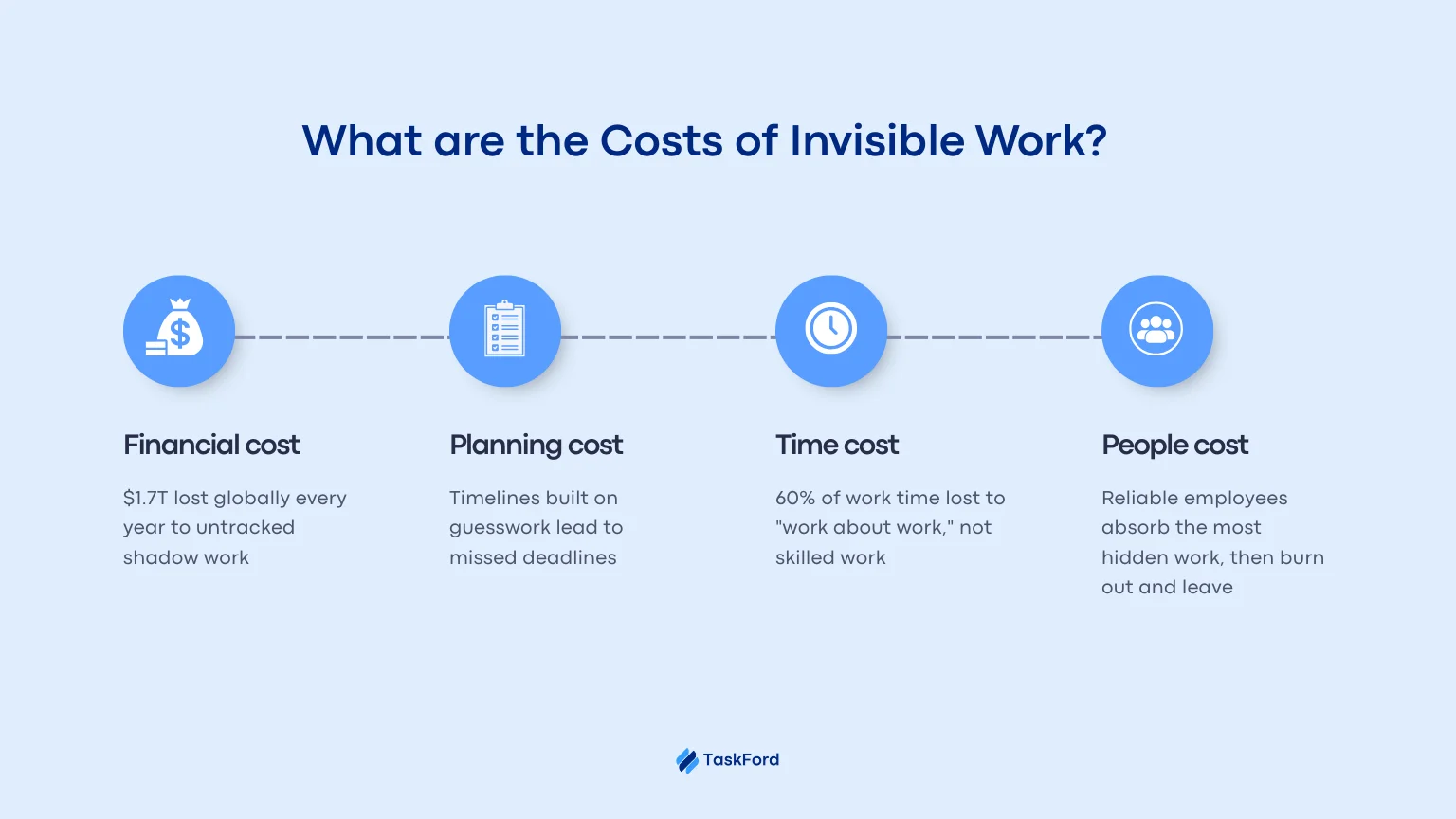
What Are the Costs of Invisible Work?
Invisible work doesn’t show up as its own line item. That’s exactly why it’s so expensive.
1. Financial cost
Start with the money. Shadow work, the small, untracked tasks like chasing approvals or fixing broken handoffs, costs companies an estimated $1.7 trillion globally every year. Add in the cost of disengaged employees quietly burning out from the extra load, and that climbs to $438 billion a year in lost output worldwide. (According to Productivity Loss Statistics 2026 by Speakwise)
2. Planning and delivery cost
When hidden work isn’t tracked, timelines become guesswork, and managers assume people have more free capacity than they actually do. This leads to unrealistic workloads, missed deadlines, and projects that stay “almost done” far longer than planned.
3. Time cost
Knowledge workers lose about 60% of their working time to “work about work” rather than the skilled work they’re paid for. That breaks down to roughly 103 hours a year in unnecessary meetings, 209 hours on duplicated effort, and 352 hours just talking about work instead of doing it. (According to Asana’s Anatomy of Work Index)
4. People cost
The most reliable team members tend to absorb the most invisible work, since others trust them to just handle it. Over time, this creates unequal workloads that breed resentment and eventually lead to turnover. The people carrying the most hidden work are often the ones who leave first, taking undocumented knowledge with them.
For a CEO, this shows up as unpredictable delivery. For a COO, capacity plans that never hold. For a PMO, the same project stuck at “almost done” every quarter.
None of it appears in a quarterly report. It just quietly taxes every project and every team, until leadership finally asks why nothing finishes on time.
How to Measure Operational Visibility
Most leaders respond to a visibility problem by asking for a bigger dashboard. That usually makes things worse, not better. More charts don’t create clarity if you’re still measuring the wrong things.
The better approach is asking a handful of honest questions and tracking the answers over time.
Are things taking longer than planned, and by how much? Not just whether a task got done, but whether it took the estimated time or quietly ran long. One late task is normal. A pattern of late tasks is hidden work showing up in your numbers.
How long does a blocker sit before someone acts on it? If a dependency or approval request sits untouched for two days, that gap is invisible work happening in real time. It just hasn’t been named yet.
How much work has no clear owner? This one stings a little to look at, but it’s worth it. Every task without an owner or a due date is still getting done by someone, quietly, off the books.
How often does “done” work come back? If finished work keeps getting reopened, that’s usually a sign requirements were unclear, or something started before it was actually ready.
None of these need a new tool. They just need someone willing to ask the question and look at the honest answer.
💡 One more thing worth knowing: visibility looks different depending on where you sit. A project manager needs to see this day to day. A delivery lead needs it weekly, across several projects. An executive needs it as a portfolio view for planning capacity. Same four questions, different altitude.
The point of all this isn’t to produce more reports. It’s to catch the moment something goes unspoken, before it turns into a missed deadline weeks later.
How to Reduce Invisible Work
You can’t eliminate invisible work completely. Some amount of coordination, clarification, and cleanup is just part of how teams operate. But you can shrink it, and make what’s left visible enough to plan around.
#1. Treat it as a coordination problem, not a communication problem
Adding another chat channel doesn’t help; it just adds more places to check. The average employee already uses around 10 different apps a day, and the more tools someone juggles, the more time they lose to distraction and hunting for information. The real fix isn’t more ways to talk about work. It’s fewer places where work has to be tracked in the first place.
#2. Break work down until “done” is a fact, not a guess
If a task takes more than a day, it’s probably hiding smaller tasks inside it. Break it down further, and status stops being an opinion. It becomes something anyone can check.
#3. Give every task a real owner and a real deadline
Unowned work doesn’t disappear, it just goes underground. A task with a name and a date attached is a task someone can be held accountable for, instead of something that quietly gets done by whoever notices it first.
#4. Don’t let the same people absorb everything
Overwork isn’t rare: 85% of employees report experiencing it, and 42% say it’s a real drag on team morale. The most reliable person on a team tends to become the default owner for anything without a clear home. Rotate that kind of work on purpose, instead of letting it fall on whoever responds fastest.
#5. Consolidate around one source of truth
This doesn’t mean forcing every team onto the same tool for everything. It means giving every project one place where status, files, and decisions live, so people stop rebuilding the same information inside spreadsheets.
One marketing team running over 200 campaigns a year found that spreading work across email, chat, and spreadsheets created constant duplication and lost context, until they consolidated into a single system and could actually see what was happening across campaigns.
That’s the exact gap TaskFord was built to close. Rather than bolting visibility on top of five disconnected tools, it gives teams one place where tasks, ownership, and status actually live. The coordination that used to happen quietly, in Slack threads and side spreadsheets, becomes something everyone can just see.
Here’s how TaskFord can help you:
- Project planning: Break goals into tasks, owners, milestones, and dependencies, so everyone knows what needs to happen and when.
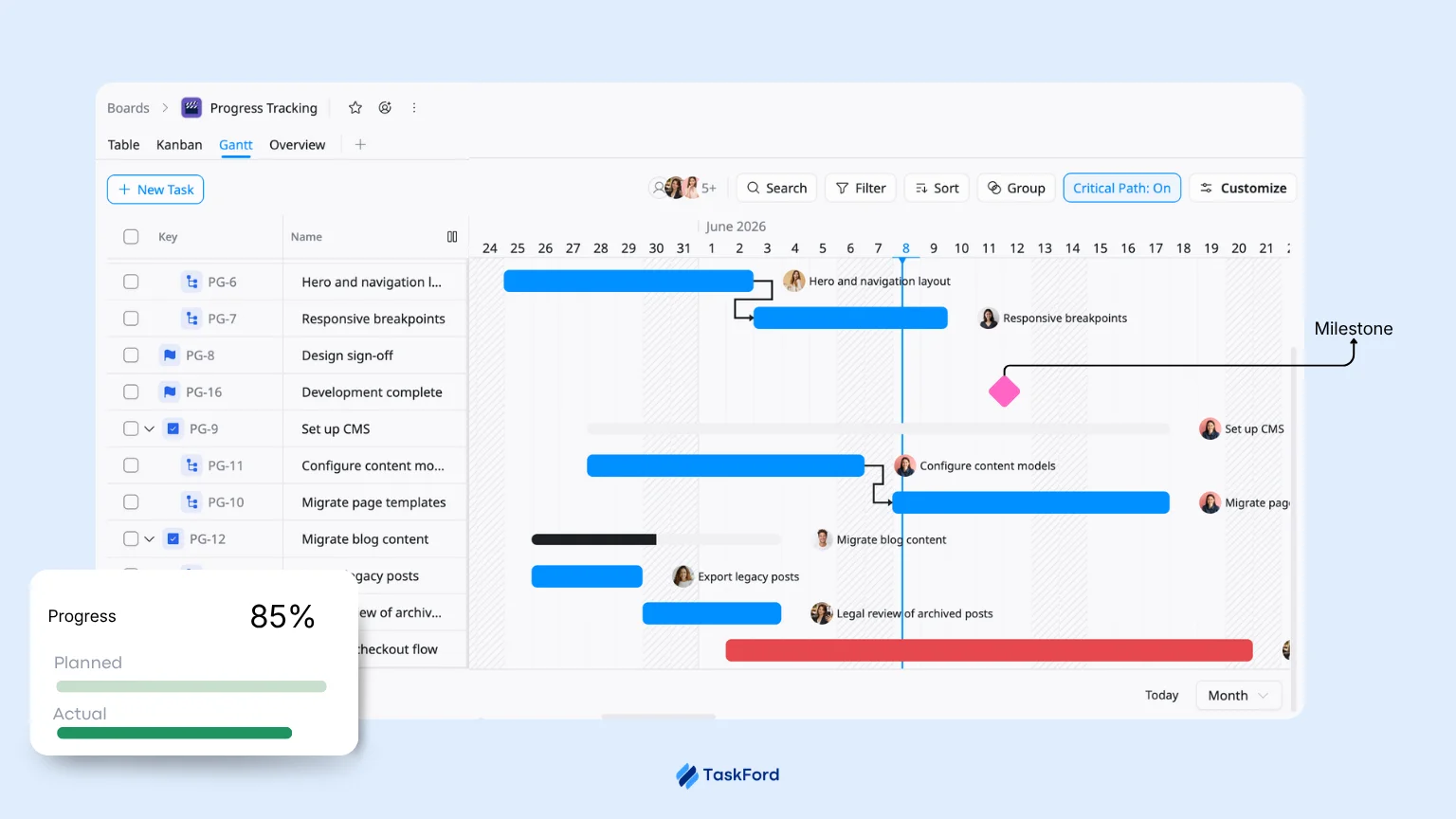
- Workload management: See who’s overloaded and who has room, before it turns into burnout or a missed deadline.
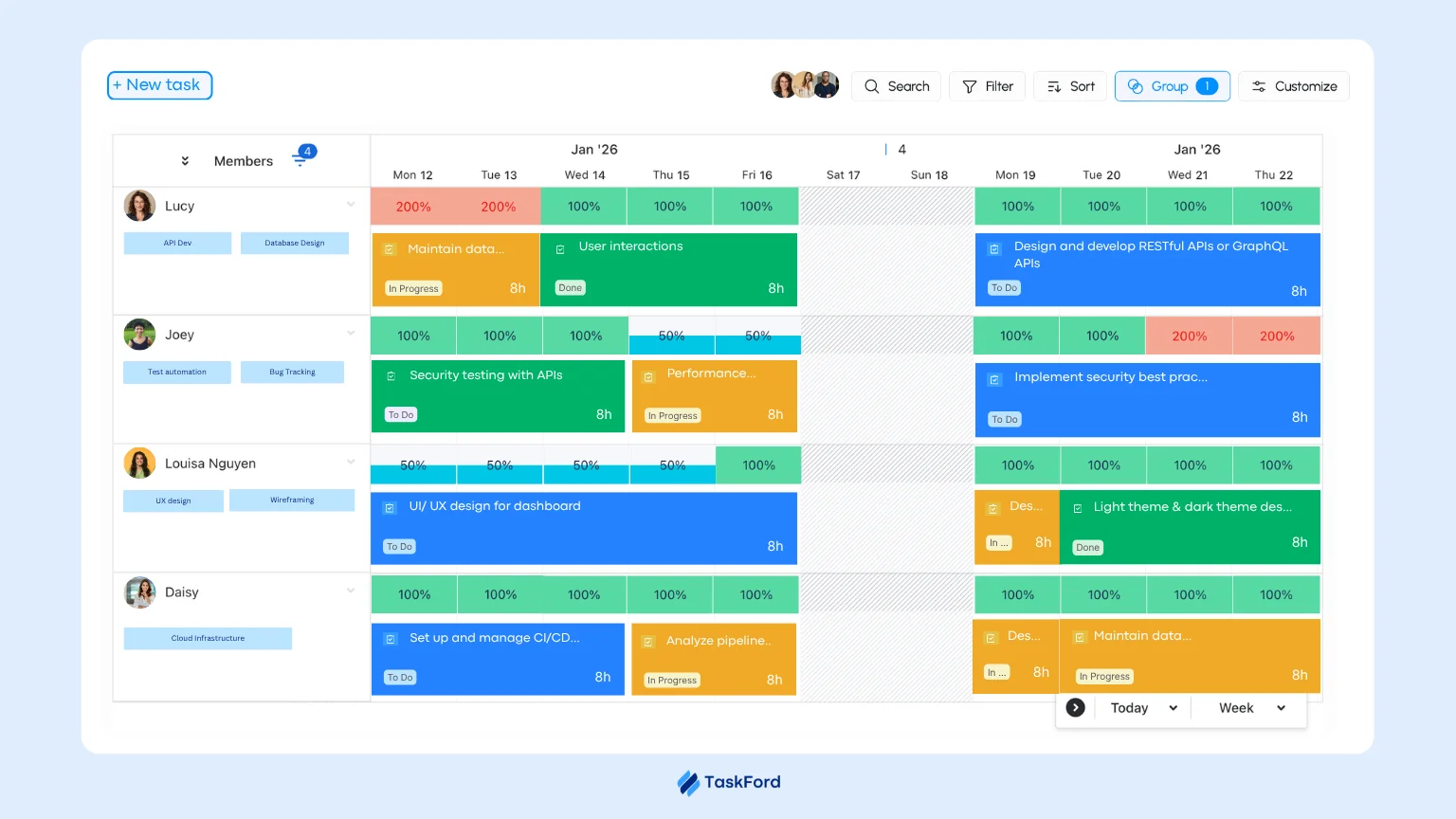
- Progress tracking and delivery visibility: Replace the weekly “we’re about 80% done” guess with a real view of what’s completed, delayed, or blocked.
- Schedule board: See tasks, deadlines, and assignments across projects in one timeline, instead of piecing it together from five tools.
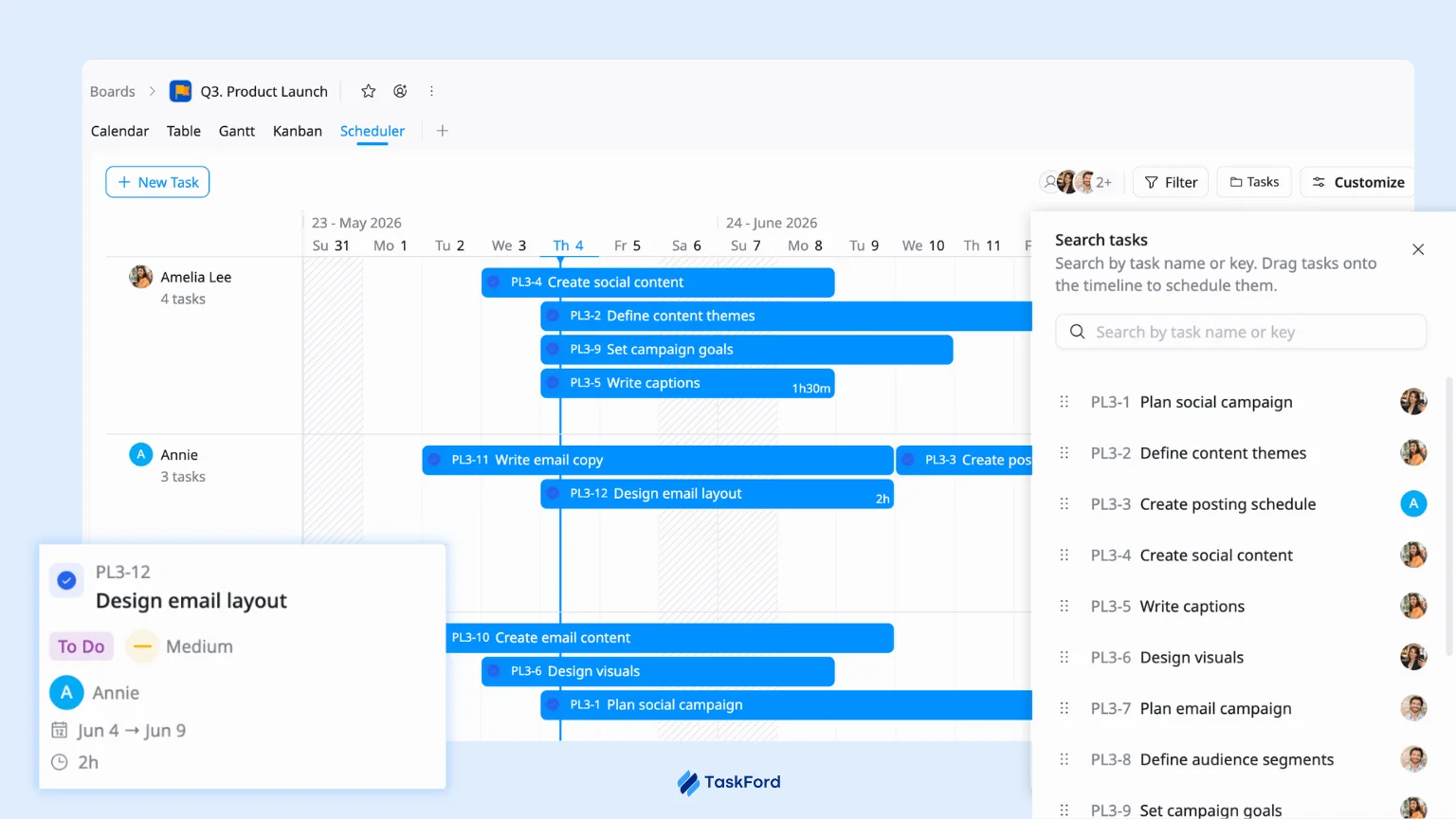
- Team collaboration: Keep updates and context attached to the task itself, instead of scattered across chats and spreadsheets.
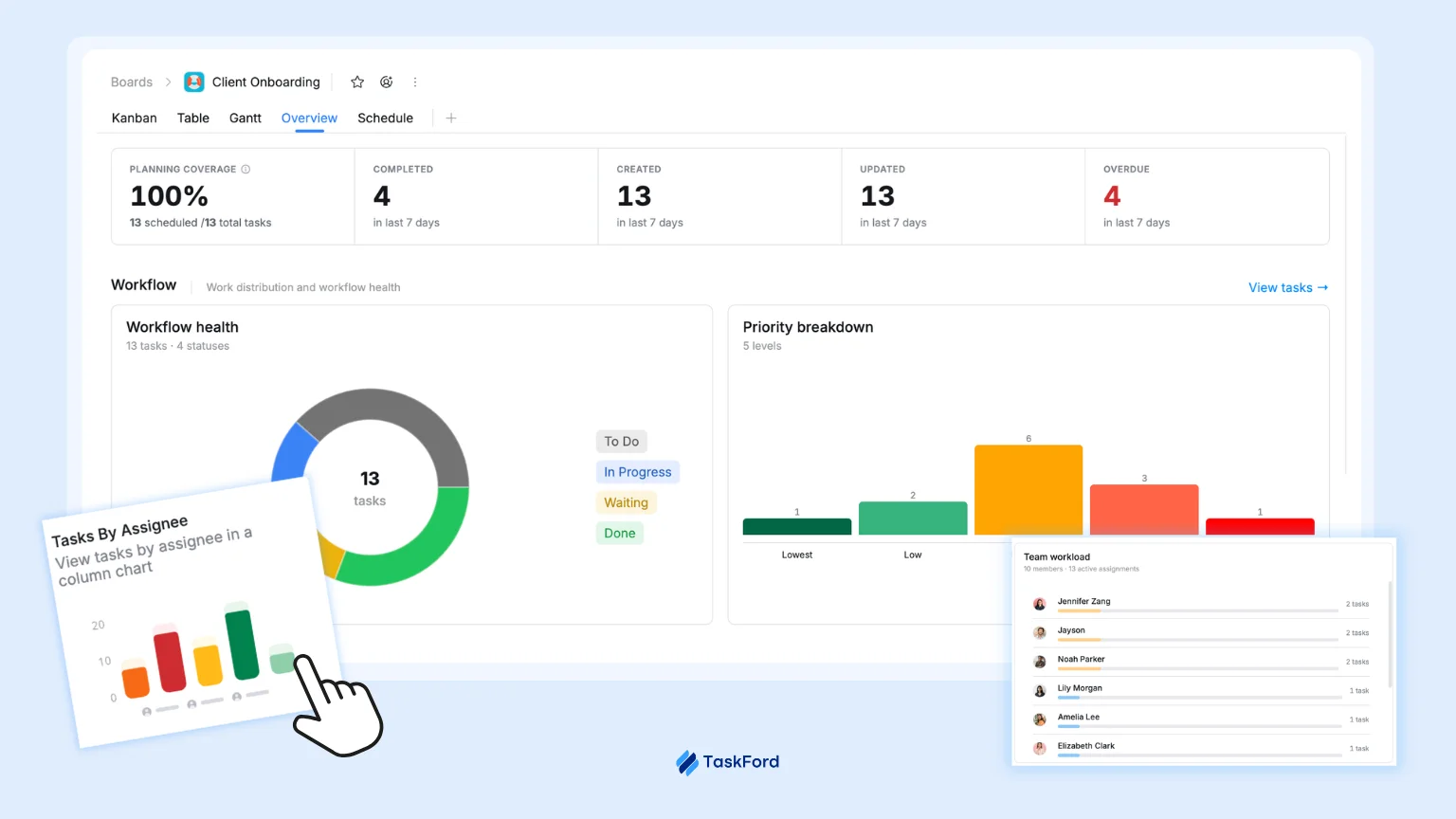
- Reporting and management visibility: Give leaders one reliable view of project health and workload, without chasing status updates.
Final Words
Invisible work isn’t a people problem, and it isn’t really a tooling problem either. It’s a visibility problem.
Every organization already has this work happening. The coordination, the chasing, the quiet fixes nobody scheduled. The only question is whether leadership can see it, or whether it stays hidden until a project stalls at 80% for the third month in a row.
The teams that get ahead of this aren’t the ones with zero hidden work. That’s not realistic. They’re the ones who’ve made it visible enough to plan around, so it stops being a surprise and starts being something they can actually manage.
That 20% that always seems to be missing was never really missing. It just was never written down.
Related Articles













How to Build and Manage a Product Roadmap with TaskFord











How to Build a Connected Project Timeline in TaskFord










What Are the Best Jira Alternatives for Scrum Teams?




















How WBS Reveals Delivery Breakdown Before It’s Too Late







![How To Conduct a Profound Stakeholder Analysis [+ Free Template]](/marketing/blog/stakeholder-analysis.webp)















What to Look for in Scrum Tools (Beyond Kanban Boards)

![Project Management Calendar for Teams and Managers [Free Templates]](/marketing/blog/project-management-calendar.webp)






How to Define Project Deliverables: A Step-by-Step Guide








![RACI Chart in Project Management: Rules & Examples [Free Download]](/marketing/blog/raci-chart.webp)













![7 Must-Have Project Management Documents Every PO Should Know [Free Templates]](/marketing/blog/project-management-documents.webp)









![How to Create a Winning Project Plan for IT Projects [10 Steps Included]](/marketing/blog/how-to-create-a-project-plan.webp)


![Daily Standup Best Practices: Apply AI to Organize Meetings Successfully [2026 Trends]](/marketing/blog/daily-standup.webp)





![How to Create a Project Communication Plan: Step-by-Step Guide [+Free Template]](/marketing/blog/project-communication-plan.png)


![Master Project Procurement Management in 5 Steps [Download a free plan template]](/marketing/blog/project-procurement-management.webp)
























Subscribe for Expert Tips
Unlock expert insights and stay ahead with TaskFord. Sign up now to receive valuable tips, strategies, and updates directly in your inbox.